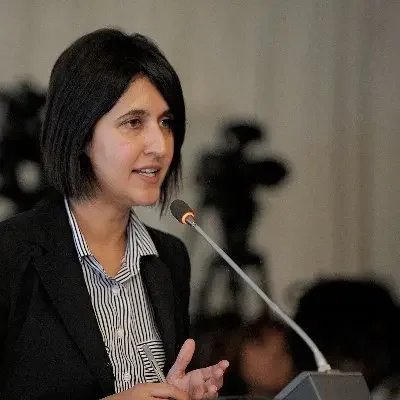
Women hold influential positions on the Madlanga commission of inquiry, established to investigate allegations of political interference, corruption and organised crime in the South African Police Service (SAPS).
When about 20 000 women marched to the Union Buildings on 9 August 1956 to protest against apartheid's pass laws, few professions reflected the equality they demanded. The legal profession, like the courts, remained overwhelmingly white and male.
Seventy years later, that landscape has changed remarkably. They are leading evidence, testing witnesses, interpreting constitutional questions and helping shape the public record of one of the country's most significant inquiries.
Their prominence reflects the transformation of South Africa's legal profession and the growing role women play in public accountability.
Sesi Baloyi SC: Guiding the commission
As co-commissioner alongside retired Constitutional Court justice Mbuyiseli Madlanga and commissioner Sandile Khumalo, advocate Sesi Baloyi brings nearly three decades of legal experience to the inquiry.
Baloyi was admitted as an attorney in 1997 before joining the Johannesburg Bar in 2005. Early in her career, she served as a researcher to former Constitutional Court justice Albie Sachs, an experience that helped shape her expertise in constitutional and administrative law.
Now a senior counsel and member of the Vmxenge Group of Advocates, her practice spans constitutional, commercial, administrative, employment and municipal law. In 2022 President Cyril Ramaphosa appointed her to the Judicial Service Commission (JSC), where she later became its spokesperson, placing her at the centre of debates about judicial accountability and appointments.
At the Madlanga commission, Baloyi has asked astute and inquisitive questions to witnesses which have shed light on the inner workings of the SAPS.
Mahlape Sello SC: Directing the evidence
As one of the commission's evidence leaders, advocate Mahlape Sello SC has become one of its most recognisable figures, leading lengthy examinations of witnesses and navigating complex questions of criminal investigations and constitutional governance.
Sello led evidence against Ekurhuleni Metropolitan Police Department's Julius Mkhwanazi, putting him under tough questioning and causing him to visibly sweat. She has caused many witnesses to sweat through her intense and unyielding scrutiny of legal procedure and mandated conduct.
Called to the Bar in 2003, Sello has built a practice across commercial and public law while serving as an arbitrator with both the Arbitration Foundation of Southern Africa and the China-Africa Joint Arbitration Centre.
Her public service extends well beyond the commission. She has served on the South African Law Reform Commission, chaired the Advertising Standards Authority's appeal committee and sat on the board of Life Healthcare.
In 2022, Sello served on Parliament's independent Section 89 panel investigating the Phala Phala matter, alongside former chief justice Sandile Ngcobo and Judge Thokozile Masipa.
Adila Hassim SC: A leading public-interest advocate
Advocate Adila Hassim SC arrived at the commission with one of the country's most distinguished public-interest law careers. She recently put her experience in navigating the complex evidence of deputy head of crime intelligence Feroz Khan in his absence after he was hospitalised as a result of an assassination attempt. A former Constitutional Court law clerk, Hassim helped shape South Africa's health rights jurisprudence through the Aids Law Project and the Treatment Action Campaign before co-founding Section27 and Corruption Watch.
Her litigation record includes the Limpopo textbook case, the silicosis class action against mining companies and the Life Esidimeni arbitration, which exposed systemic failures that led to the deaths of psychiatric patients.
Internationally, Hassim gained recognition as a member of South Africa's legal team before the International Court of Justice in South Africa versus Israel, where she presented arguments supporting South Africa's genocide case.
Hassim has brought considerable weight to the commission's evidence-led approach, using her experience in constitutional litigation and public accountability to weave through evidence of Witness X and North West businessman Suliman Carrim.
A new generation of constitutional lawyers
Several younger advocates have also emerged as key figures at the Madlanga commission, putting a spotlight on the progress of women in the legal sector.
Lee Segeels-Ncube, a member of the Johannesburg Bar who specialises in administrative and commercial law, has played an important role in leading crucial testimony of Drusthanta Ramsamy, a prosecutor at the Independent Directorate Against Corruption. Segeels-Ncube led Ramsamy in her intricate account of the inner workings of Idac and the leadership failure of former unit head Andrea Johnson.
Thabang Pooe started her career as a law clerk to Justice Madlanga at the Constitutional Court. She has accrued academic training in South Africa and the United States, with experience at Section27. She participated in the Life Esidimeni process before joining the commission. Pooe led evidence implicating deputy police commissioner Hilda Senthumule in the controversial disbandment of the Political Killings Task Team.
Ofentse Motlhasedi led the evidence of Witness C, a Gauteng counter-intelligence detective. The testimony detailed how controversial businessman Vusimuzi "Cat" Matlala name-dropped and sought protection from police minister Senzo Mchunu after his arrest. Motlhasedi brings expertise in human rights and constitutional litigation after clerking at the Constitutional Court and the Supreme Court of Kenya before moving into public-interest litigation and legislative drafting.
From representation to influence
The prominence of women at the Madlanga commission reflects improved representation and demonstrates how women occupy positions that shape constitutional accountability at the highest level of public life.
Involving testing allegations against some of South Africa's most powerful political and law enforcement figures, women at the Madlanga commission have displayed not only how much they have progressed but also their often-ignored capability.
The advocates leading that work are not symbolic appointments but experienced legal practitioners whose careers span constitutional litigation, public-interest law, judicial reform and international human rights.
As South Africa celebrates Women's Day, the influential and capable women at the Madlanga Commission offer a reminder of how far the legal profession has evolved since the women of 1956 challenged exclusion and injustice.