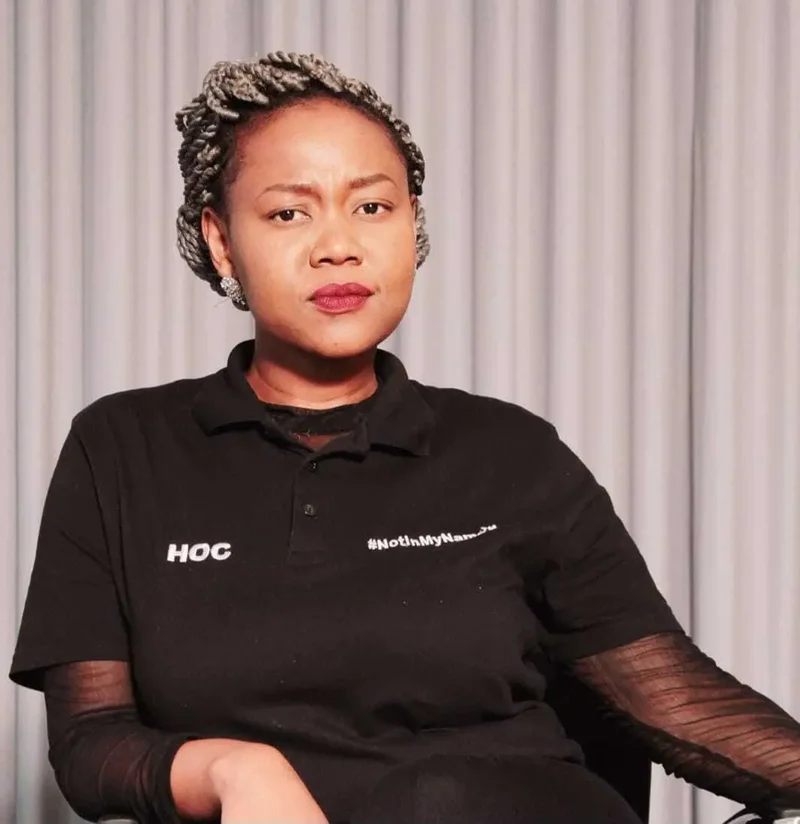
When South Africa came to a standstill during the Covid-19 pandemic, millions of people were anxious about what the next day would bring. Some worried about their jobs. Others worried about their health. Many wondered how they would put food on the table.
It was during this time that Mo Senne discovered what communication could really do. It was no longer about media coverage or carefully written statements. It became a way to connect people who wanted to help with those who desperately needed support. It became a tool for restoring dignity when hope was running low.
Working with Not In My Name International, Senne helped lead communications for the organisation's Food Parcel Drive. The campaign brought together volunteers, businesses and communities at a time when South Africans needed one another more than ever.
Every message had a purpose. Every post, interview and call to action helped move food, resources and support to families in need.
The campaign later received a United Nations SDG Action Award but for Senne, the biggest reward was seeing the direct impact on people's lives.
"It showed me that communication is not just about sharing information," she says. "It can protect people's dignity. It can bring people together and it can save lives."
The experience changed the direction of her career. It also gave her a purpose that guides her work today.
Today, Senne is a senior communications officer at Rhodes University and head of communications and research at Not In My Name International. She has become known for leading campaigns that speak to real issues facing South Africans.
Her work has taken her into universities, government spaces and civil society organisations, where difficult conversations often require careful leadership.
Yet she does not see communication as a means of controlling public opinion; she sees it as a way to help people understand one another. For her, every campaign begins with a simple question. Who are the people at the heart of this story and how can their voices be heard?
That way of thinking has shaped every stage of her career. Instead of treating communities as audiences waiting for information, she believes they should be partners in creating it. Listening comes before speaking. Respect comes before publicity. She believes the strongest messages are not created in boardrooms. They come from the lived experiences of ordinary people.
"Communities are not audiences," she says. "They are co-creators." It is a simple idea but one that has helped her build campaigns that people can recognise themselves in.
Her commitment to people is also reflected in the way she continues to learn. Senne holds a bachelor of psychology honours degree with a distinction in research methods and is studying African feminist research methodology at Rhodes University.
She believes education should never end because society never stands still. Every new lesson helps her understand people better. Every new perspective helps her communicate with greater honesty and care. It has also strengthened her belief that communication should never be about protecting power. It should be about protecting people.
This way of thinking has influenced her work at Rhodes University. Since joining the institution, she has helped tell stories that showcase research, innovation and community impact. Projects such as the Nqweba meteorite discovery and the National Arts Festival Exhibitions were not simply promoted as institutional successes. They became opportunities to show how knowledge can benefit society.
Her work contributed to Rhodes University receiving consecutive Marketing, Advancement and Communication in Education Excellence Awards in 2024 and 2025. The first was especially significant because it marked the university's first Mace award.
While she is proud of the achievements, she says awards are never the destination. They are a reminder that meaningful work has been recognised.
Outside the university, Senne has worked alongside organisations, including UN Women on the #IncludingTheBoyChild campaign and contributed to conversations on gender-based violence, public safety and social justice. She has collaborated with government departments and the South African Police Service on Project Harmony and the Department of Community Safety on GBVF Response Fund, aimed at strengthening communities and building trust.
The spaces often come with public pressure and intense scrutiny but she has learnt not to be distracted by the noise. Instead, she focuses on facts, evidence and the people whose lives are affected.
"When people challenge your work, it means they are paying attention," she says. "The important thing is to keep bringing the conversation back to solutions and the people who need help."
For Senne, communication is not about having all the answers. It is about asking better questions. It is about making sure the most vulnerable people are not forgotten when decisions are made. Her studies in African feminist research methodology have further strengthened this belief. They have encouraged her to think about who holds power, whose voices are missing and how institutions can become more accountable to the people they serve.
She believes trust cannot be built through carefully managed public relations alone. It grows through honesty, accountability and a willingness to listen, especially when conversations become uncomfortable. She is equally passionate about what the future holds for young African women. In her view, technology has changed the rules. Digital platforms have created opportunities that previous generations could only imagine. Young women no longer have to wait for someone else to tell their stories. They can write them, publish them and share them with the world. They can build communities, influence public conversations and challenge old ways of thinking.
She encourages young women to go beyond creating content. Learn how digital platforms work. Understand data and strategy. Keep asking questions. Most importantly, use the skills to solve real problems in the communities around you.
Looking back, Senne hopes her career will show that communications can be far more than media statements and social media posts. She wants to help redefine the profession as one rooted in ethics, research and service. She believes communication has the power to strengthen institutions, support communities and inspire action when it is done with integrity. More than anything, she wants people to remember that every message has the potential to change someone's life.
Her message to young women is one she hopes they will carry with them long after Women's Month has passed.
"Do not make yourself smaller to fit into someone else's idea of who you should be. Your story matters. Your voice matters. Keep learning, keep showing up and never wait for permission to take your place."
It is a message filled with hope. It reminds us that changing South Africa does not always begin with grand gestures. Sometimes it begins with one person deciding to use their skills to lift someone else. The decision can inspire another person to do the same. And that is how lasting change begins.