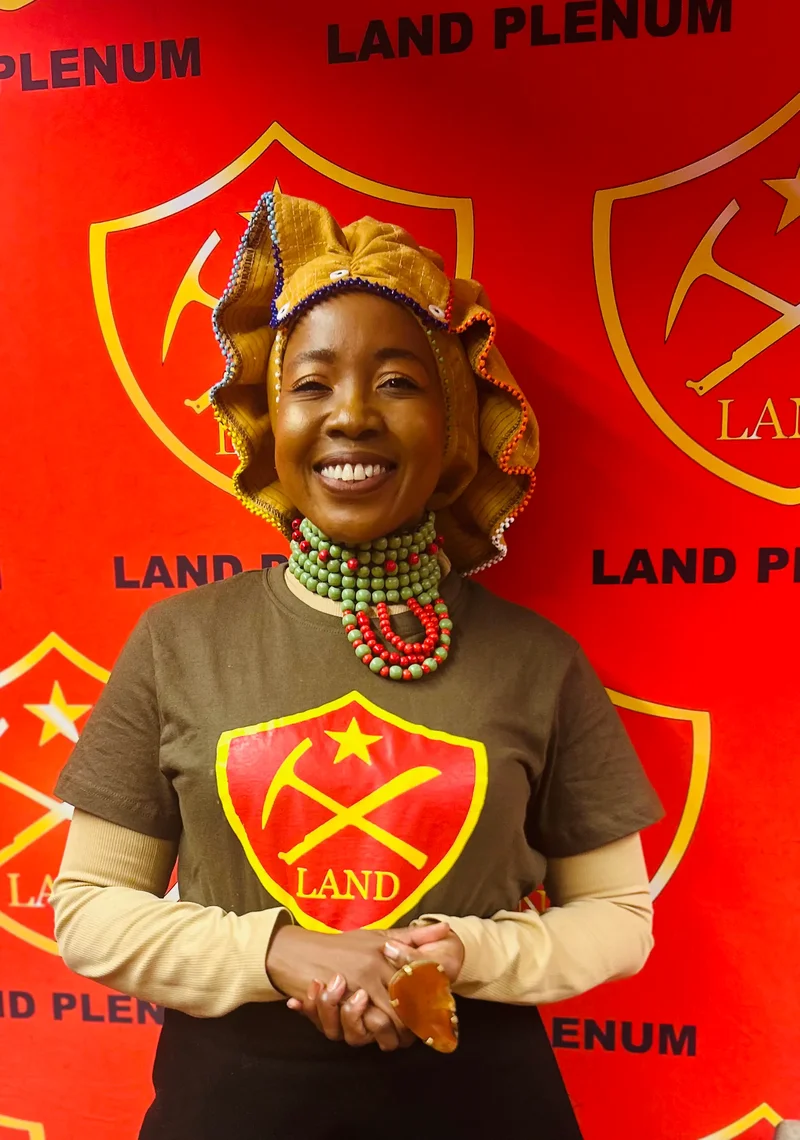
South African poet, musician, beadwork artist and social activist Ntsiki Mazwai has spent much of her public life speaking out on the issues shaping the country. Whether the conversation is about politics, race, culture or gender, she has rarely held back.
Her views have made headlines, sparked debate and often divided opinion. Love her or disagree with her, Mazwai has become one of South Africa's most recognisable public voices.
Now, she wants to test that influence in a different space.
Mazwai is the Land Party's mayoral candidate for Johannesburg, moving her from years of public debate to the front lines of local politics. It is a move that asks: Can someone who has spent years challenging those in power become part of the system they once criticised?
For Mazwai, the answer lies in her growing frustration with South Africa's political leadership. She says there came a point when she no longer felt represented by the people asking for her vote.
"I had run out of people to vote for," she says. "The current political leaders have been a disappointment to me."
As many South Africans are disillusioned with politics, Mazwai also stopped voting. Looking back, she believes that decision also meant giving away her own power to influence change. "The problem with not voting is that it gives away the power."
The Land Party had been approaching her for about two years before she agreed to become its mayoral candidate.
At first, she did not believe she was ready for politics. As time passed, she found herself agreeing with many of the party's policies and began seeing public office as another way to serve the communities she had spoken about for years. "I can do more for my community on the ground than I can on social media."
Her decision comes as Johannesburg continues to face some of the biggest challenges of any city in the country. Residents regularly raise concerns about unreliable service delivery, ageing infrastructure, illegal dumping, hijacked buildings, rising electricity costs and a municipality that has struggled with political instability over the years. It is in light of these issues that candidates are once again asking residents to trust them to lead the city.
Mazwai believes what Johannesburg needs most is a different kind of leadership. Rather than presenting herself as a career politician, she says she wants to bring honesty, accountability and direct engagement into local government.
She says one of the biggest priorities would be cleaning up the city. In her view, cleaner streets are not only about appearance. Better waste management can improve public health, restore pride in communities, create jobs and encourage investment.
Her proposal includes working more closely with Pikitup and independent waste management companies while increasing the number of public bins, toilets and green spaces across Johannesburg.
The city's inner core is another area she believes needs urgent attention. Mazwai wants to address the growing number of hijacked buildings by creating temporary accommodation for residents while the city works towards long-term housing solutions. She believes this approach gives people dignity while allowing the municipality to reclaim buildings that have fallen into disrepair.
She also believes Johannesburg needs to rethink how it generates electricity. With households and businesses facing rising costs, Mazwai wants the city to invest more in alternative energy, including solar power, rather than relying solely on Eskom.
Growing the local economy is another major part of her vision. She believes the city should make it easier for entrepreneurs to build sustainable businesses by introducing a two-year break on municipal rates for start-ups.
She also wants greater support for artists and small businesses, arguing that they play an important role in creating jobs and strengthening local economies.
Employment is another issue she believes deserves greater attention. Her proposal includes encouraging businesses to hire more local residents through compliance incentives and penalties for noncompliance. She argues that when local people are employed, communities become more stable and businesses benefit from a stronger workforce.
Mazwai also wants to address the unequal quality of service delivery across Johannesburg.
She believes poorer communities should receive greater support, while residents who are able to pay continue contributing according to their usage. One proposal would introduce a R50 monthly municipal flat rate for low-income households, which she believes would make services more affordable and encourage more people to pay for them.
"We want to create a city where nobody gets left behind."
Alexandra is one of the communities she often returns to. Just a short walk from Sandton, it remains one of Johannesburg's strongest reminders of the inequality that continues to shape the city. Mazwai believes Alexandra should become one of the municipality's first major redevelopment projects, bringing together engineers, town planners and local communities to improve housing and public spaces.
"I'm very uncomfortable with Alex looking the way it does when it is a 15-minute walk from the richest square mile in Africa," she says.
"People who live in Alex are probably the ones who clean up Sandton and have it looking so shiny. We need to look after those people because they are the backbone of our economy."
If elected, Mazwai says her first 100 days would focus on cleaning the city, improving Johannesburg's finances, rebuilding Alexandra and creating more opportunities for entrepreneurs and artists. She also wants to bring together business leaders and financial experts to identify investment opportunities and improve the city's financial position. For someone who has spent years speaking freely from outside the government, entering politics brings a different kind of responsibility. Public debate is no longer only about criticising those in office. It is about convincing residents that your own ideas can work.
Mazwai knows that many people will judge her decision to enter politics through the lens of her outspoken public profile. Others will see it as a natural next step for someone who has spent years calling for change.
Whether her campaign gains enough support to take her into the mayor's office remains to be seen. What is already clear is that one of South Africa's most recognisable public voices has decided that speaking about change is no longer enough. She now wants the opportunity to help lead it and become the "Land Lady of Jozi."