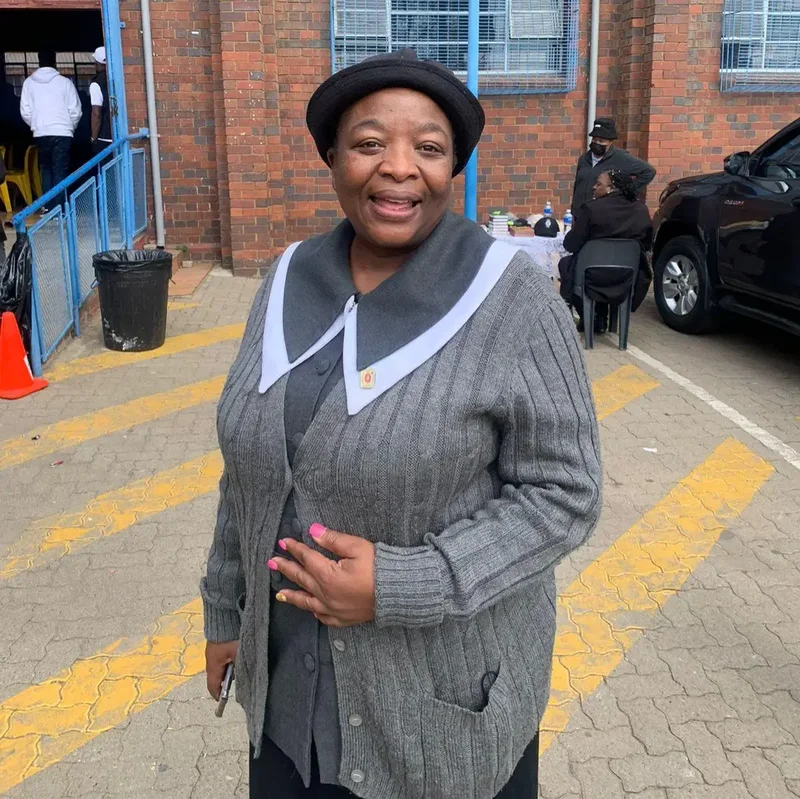
There are strong women and then there is Sissy Obisi Dlamini, whom we have always called Mamkhulu.
She taught me that resilience is rarely loud, triumphant or glamorous. It looks like waking up every morning and continuing to carry other people long after your own heart has been broken into pieces too small to count. It is believing that love is measured less by what you say than by how faithfully you show up. When I think of Mamkhulu, I do not first remember the woman who eventually found love again or the respected church leader who has become a source of comfort to many. I remember a hospital room.
The smell of disinfectant hung in the air as machines hummed steadily beside her bed. Her body had been ravaged by illness, her spirit exhausted by years of unimaginable loss. Quietly, almost matter-of-factly, she told us that perhaps the end needed to come because she was tired of hurting.
It is a memory that has never left me because it forced me, at a young age, to confront an uncomfortable truth: the people we call strong are often the ones who have spent years wondering whether they have anything left to give.
Yet Mamkhulu's story should not begin with tragedy.
Long before grief became the defining language of her life, she had become the person everyone depended on. As the middle child, she naturally grew into the emotional centre of the family. Responsibility came before freedom. When she started working, her salary immediately stopped belonging to her alone.
She never made a spectacle of generosity. She quietly solved problems, stretched what little she had and carried burdens without expecting applause. Looking back, I realise she was practising a form of leadership that many women inherit without ever asking for it.
Later, when her own mother became frail, Mamkhulu stepped into another role familiar to countless African women. She became daughter, nurse, advocate, companion and full-time caregiver. She rearranged her own life around someone else's needs because that was simply what love demanded.
It is work that often goes unseen because it happens inside homes instead of offices, in hospital wards instead of boardrooms. Yet it is the invisible labour that keeps families alive.
Then life began asking impossible things of her.
In 2008, two of her grandchildren died in a devastating house fire. It remains one of the losses our family struggles to speak about because some grief never settles into language. It becomes another empty chair at family gatherings, another birthday marked by absence instead of celebration.
Before the wound had begun to heal, another tragedy arrived.
In 2009, while in Maputo, her only son, Mthokozisi Benjamin Obisi, was shot and killed by armed robbers. No parent imagines surviving their child's death. Yet Mamkhulu was suddenly expected to.
I remember watching the woman I had known disappear behind an overwhelming sadness. She spoke. She moved through the routines of daily life. But there was an emptiness in her eyes that frightened me because it felt as though a part of her had died alongside her only son.
The shock rippled through the rest of the family. My grandmother, who was present when the attack happened, was traumatised. She had heard the gunshots, the voices of the attackers and the cries of her grandson, yet she could not tell anyone what had happened because she was unable to speak due to a stroke she had many years ago. All she could do was cry.
Mamkhulu herself became so overwhelmed by grief that she temporarily lost touch with reality. The family delayed her son's funeral, hoping enough of her memory would return for her to understand that her only child had died and to give him the farewell he deserved.
It remains one of the clearest reminders I know that grief never belongs to one person alone. It spreads through generations, reshaping everyone it touches.
By the time my grandmother died the next year, Mamkhulu had buried two grandchildren, her only son and her mother.
Life was not finished testing her. In 2011, while driving to visit one of her grandchildren, her car overheated. When she cautiously tried to open the bonnet, boiling water burst through the front grille and severely burnt her thighs.
What initially seemed like a terrible accident became the beginning of another long battle.
The burns refused to heal. Complications followed. Kidney disease emerged. Her platelet count dropped dangerously low. Most of 2012 was spent moving between hospital wards and brief weekends at home.
The hospital visits changed me. I remember hearing her whisper that perhaps death would be kinder than another day of pain. They were not dramatic words spoken for sympathy. They came from someone whose body, mind and spirit had reached their limit.
Our family responded in the only way we knew how.
When she came home for weekends, I cooked. At the time it felt insignificant but I now understand that healing is often built from ordinary acts repeated with extraordinary consistency: a warm meal, a hand held without conversation, a prayer before sunrise, the quiet promise that someone will be there tomorrow.
Even recovery was interrupted by loss. In 2013, the woman helping care for Mamkhulu died suddenly after completing household chores and resting on the family's couch. Once again, grief entered the home before healing had fully arrived.
Then, slowly, something changed. Not because the pain disappeared but because Mamkhulu began building a life around it instead of allowing it to define every part of her identity.
Church became her refuge. Faith was no longer about asking why suffering exists. Instead, it became a way of transforming pain into compassion. Before long, she was once again doing what had always come naturally: visiting the sick, praying with strangers, encouraging the discouraged and quietly becoming a safe place for people carrying burdens of their own.
Then came the most unexpected chapter of all.
On 11 July 2025, while attending the funeral of a relative, Mamkhulu unexpectedly met a man she had dated in the 1970s. They exchanged numbers and began talking again after decades apart. Four months later, they were married.
It felt almost impossible that after so much heartbreak, life could surprise her with joy.
As I prepared this Women's Day edition and thought about what a New Power List should celebrate, I kept returning to Mamkhulu because her story refuses to fit the way we usually measure power.
She has never led a multinational company or stood behind podiums collecting awards. She has never sought recognition for the lives she has quietly held together.
Yet she has spent decades performing the invisible labour without which families collapse, communities unravel and hope slowly disappears.
Her story is personal because she is my aunt.
But it is also profoundly South African.
Across this country are thousands of women like her whose names will never trend online and whose sacrifices will never be formally recognised.
They stretch salaries to feed entire households. They bury children while raising grandchildren. They nurse ageing parents through illness. They survive hardship that leaves permanent scars and somehow still find enough tenderness to comfort the next person who arrives at their door asking for help.
For years I believed Mamkhulu's greatest strength was that she never broke.
I know now that I was wrong. She broke many times. I saw it in the emptiness of her eyes after her son's death, in the despair of the hospital rooms and in the tears she could no longer hide.
What makes her extraordinary is not that she escaped suffering untouched. It is that she refused to let suffering become the final truth about her life. Again and again, she chose faith over bitterness, community over isolation and love over despair.
I remember hearing her whisper that perhaps death would be kinder than another day of pain
Perhaps that is the kind of power we have overlooked for far too long.
Not the power that demands attention but the power that quietly sustains generations.
If this Women's Day asks us to rethink who deserves to be celebrated, then I can think of no one more deserving than Sissy Obisi Dlamini, my Mamkhulu.
Her life reminds me that the strongest women are not those who never fall apart. They are the women who gather the broken pieces of themselves with trembling hands and somehow find enough room to carry everyone else.