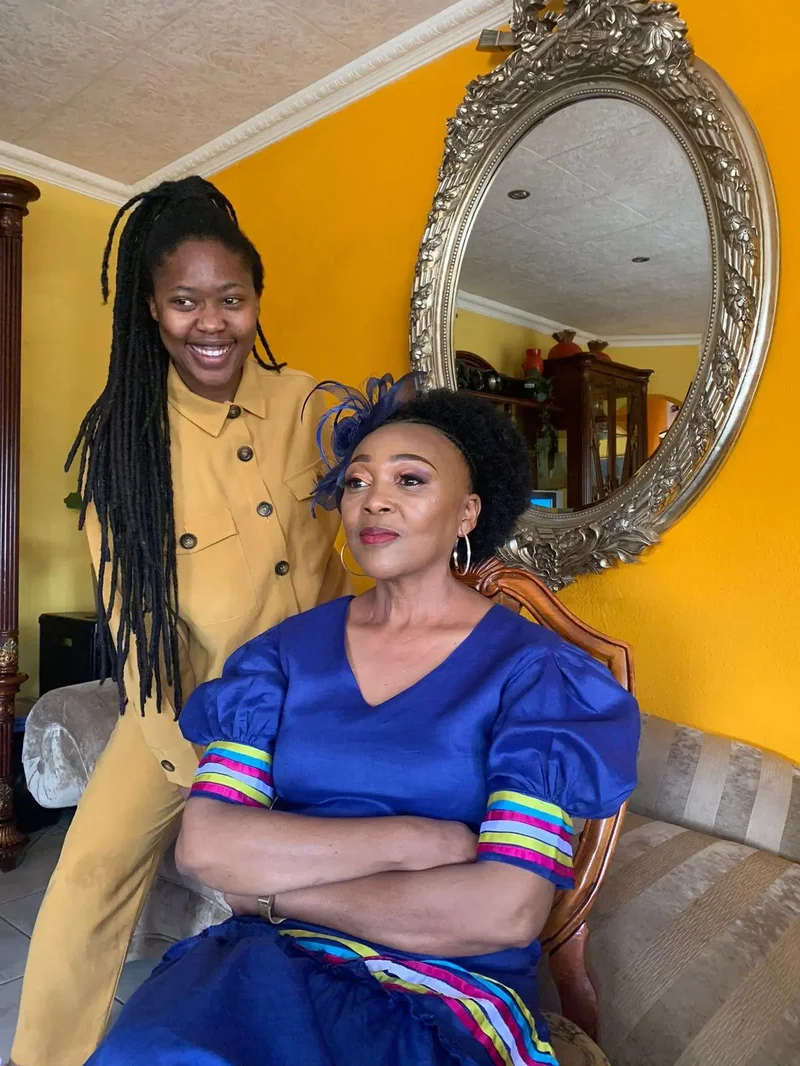
I grew up believing that some of the most remarkable women would never make the news. As a child, I was the quiet one. I preferred listening to speaking and watching rather than interrupting. In our home, children did not ask elders questions. We learnt by paying attention. Looking back, I realise those moments of observation shaped the journalist I would become and the way I understand women's lives.
Our house was always full. My parents loved hosting. Our small living room became a gathering place for family, friends and comrades. There was almost always music playing often Caiphus Semenya - while blue and green bottles lined the table and conversations stretched late into the night. I was never part of the conversations but I heard them all the same. It was there that I met women in their fullest complexity.
I listened as they spoke about exile and homecoming, motherhood and marriage, heartbreak and healing, careers interrupted and dreams deferred. They laughed loudly, challenged one another, mourned losses and celebrated victories that the outside world would never know about. They carried families, communities and movements, often at great personal cost, yet they rarely spoke about themselves as extraordinary. To them, it was simply life. My mother embodied that spirit. I often say I was raised by a soldier because that is exactly who she was. Exile had given her a fierce discipline and an unwavering sense of justice that never left her. Like so many women in my family, she was resilient, outspoken and deeply committed to those around her. It was through the women in my life that I first understood what it meant to endure, organise, nurture and lead.
The older I became, the more I realised the women shared something else. They were rarely recognised.
History has a way of celebrating women only when they become impossible to ignore. Journalism, too, can sometimes gravitate towards the loudest voices, the biggest personalities and the most visible successes. Yet the women who have held the country together have not always stood behind podiums or appeared on television screens. Many have built lives of extraordinary service in homes, hospitals, schools, community halls, laboratories, boardrooms and organisations, asking for little more than the opportunity to keep doing the work.
They are often the first to arrive and the last to leave.
They solve problems before anyone notices they exist. They mentor, advocate relentlessly and carry responsibilities that are seldom reflected in job titles. They make impossible decisions for their families and communities every day, often without recognition or applause.
Their stories matter.
Not because they are exceptional in the way we have come to define success but because they remind us that power is not always visible. Sometimes it is found in consistency. Sometimes it lives in sacrifice. Sometimes it looks like showing up, day after day, for people who depend on you.
That belief became the foundation of The New Power List.
This Women's Day edition is not a celebration of fame. It is a celebration of impact. It is an opportunity to honour women whose contributions extend far beyond headlines and whose influence can be measured in healthier communities, stronger institutions, better policies, thriving businesses and generations of people whose lives are better because the women chose to lead.
Across these pages, you will meet doctors, campaigners, communicators, entrepreneurs, scientists and community builders. Some names will be familiar. Others will be new. What connects them is not status but purpose. They have dedicated themselves to changing the lives of others, often without expecting recognition in return.
In many ways, this edition is also for the women who never expected their stories to be told.
The women who gathered around my childhood living room table. The women who believed their lives were too ordinary to be documented. The women whose wisdom was shared in conversation rather than on conference stages, whose resilience was woven into everyday life rather than celebrated with awards.
They taught me that leadership does not always look the way we expect it to. It is not always loud. It is not always public. More often, it is deeply personal. It is choosing to carry others when no one is watching.
As journalists, we often say our job is to tell stories that matter. This edition asks a different question: Whose stories have we overlooked?
The New Power List is our answer. It is a tribute to the women whose work rarely makes front pages but whose contributions shape our country every day. Women whose power is not defined by visibility but by the lives they touch.
This edition is for them.