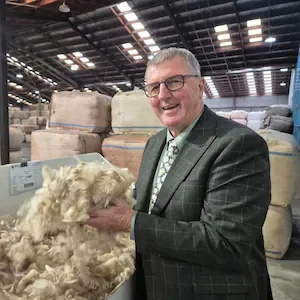
A long-awaited recovery in New Zealand wool prices is easing as buyers become reluctant to spend top dollar on the clip this new season.
However, a North Island auctioneer believes the mid-winter market might have hit its floor, after a strong
A long-awaited recovery in New Zealand wool prices is easing as buyers become reluctant to spend top dollar on the clip this new season.
However, a North Island auctioneer believes the mid-winter market might have hit its floor, after a strong lead-up.
Buoyant prices, including premium clips even cracking the $7-a-kilogram mark, have been enjoyed by wool growers this year.
But subdued demand from buyers had calmed prices across most wool types at the last few wool auctions.
Last month’s auction at Hawke’s Bay’s last remaining wool auction house, Kells Wool in Napier, was a “tough day” because of buyer interest and fewer orders affecting prices, the firm said.
But owner Richard Kells said prices firmed at this week’s auction on Tuesday, with long wool types attracting the greatest competition.
The average greasy price hit 375 cents versus 488c clean, with the average price per bale reaching $562.87.
This compared to the same time last year when the average greasy price was 285c, 342c clean, with the average bale nabbing $417.72, Kells said.
“We had a big turnout, a full bench of buyers and the bidding was brisk, so they all wanted some wool,” he said.
“That’s what gives us confidence that we’ve seen the worst of this correction.”
Kells said there was some reluctance from Chinese buyers in particular to pay top dollar again, but he expected the bottom had been hit.
“We’ve gone through a very sharp peak, but we’re still ahead of last year,” he said.
“The prices at our auction equalled the national sale in Christchurch.
“In fact, the fleece and the occupents were slightly firmer.
“So we think the bottom of the slide has been reached and we can look forward to some improvement in the coming months.”
Prices for second shear, crossbred fleeces and oddments were particularly hit at PGG Wrightson’s last national auction in Christchurch last week.
Here, 95c fell off the strong wool indicator and only 69% of the offering sold.
Its national auction manager, Dave Burridge, said although the market had eased considerably, the fundamentals of reduced wool supply into the next few months remained unchanged.
“Exporters have struggled to secure new sales following the elevated buying levels seen at the end of the season in June, while many overseas buyers are waiting for prices to stabilise before re-entering the market,” he said in PGG’s latest wool market report.
Kells said this week’s wool supply was “more of a dribble” than a flow, disrupted by cold and wet weather and time of year on farm.
He said ewe wool was effectively finished, and with lambing beginning for some, it was now down to trading lambs for the next couple of months.
Meanwhile, PGG said it was expecting tighter supplies to support the market, though it forecast price volatility to continue.
Its next auction will be held in Ōtautahi on August 13, with the Napier auction scheduled for August 28.