South Africans have become so accustomed to alcohol being part of everyday life that many hardly notice it anymore.
It is there at children's birthday parties, family braais, weddings and funerals. It is celebrated in glossy advertisements during prime-time sport and sold on almost every corner in many townships. It has become so deeply woven into the country's social fabric that questioning it can feel almost radical.
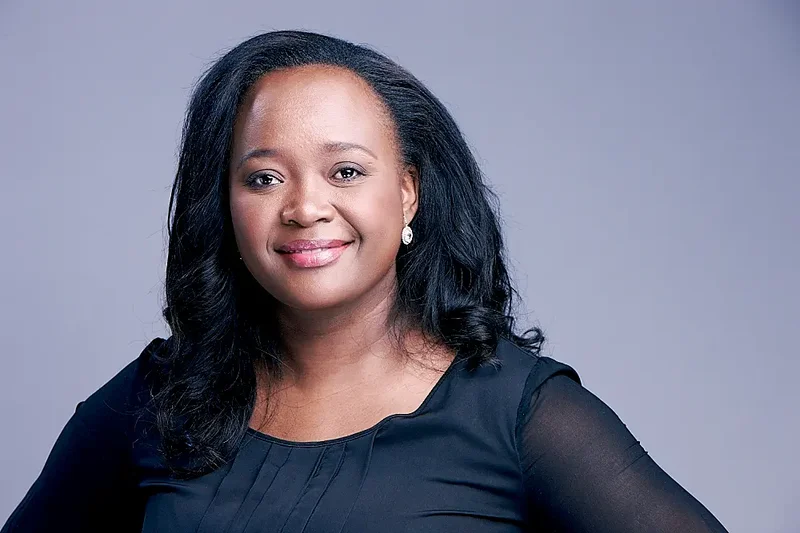
Nomcebo Dlamini has made that question her life's work.
As campaign director of the Southern African Alcohol Policy Alliance in South Africa (Saapa SA), she has dedicated her career to asking difficult questions about the role alcohol plays in South African society. It is work that takes her into communities where families are grappling with violence, child neglect and addiction but it is also work that begins with listening.
"I've been in public health advocacy for about 10 years," she says. "Working with young people, I came to realise that we have a serious problem in our country when it comes to substance use. I never like complaining about a problem and doing absolutely nothing about it. Even if you can't solve everything, at least try to do the bit that you can."
The words have shaped her career. With experience in project management and youth development, Dlamini did not set out to become one of South Africa's leading alcohol policy advocates. Instead, curiosity led her there. As she searched for answers, she discovered the Central Drug Authority and South Africa's National Drug Master Plan. Wondering why so few people seemed to know about either, she applied to serve on the authority in 2021.
It was there that she noticed something she has never stopped talking about.
"There was a lot of focus on illicit substances," she says. "But hardly any focus on alcohol because it is a legal substance. It's almost ignored as a drug. But alcohol is a drug. Just because it's legal doesn't mean it's not causing harm."
The observation became the foundation of her work.
Travelling through communities across South Africa, Dlamini has found that people understand the crisis. They do not need convincing that alcohol is harming families. They live with its consequences every day.
"Over 70% of the South Africans we've spoken to realise there's a problem," she says. "One of the biggest challenges is that we binge-drink. Our beer is cheap sometimes cheaper than a loaf of bread. Families are making choices between buying bread and buying beer. Communities are asking us the same questions: Why is it so cheap? Why is there so much advertising? Why is it everywhere?"
The conversations have revealed patterns that are impossible for her to ignore.
Women speak about gender-based violence. Grandparents speak about children being left alone while parents go drinking. Community leaders speak about neighbourhoods where taverns outnumber parks and sports facilities.
For Dlamini, the stories are not isolated incidents.
"They're linked," she says. "When you talk to women who are dealing with gender-based violence, in almost every instance alcohol has enabled it to happen. Either the perpetrator was intoxicated, the victim was intoxicated or both were".
"We've just completed a study looking at the relationship between liquor outlets and gender-based violence and they mirror each other. Where there are more liquor establishments, the incidents of GBV are significantly higher."
She pauses before adding another reality that stays with her.
"Communities are crying out about child neglect. Small children are being left alone because parents are out drinking. Older siblings are raising younger siblings while adults are at taverns. Those are the realities communities are sharing with us."
Among all the meetings she has attended, one memory remains impossible to forget.
When you talk to women who are dealing with gender-based violence, in almost every instance alcohol has enabled it to happen
During a community dialogue in the Eastern Cape, a 14-year-old girl stood up and challenged the adults in the room.
The young girl asked: "Why is this allowed to continue? We keep telling you that this is traumatising us", Dlamini recalls.
For Dlamini, advocacy has never been about statistics alone.
It is personal.
She grew up surrounded by alcohol and watched addiction steal opportunities from people she loved.
"I grew up with alcohol all around me," she says quietly. "I saw firsthand as a child just how destructive it was. Even today, I have family members who have simply drunk their lives away."
Her family's experiences did not end there. She also lost relatives to drug abuse, experiences that cemented her determination to work in public health.
"That's why this work is so personal," she says. "When people ask why I care so much, it's because I've seen the damage. I've buried people. I've watched family members lose their lives to addiction. It's not something I read about in a report."
Yet amid the painful memories stands another lasting influence: her mother.
Again and again during the conversation, Dlamini returns to her.
"I was lucky enough to have a mother who saw the dangers and decided to protect us," she says. "She made sure we weren't always in those environments. I always say: 'May God bless her soul because she protected us.' And now I ask myself: 'What are we doing as women today? Are we protecting our children or are we joining in?'
We're the ones buying the champagne. We're the ones making alcohol part of children's celebrations. Why are we normalising a drug?"
It is a question she believes South Africa has avoided for far too long. "We're not saying people shouldn't drink," she says.
"That has never been our message. What we're saying is: let's look at this thing for what it is. Communities themselves are telling us that alcohol is destroying families. They're asking why it's so cheap, why it's advertised everywhere and why it has become so normal. They already know there's a problem."
For Dlamini, leadership begins with having the courage to ask the uncomfortable questions.
"It means not being afraid to speak out," she says.
"That's something my mother taught me. She always wanted to hear what I thought, even if it wasn't what everyone else wanted to hear. If you see there's a problem, speak out. The women of 1956 spoke out when it wasn't popular. As women today, we also need to speak out."
Advocating for policy reform can be frustrating. Progress is slow and powerful industries do not easily surrender influence.
"There are many moments when you feel like giving up," she admits. "You work so hard and then nothing changes. You feel like you've been punched in the stomach. But then I ask myself: 'If I give up, what happens?"
The industry isn't going to stop making profits on its own. So you feel sorry for yourself for two minutes, then you get back on the horse because change has to come."
As South Africa celebrates Women's Day, Dlamini hopes the next generation of women will redefine what leadership looks like.
"I hope young women take their position again," she says.
"I hope they stop seeing certain things as glamorous and start seeing them for what they are. When I think about our mothers and grandmothers, they weren't excited by parties. They were excited by women making a difference. I want young women to become leaders who give other young women hope. That's the legacy I want to leave."
Like the women who marched before her, Dlamini understands that change rarely begins with applause. More often, it begins with one person willing to ask a question others have stopped asking.
Every day, in community halls and policy meetings across South Africa, she continues to ask it.