House supply tipped to increase as WA market slows
Save
You have reached your maximum number of saved items.
Remove items from your saved list to add more.
AAA
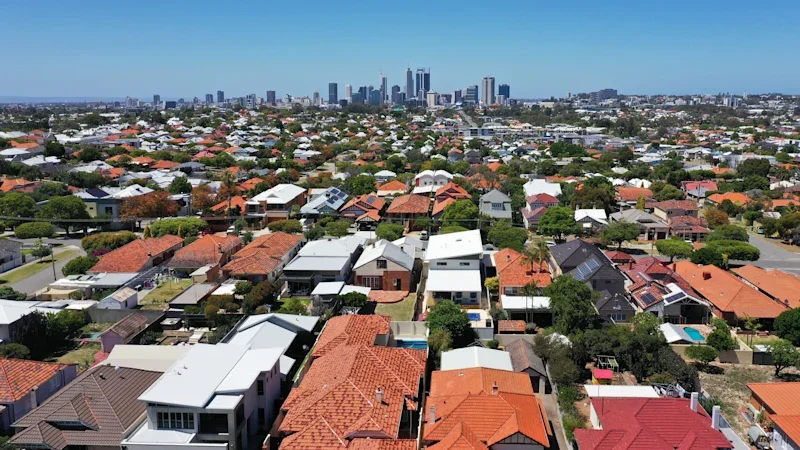
Perth’s galloping property prices are being brought to heel after almost four years of constant gains, with new data revealing modest growth in median house prices for the June quarter.
The WA capital extended its run to 15 consecutive quarters of growth to reach a median house price of $1.18 million, according to Domain’s latest House Price Report.
However, house prices grew at just 1 per cent for the quarter – the weakest pace in more than a year.
Domain’s chief of research and economics, Dr Nicola Powell, said the report signalled a “turning tide” in buying conditions across Perth.
While Perth’s market remains the strongest among Australia’s capital cities, Powell said the report suggested it had moved past its “peak rate of price growth”.
“We did see unit prices fall, but I really think that this signals that those years of strong rates of price growth are now a thing of the past,” she said.
Median unit prices declined by 1.3 per cent in the June quarter, bringing an end to a three-year run of growth tied to rapidly rising house prices as first-home buyers looked for other footholds to get onto the property ladder.
Haiven Property South director Peter Zambotti said the number of people visiting home openings in Applecross – one of the suburbs where median house prices fell – dropped “drastically” in the last quarter.
“They’ve gone from 20 to five or six. That’s a big change in terms of numbers, and we’re not getting multiple offers any more. We’re getting single offers and sometimes subject sale, which is a big, big change,” Zambotti said.
“Some things in Applecross are selling, and they’ve actually gone up, which is your quarter-acre blocks, but a lot of the rest of it has gone down.
“Apartments have come down considerably. We’ve been selling apartments less than they paid a year ago.”
Zambotti said people are less inclined to buy fast with more options available.
“They are being more pragmatic. They are being more decisive on exactly what they want. Before, Applecross was going up so much that people would buy just to be in the market so that they didn’t miss the run. Now they’re buying only if it’s right, because the market’s not going up,” he said.
Zambotti expects a lot more listings to pop up on the market.
“So I think there’s going to be a lot of stock in spring, which will take the supply and demand. We’re at 6500 listings, our modelling suggests we might be at 10,000 listings by Christmas,” he said.
Powell said unit prices fell across every capital except Darwin in the June quarter, and believed it could be tied to a shift in investor sentiment brought about by Labor’s changes to negative gearing and investment taxes.
She added that supply is up in Perth, with the strongest annual uplift in listings since 2011.
“When you look at overall supply in the market, it’s 31 per cent higher compared to this time last year,” Powell said.
“New listings have risen, total supply is rising at a faster rate than new listings, and so it shows as well that dynamic indicates that absorption rates are slowing down.
“So ultimately, I think buyer demand is now starting to ease, and this is all helping to play out to kind of slow down Perth’s pretty much unstoppable housing market.”
Powell said the biggest price declines would be seen in cities like Sydney and Melbourne, but Perth could see much slower conditions in 2026.
She said a catalyst such as an interest rate reduction was needed to change market conditions.
“But that is not going to happen any time soon,” she said.
“Perth has seen such a marked change in affordability and price point that I think all of these things are colliding together to really change the outlook and the movement in price,” she said.
Save
You have reached your maximum number of saved items.
Remove items from your saved list to add more.