Your support helps us to tell the story
From reproductive rights to climate change to Big Tech, The Independent is on the ground when the story is developing. Whether it's investigating the financials of Elon Musk's pro-Trump PAC or producing our latest documentary, 'The A Word', which shines a light on the American women fighting for reproductive rights, we know how important it is to parse out the facts from the messaging.
At such a critical moment in US history, we need reporters on the ground. Your donation allows us to keep sending journalists to speak to both sides of the story.
The Independent is trusted by Americans across the entire political spectrum. And unlike many other quality news outlets, we choose not to lock Americans out of our reporting and analysis with paywalls. We believe quality journalism should be available to everyone, paid for by those who can afford it.
Your support makes all the difference.
Read more
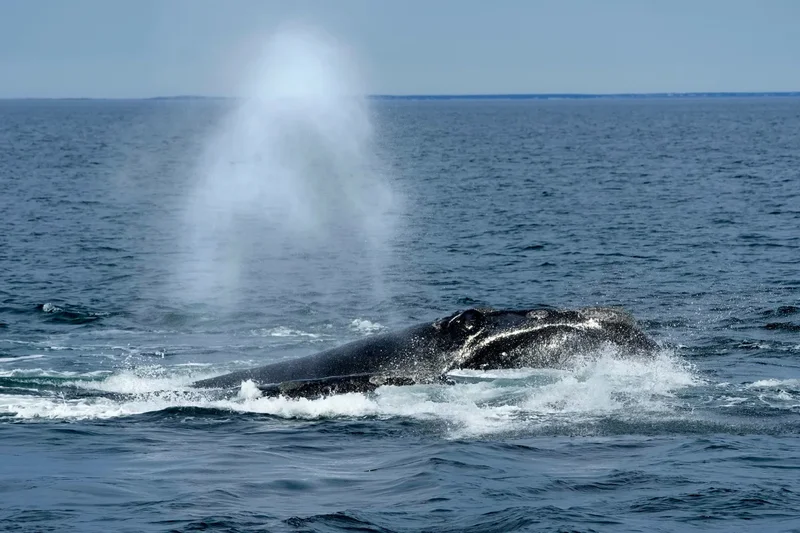
New protections for endangered right whales in the North Atlantic would be postponed for nearly a decade under a plan that cleared a key hurdle in Washington last week with the full-throated support of the fishing and lobster industries.
Environmentalists say this could spell the end for the vanishing whales, which can drown after getting tangled up in fishing gear or being struck by boats. There are only about 380 North Atlantic right whales left.
The federal government has already paused any new right whale rules until 2028, and the House Natural Resources Committee voted on July 15 to extend that moratorium to 2035. A vote by the Republican-controlled Congress could happen as soon as this summer, and is almost certain to pass.
President Donald Trump 's administration has thrown its support behind U.S. Rep. Jared Golden, a Democrat from Maine, in his efforts to further delay new regulations aimed at protecting right whales. Golden introduced the bill along with Republican Rep. Mike Lawler of New York.
Much of the pushback against further regulations has come from the lobster and crab industries in New England states like Maine and Massachusetts. Those fishing industries say they already follow some of the most comprehensive conservation measures in the world, and have made a case that adding more rules might drive them out of business.
The pause on new rules, Golden said, is also intended to allow more time to gather data about how best to protect whales.
“Mainers are not asking for much. We just need more time,” he said.
The moratorium has been in place since 2022. Environmental groups warn that amid the delays and further studies, right whales keep dying from run-ins with commercial fishing gear.
The whale population shrank by about 25% from 2010 to 2020. Although they rebounded slightly in recent years, their numbers remain well below 2010, when there were about 480.
“They needed more protections in 2022 when Congress ignored a mountain of evidence and decided that insufficient efforts were enough,” Gib Brogan, senior campaign director with conservation group Oceana, said. “Now, once again, lawmakers are trying to pass the buck.”
The fishing industry has countered that the current rules are sufficient — and say those rules won't change if the moratorium is extended.
“The current conservation framework remains fully in place, and this legislation does not weaken protections for the North Atlantic right whale,” Beth Casoni, executive director of the Massachusetts Lobstermen’s Association, said.
Right whales were once common off the East Coast, but they were hunted to near extinction during the commercial whaling era. Aside from entanglement or ship strikes, scientists say the whales are also imperiled by the warming of the ocean due to human-caused climate change.