This post is part of Global Voices’ July 2026 Spotlight series, “Statelessness.” This series offers insight into the issue of statelessness and how it hinders people’s freedom of movement, educational opportunities, political access, and more. You can support this coverage by donating here.
While trying to define nationhood, people often rely on simplistic descriptions and groupings — the lines drawn on a map, demarcations outlined by treaties and agreements, common identities and ideologies within a specific space — but for many people groups, the concept of nationhood can fall outside these traditional borders. This is the case for many in post-Soviet spaces, for example, Ukraine’s Roma community, whose members are now fighting Russia and dying for a country that, for generations, treated them as outsiders. It is also true for Tatars, whose homeland largely exists within a cultural space rather than a physical one.
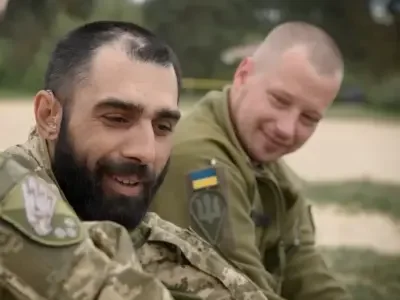
Since Russia’s full-scale invasion in February 2022, hundreds of Roma have joined the Armed Forces of in the fight against Russia. Yet despite this service, Roma Ukrainian refugees continue facing discrimination within Ukraine and beyond in Europe.
Further east, within Russia, Tatars, the country’s second-largest ethnic group, continue to grapple with a different question: What does homeland mean for a people scattered across continents, with no single territory uniting them? Tatarstan, a republic of the Russian Federation, remains a cultural anchor, but for many Tatars, belonging is carried through community and culture rather than a location on a map. That dispersion, together with a traumatic, fraught history, shapes how Tatars today navigate conversations about sovereignty, separatism, and self-determination.
The Ukrainian Roma fighting Russia, yet still not accepted
Since the second Russian large-scale invasion of Ukraine began in February 2022, there have been few stories of Ukraine’s Roma population fighting for Ukraine, even as many took to the front lines.
Already in 2022, Roma journalist Viktor Chovka reported that Roma soldiers were fighting within the Ukrainian Army because they were born in Ukraine and considered it their home.
On his Facebook profile, Horvat often shares photographs of Romani soldiers in the Ukrainian Army. His main photo also features the Ukrainian flag, highlighting the dual identities that many Ukrainian Roma carry.
According to Horvat, approximately 250 Roma from Zakarpattia joined Ukraine’s defense forces in 2022. By August 2024, he estimated that more than 500 were serving. Ukrainian flags have become increasingly visible in Roma settlements, alongside greater use of the Ukrainian language and Ukrainian songs.
In an article from 2024 by the Ukrainian media outlet Varosh, Horvat said Roma people historically lived as minorities under various states and empires and rarely occupied secure social positions. Their experience of persecution during the Second World War also contributed to a historical distance from military institutions. Today, however, many equate defending Ukraine to defending their own families and future.
Horvat also mentions educational inequality: He estimates that around 40 percent of Roma in Zakarpattia, Ukraine, lack a basic secondary education, although the situation has improved in recent years. Some Roma have never obtained Ukrainian passports, which can prevent them from being formally mobilized. Regional recruitment officials say low literacy does not necessarily prevent military service, but it can create practical difficulties.
Anti-Discrimination Center “Memorial” organized a meeting in 2025 in Brussels with Roma veterans who voluntarily joined the Armed Forces of Ukraine, where Roma veterans described both discrimination and solidarity within the Ukrainian armed forces.
Roma Arsen Mednyk joined the military after Russian forces occupied his hometown, Bucha, and massacred civilians there. Initially treated with suspicion because he was Roma, he earned the trust of other soldiers and later became a storm-unit commander. His story was presented in a documentary about Roma soldiers and the war.
Marginalization and discrimination of Roma refugees
Before February 2022, Ukraine’s Roma population already faced severe barriers to citizenship, housing, education, healthcare, and employment.
Of an estimated 400,000 Roma living in the country, around 30,000 reportedly lacked official identity documents, leaving them functionally stateless. Roma women sometimes gave birth at home because of discrimination or unaffordable medical costs, leaving children without birth certificates and forcing families to live at the margins of society.
After the Russian invasion, discrimination followed Roma families to Ukraine’s borders. Human rights organizations received reports of unequal treatment, including a case of a mother and two children who were repeatedly prevented from crossing into Hungary.
In European reception centers, Roma refugees were sometimes segregated from other Ukrainians. In Moldova, families were placed in facilities without adequate heating or hot water. In the Czech Republic, the Guardian reported in 2022, Roma slept in poor conditions at Prague’s railway station and were accused of pretending to be Ukrainian to obtain assistance. Volunteers also reported that some hosts in Moldova and Poland were willing to accommodate only white refugees, while the Roma are widely considered people of color.
For some families, the hostility was so intense that they chose to return to war-torn Ukraine rather than remain in discriminatory conditions.
For Tatars, homeland is more than a place on the map
While the war has pushed many Ukrainian Roma to defend a land they consider theirs, for Tatars, however, the relationship between identity and territory has never been so simple.
Tatars are the second-largest ethnic nation in the Russian Federation, yet there is no single place that all Tatars call home. The Republic of Tatarstan, a territory within Russia, is often described as the homeland of the Tatars, but ethnic Tatars make up only around half of the republic’s population, sharing it with Russians, Bashkirs, Chuvash, Armenians and many others.
Beyond Tatarstan, millions of Tatars live across Russia, in neighboring republics, oblasts, krais and major cities, as well as throughout the post-Soviet space and in diasporas across Europe, Türkiye, North America and beyond. Some communities were formed through centuries of imperial expansion, forced resettlement and Soviet policies, while others emerged through education, work or personal choice. As a result, Tatar identity has long existed across borders rather than within them.
This dispersion has shaped how many Tatars understand belonging. Tatarstan remains the historical and cultural center of the nation, home to institutions that preserve the language, literature, and traditions. But for many Tatars, “homeland” is just as likely to be found around a family table, through the Tatar language, music, Sabantuy celebrations or even the ritual of sharing tea as it is on a map. The culture has become the thread connecting communities separated by geography, politics and generations. For a people spread across continents, identity is often carried rather than inherited from a single place.
This also explains why conversations about the future of Tatarstan often sound different inside Tatar communities than they do abroad. Previous attempts to link Tatar national aspirations to geopolitical projects, including the German-sponsored Idel-Ural Legion during World War II and the collaboration of some Crimean Tatar groups with Nazi occupation authorities, were followed by devastating consequences, most notably the collective deportation of the Crimean Tatars in 1944.
These episodes continue to influence how many Tatars perceive questions of sovereignty and separatism. Some commentators, including contributors regularly featured by Radio Free Europe/Radio Liberty (RFE/RL), the Idel-Ural project, and affiliated platforms, have argued that Russia’s republics should become independent states if the Russian Federation were ever to disintegrate.
Yet such discussions do not necessarily reflect the views of many Tatars themselves.
With Tatars living across the Russian Federation and far beyond its borders, and with Tatarstan located in the geographical heart of European Russia rather than on its periphery, the republic holds a significance that is primarily historical, cultural, and symbolic. For many Tatars, as for other minorities in Russia, preserving language, culture and community remains a more immediate concern than redrawing political borders.