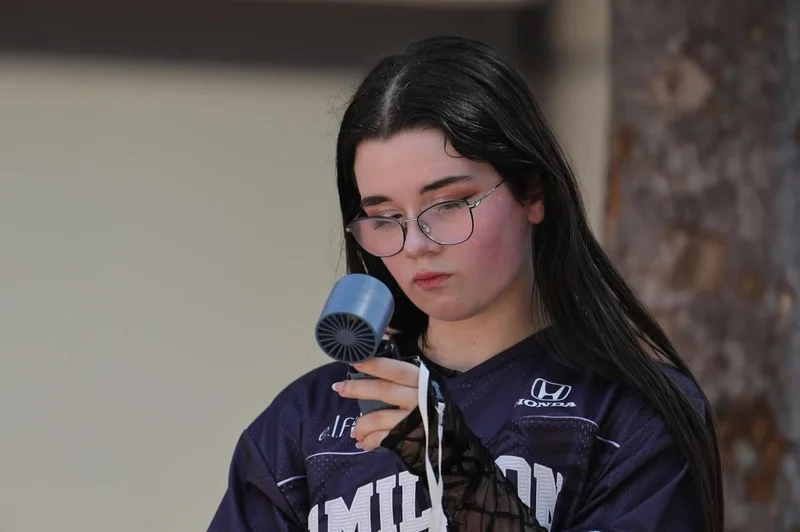
The prolonged record heat wave that has pushed temperatures across much of the country close to 40 degrees Celsius could worsen next year and persist as the new normal for upcoming summers, an expert said.
"Next summer could be even hotter, and we need to be prepared for it," Kim Baek-min, a professor of environmental atmospheric sciences at Pukyong National University, said while appearing on CBS news radio program "Park Sung-tae's News Show."
He attributed the record heat that has swept across the world to a super El Niño — an unusually intense occurrence of El Niño, a phenomenon in which sea surface temperatures rise above normal levels.
“It is the most unusual meteorological event this year,” Kim said. “Considering that global temperatures tend to rise in steps after an El Niño, temperatures are likely to increase even more steeply next year.”
On a broader level, the biggest contributor to the heat wave is persistently warm ocean water, according to Kim. He explained that oceans, which have helped buffer the global warming caused by carbon dioxide emissions since industrialization, are reaching a breaking point.
“Ocean water gets colder with depth. But as the ocean warms, surface temperatures rise, making it harder for the warmer surface water to mix with the colder water below. As a result, the ocean surface heats up more quickly and easily.”
But global warming alone is insufficient to explain the extreme heat, Kim said, suggesting that clearer skies resulting from efforts to tackle climate change may also be contributing to the heat wave.
“By replacing fossil fuels with renewable energy, we have made the skies clearer. Ironically, that allows more sunlight to reach and heat the oceans,” he said.
Once heated, seawater does not cool easily. Kim forecast that heat waves like this one will therefore be an unavoidable weather pattern until 2040 or 2050, regardless of what humanity does now. This means Korea could experience another record heat wave similar to this year’s as early as next summer.
He predicted that the heat wave could peak in mid- or late August, noting the time lag between the ground absorbing heat and that heat driving air temperatures higher.
“The heat wave arrived late in the Seoul metropolitan area, as it took time to move northward from the southern part of the country, but the hottest period still lies ahead,” he said.
This article from the Hankook Ilbo, the sister publication of The Korea Times, is translated by a generative AI system and edited by The Korea Times.