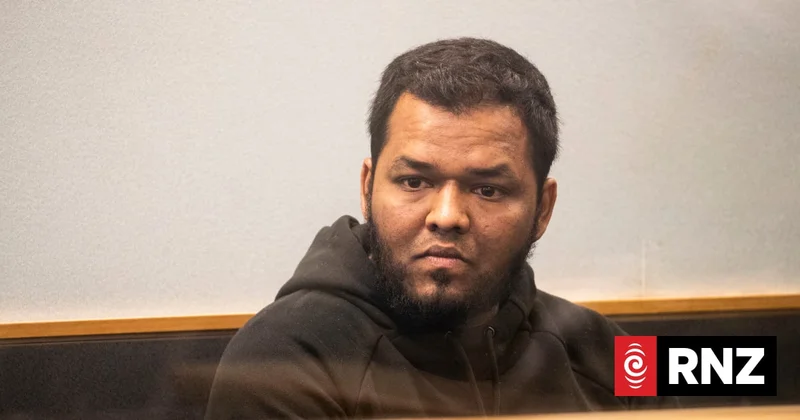
Ahamed Samsudeen called himself a terrorist and threatened guards while he spent time inside New Zealand's maximum security prison, a coroner has heard.
The inquest at the Auckland District Court has been told there was no programme to deradicalise Samsudeen while they had him in prison.
Shortly after his 2021 release, Samsudeen stabbed six shoppers at a West Auckland supermarket, before being shot dead by police.
Samsudeen was first arrested in 2017, charged with sharing violent ISIS videos, as well as possessing an offensive weapon, failing to assist police with a search, and using documents for financial gain.
He was bailed a year later, before being arrested again on a similar set of charges. It was during this time in prison where he was moved to the extreme risk unit inside Auckland's maximum security prison at Paremoremo.
Jeanette Burns, the commissioner for the extreme risk prisoners directorate, told the coroner about the behaviour that saw Samsudeen held in the unit.
"He was showing a pattern of escalating violence, escalating threats to staff, was claiming himself to be a terrorist and that he would come after staff if they didn't do what he wanted them to do," she said.
She was asked by stand-by counsel representing the interests of Samsudeen's family, Fletcher Pilditch KC, about the programmes for de-radicalisation available while Samsudeen was in custody.
"Was consideration given at the time of his management plan towards trying to find either a programme or some sort of tailored intervention to address the causes of why he was in remand in the first place?" Pilditch asked.
"In other words, his extremist beliefs, his ideologies, his threats of carrying out or acting out on the basis of his ideological beliefs."
Burns said there was no programme or treatment available at the time.
"Subsequently, our psychological services have been looking at different programmes," she said.
Dr Clarke Jones was the terrorism expert who designed a disengagement programme for Samsudeen in 2018.
His assessment of the future LynnMall attacker was scrutinised by Corrections counsel Lilla Dittrich, who asked if it had been limited by the secondary sources he was using.
"I think I would stand by my decisions of other action, or preventative action, could've been taken to address whatever level of mental health, problems with his mental should have been addressed earlier," he said.
Dr Jones said he stood by his opinion that Samsudeen's treatment while in custody contributed to his radicalisation, as opposed to rehabilitating him.
That was despite confirming he had never met the prisoner and was not involved with Samsudeen after 2018.
"Under the circumstances, I think I can make that statement because I know what the end result was," Jones said.
"Whether the treatment was effective and whether he was offered some sort of pre-release/post-release reintegration programme, then I would argue that the time in custody contributed to the outcome."
The inquest continues today.