With temperatures in Rome reaching peaks of 40C during the summer months, many residents and tourists using the subway to get around the city are struggling with the extreme heat on the trains.
Metro C, Rome’s newest line with driverless automatic trains, has been at the centre of complaints from passengers over extremely hot cars and possible problems with the air conditioning.
READ ALSO: The rail travel disruption to expect in Italy this summer
Codacons, a consumer protection group, reported the complaints to Rome's public transport provider in July, saying frequent air conditioning malfunctioning “appears likely to affect the health and safety of users,” as reported by RomaToday.
The Metro C trains are fully enclosed with no windows that can be opened, and without air circulation, can become very hot in the summer.
But Atac responded to say that there isn’t much it can do.
The company said the problem was not caused by an air conditioning breakdown, but that the trains were designed to maintain no more than an 8C difference from the outdoor temperature to avoid large temperature swings.
While this might work well when the outside temperature is around 30C, with temperatures in Rome approaching 40C during the current heatwave, the situation becomes more critical.
Even with functioning air conditioning, Metro C train carriages can reach temperatures of around 32C.
Atac pointed out that the effectiveness of air conditioning is further reduced by extended opening of the train doors, the outdoor sections of the route exposed to the sun, and the increased number of passengers following the opening of the new central stations of Colosseum and Porta Metronia.
READ ALSO: 'Gelato for lunch': Italy's official advice for keeping cool in summer
Rome's municipal council also highlighted that, since its opening in 2014, the C line has had only 13 trains, and with the frequent maintenance required, only nine to 10 trains are typically in service on a given day, which means a train passes every eight minutes on average.
Atac said the air conditioning on the trains is functioning as normal, with 33 malfunctions resolved since the beginning of June.
However, passengers will have to wait years before any possible improvement. New trains are expected to arrive in the capital in 2027, and it could take at least another year before they enter service.
What about other transport services?
Metro A appears to be the subway line in the best shape when it comes to air conditioning, while Metro B passengers have reported that some older trains don’t have air conditioning at all.
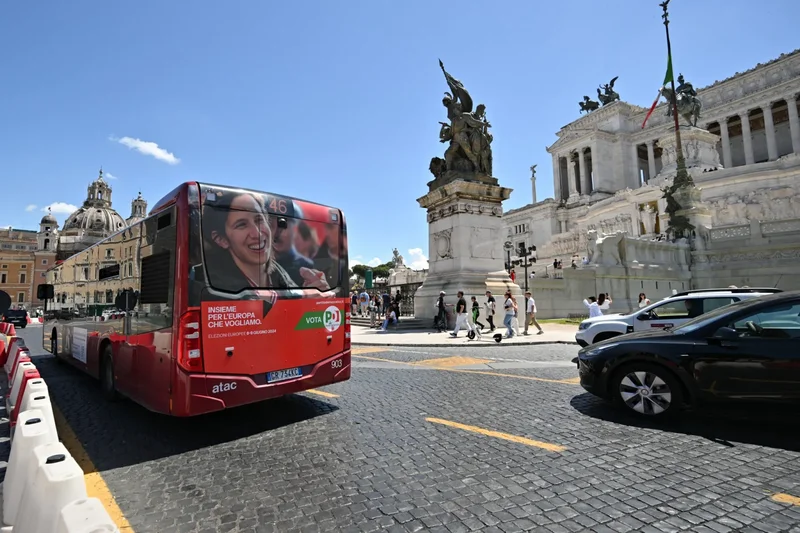
Many buses have air conditioning, but several cases of malfunctions have been recorded this summer. Passengers have reported temperatures of 30-35C or higher on some buses and cases of heat sickness. Most of the reported air conditioning problems have involved older buses that entered service between 2019 and 2022.
But even electric buses have faced their own challenges. Rome has received about €292 million from the European Union to buy 411 new electric buses, and 250 are already operational in the capital, according to RomaToday.
But in the extreme heat, air conditioning drains the bus’s battery faster, forcing drivers to return to the depot more frequently to recharge their buses.
Atac said it is rotating buses to guarantee continued service and limit the impact on the electric grid, and the company is also in touch with the bus provider to find a solution to optimize battery performance.
“The origin of the problem is not a faulty bus, but a threshold designed for a climate that is no longer the same as it was before,” Rome transport councillor Eugenio Patanè said.
He explained that temperatures inside the buses are automatically regulated to 7C below the outside temperature – similarly to Metro C.
The city is working to optimise the air conditioning, Patanè added, so that it can be set to 10-12C below the outside temperature during days of extreme heat.