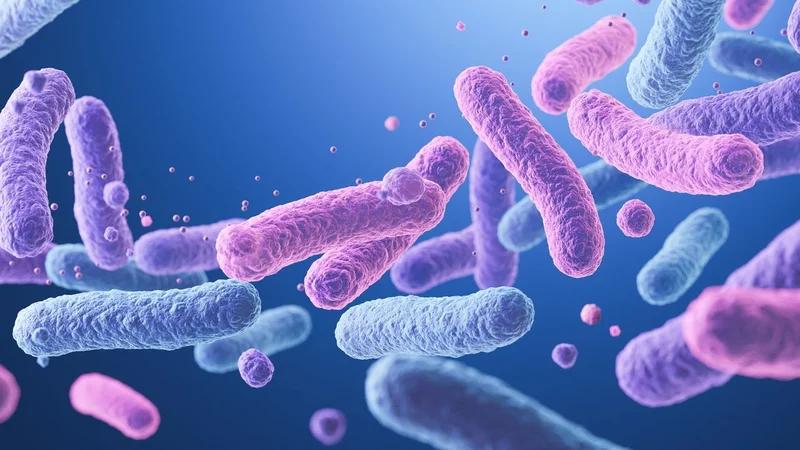
Bolstering a type of bacteria that lives in the uterus may help counter age-related changes that can make it harder to get pregnant, a new study suggests.
While fertility decline is often linked to changes in egg number or quality, the uterus also becomes less receptive to an implanting embryo with age. The new research suggests that changes in the bacteria living there may be part of the reason.
In experiments, treating aged mice and lab-grown human uterine cells with a specific species of Lactobacillus, a group of bacteria often found in the uterus, reduced signs of aging in the uterine lining and improved embryo implantation. This improvement was also seen with a specific byproduct of Lactobacillus.
The findings, published Thursday (Aug. 6) in the journal Cell Host & Microbe, suggest that the uterine microbiome could be a promising target for treating age-related infertility. However, experts who were not involved in the study cautioned that the research is still preliminary.
"This is an interesting and promising approach, but we still don't know whether these findings will translate into meaningful improvements in human fertility," said Dr. Alex Robles, a fertility specialist at Columbia University Fertility Center who was not involved in the study.
"The microbiome can be influenced by many factors, including genetics, diet, geography, environmental exposures and other lifestyle practices," he told Live Science in an email, "which is why it's important to validate these findings across diverse populations before developing broadly applicable treatments."
To explore whether and how the uterine microbiome changes with age, the study researchers analyzed samples of the endometrium — tissue from the lining of the uterus — from 149 women ages 20 to 45 who were undergoing fertility treatment in China. The older women had lower levels of beneficial Lactobacillus bacteria, particularly L. gasseri and L. crispatus. These bacteria are generally associated with a healthy reproductive tract.
Get the world’s most fascinating discoveries delivered straight to your inbox.
"One finding that surprised us was that overall microbial diversity did not change markedly across the different age groups," study co-author Dr. Rong Li, deputy director of the Department of Obstetrics and Gynecology at Peking University Third Hospital in Beijing, said in a statement. "Instead, the major differences involved particular bacterial species."
Later, 93 of the women underwent in vitro fertilization (IVF), and of those, 56 became pregnant. Those who became pregnant had higher levels of Lactobacillus in their uterine lining than those who did not get pregnant. That said, the pregnancy rates were similar across women of different ages who underwent IVF.
To better understand the effect of these bacteria on the uterus, the team isolated five Lactobacillus species and tested how they interacted with uterine cells. L. gasseri stood out because it attached strongly to uterine cells, and this attachment was associated with reduced inflammation and lower damage from oxidative stress. The bacterium also produced large amounts of exopolysaccharides (EPS), a type of sugar molecule.
The researchers then purified these sugars into a postbiotic they call LG-EPS. Unlike probiotics, postbiotics are products of bacterial cells and thus do not contain live bacteria.
Then, the researchers ran tests in older female mice (roughly equivalent to a middle-aged woman) to see whether introducing L. gasseri or LG-EPS to the vaginal canal could affect the aging uterus. After four weeks of daily vaginal treatment with either the bacterium or the postbiotic, the mice had fewer signs of uterine aging, less inflammation and higher embryo implantation rates than the untreated animals did. (That said, the team did not measure how much of each treatment actually reached the uterus.)
When they tried the same test with a modified strain of L. gasseri that could not make EPS, they found that many of these benefits disappeared. That suggested that the exopolysaccharides were responsible for much of the benefit. LG-EPS also reduced signs of aging in artificially aged human uterine cells, improving their ability to support embryo implantation.
Further experiments suggested that the postbiotic works by modifying a signaling pathway that helps control cell growth and tissue repair. This pathway was overactive in aged mice and uterine cells, but treatment helped to normalize its activity. Blocking a key protein in the same pathway eliminated the treatment's effects.
RELATED STORIES
Robles said postbiotic treatments could be especially interesting because they may be easier to manufacture than treatments containing live bacteria. "If confirmed in future studies, these treatments could potentially be used alongside IVF to improve the uterine environment before embryo transfer," he suggested.
But he cautioned that the study should not prompt people to try over-the-counter probiotics or other supplements as ad hoc fertility treatments.
"The reproductive tract is a delicate ecosystem, and introducing or eliminating certain bacteria could have unintended consequences," Robles said. "We do not fully understand what constitutes a 'healthy' uterine microbiome. As such, any intervention should be approached with caution."
This article is for informational purposes only and is not meant to offer medical advice.
Li, M., Li, S., Zheng, D., Liao, B., Niu, H., Wang, Y., Liu, X., Pan, H., Yu, Y., Zhou, P., & Li, R. (2026). Lactobacillus gasseri postbiotics ameliorate age-related decline in endometrial receptivity. Cell Host & Microbe, S1931312826002787. https://doi.org/10.1016/j.chom.2026.06.018
Isha Ishtiaq is a freelance health journalist based in Pakistan who covers health, medicine and biomedical research. Her work has appeared in Live Science, Science News, and Medscape, among other outlets. She holds a B.S. (Hons) in biotechnology from the University of Gujrat and an M.S. in biological sciences from the University of Sialkot, where her research focused on the use of deep learning models for disease detection.