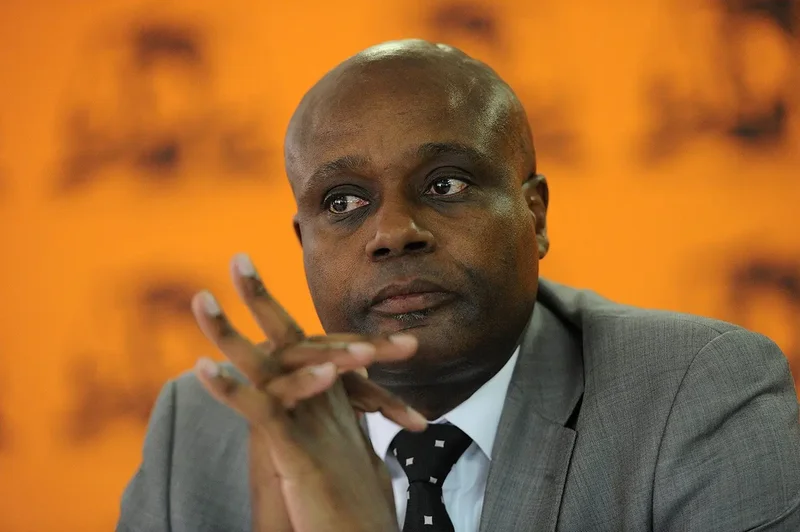
President Cyril Ramaphosa has cleared Gauteng South Director of Public Prosecutions Andrew Chauke to return to office after a year-long suspension, accepting an independent inquiry's findings that there was no credible evidence he acted unlawfully in the Cato Manor prosecutions or improperly exercised his prosecutorial powers.
In a statement on Wednesday, the presidency said Ramaphosa had informed Chauke that he had been exonerated by the Nkabinde Panel of Enquiry, which was appointed to determine whether he remained fit and proper to hold office following serious allegations concerning his conduct as one of the country's most senior prosecutors.
The inquiry, chaired by retired Constitutional Court justice Baaitse Elizabeth Nkabinde, found there was “no credible evidence” that Chauke had improperly taken prosecutorial decisions in relation to the Cato Manor matter or acted unlawfully in carrying out his coordination functions.
In his letter informing Chauke of the outcome, Ramaphosa said the panel had also found there was evidence to support the institution of racketeering charges against former KwaZulu-Natal Hawks head Major General Johan Booysen and members of the Cato Manor Unit, one of the prosecutorial decisions examined during the inquiry.
The panel further found that Chauke’s decision to provisionally withdraw the murder and related charges against former crime intelligence head Richard Mdluli and instead refer the matter to an inquest “was not irrational”.
According to Ramaphosa’s letter, the panel found there was no direct or credible evidence that Chauke had breached the Constitution, the National Prosecuting Authority Act, the prosecution policy or other applicable legal prescripts, or that he had failed to exercise his prosecutorial discretion properly in carrying out his duties.
Chauke has been on suspension since 20 July 2025, when Ramaphosa suspended him pending the outcome of the inquiry. The president formally established the inquiry in September 2025 under section 12(6)(a) of the National Prosecuting Authority Act.
In his letter, Ramaphosa said he had carefully considered the panel’s report and accepted its findings and recommendations.
“I am satisfied that the allegations against you have not been substantiated by the evidence presented before the enquiry,” the president wrote.
The inquiry was established after allegations that Chauke had improperly handled prosecutions linked to the Cato Manor police unit and the provisional withdrawal of murder charges against Mdluli, raising questions about whether he remained fit to hold office.
“In view of these and other findings that exonerate Adv Chauke, President Ramaphosa is satisfied that there is no basis upon which to conclude that Adv Chauke is unfit to hold office as Director of Public Prosecutions,” the presidency said.
In his letter, Ramaphosa noted that the panel had submitted its report to him on 1 July after considering extensive oral and documentary evidence, expert opinions, witness statements and legal submissions.
Throughout the inquiry, Chauke maintained that he had acted lawfully, that many of the decisions under scrutiny were taken collectively or under the authority of successive national directors of public prosecutions and that he had not exceeded his powers.
Ramaphosa thanked Chauke for his cooperation during the inquiry and said he trusted that the conclusion of the process would allow him to continue discharging his constitutional and statutory responsibilities “with dedication and integrity in service of the National Prosecuting Authority and the nation”.
The president also thanked Nkabinde and fellow panel members advocate Elizabeth Baloyi-Mere SC and attorney Matshego Ramagaga for their work.