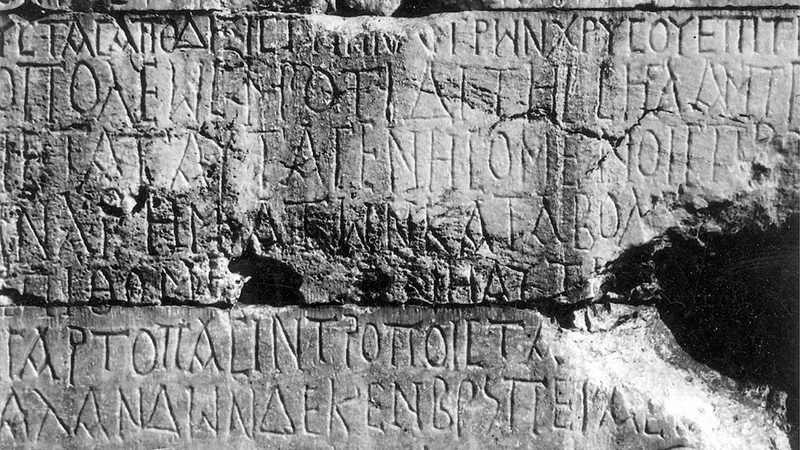
Archaeologists in western Turkey recently discovered a detailed account of 1,600-year-old tax fraud so brazen that ancient Rome made it a deadly offense. Initially believed to be funerary ode inscriptions, the Late Antiquity stone tablets actually provide vital missing information in a notably widespread corruption case that spanned more than a decade—and even implicated the estate of Emperor Valentinian III’s daughter, Placidia.
The artifacts found at the ruins of Stratonikeia in western Turkey relate to a financial case documented on similar stones studied by researchers since the 18th century. Around 465 CE, Roman officials began receiving complaints about tax officials operating in western Asia Minor who were reportedly issuing payment receipts without actually recording the specific totals. They then related lower numbers to the imperial treasury in Constantinople and pocket the excess money.
Despite the flagrant issue, it would take around 15 years for Rome to enact effective reforms. But in 480 CE, a Praetorian Prefect known as Flavius Illus Pusaeus Dionysius finally managed to clamp down on the problem. To ensure an end to the corruption, Dionysius threatened to strip the estate from his special envoy sent to handle the situation unless it was handled. He also issued a much more intense declaration to the suspected fraudsters. Anyone convicted of the scheme would be put to death.
As Arkeonews recently noted, Rome sent at least 11 other imperial orders between the 4th and 6th centuries about properly issue tax receipts, but none mentioned capital punishment. According to University of Warsaw historian Paweł Nowakowski, the decision to dramatically up the consequences for fraud was likely motivated by more than lost money.
“It’s less about the scale of the offense and more about defying imperial will: a kind of rebellion or affront to the emperor’s authority,” he said. “That may be why we see such a severe punishment for officials abusing the imperial family’s estate.”
Nowakowski also suggested the new death penalty was more rhetorical than actionable. He cited other Roman dictates that sometimes mentioned intense penalties to highlight the seriousness of the matter, without any evidence of someone receiving the punishment.
Nevertheless, the decree’s intensity appeared to work. Rome didn’t have a habit of distributing public stone inscriptions across the empire unless the message was received by locals.