Peru · Mining
How Block Caving Changes Cerro Lindo
Block caving is designed for large ore bodies at depth. Instead of repeatedly drilling and blasting small sections, miners undercut the base of an extensive column. Gravity and induced rock stresses fracture the ore, which then descends in a controlled flow to drawpoints on a lower extraction level.
Nexa began using the method in an initial sector of Cerro Lindo at the end of the second quarter and said regular operation was reached in July. The second quarter therefore did not include a full period at regular operation.
The company describes Cerro Lindo as Peru’s first mine to implement block caving. That national-first designation is a Nexa statement; the operational start itself is also documented in the company’s earnings filing with Peru’s securities regulator.
Lower Costs, Deeper Ore and New Risks
The economic case rests on scale. Once the cave is established, ore can move continuously without the continuous drilling and blasting required by conventional sublevel stoping. Nexa expects lower unit costs and improved efficiency as the caving footprint expands.
The method may also make deeper, lower-grade but high-volume areas economical. Nexa says that could add mineral to the mine plan and support a longer operating life. It expects better access to copper-rich zones, an important point after group copper production fell 31% year on year to 6,300 tonnes in the second quarter.
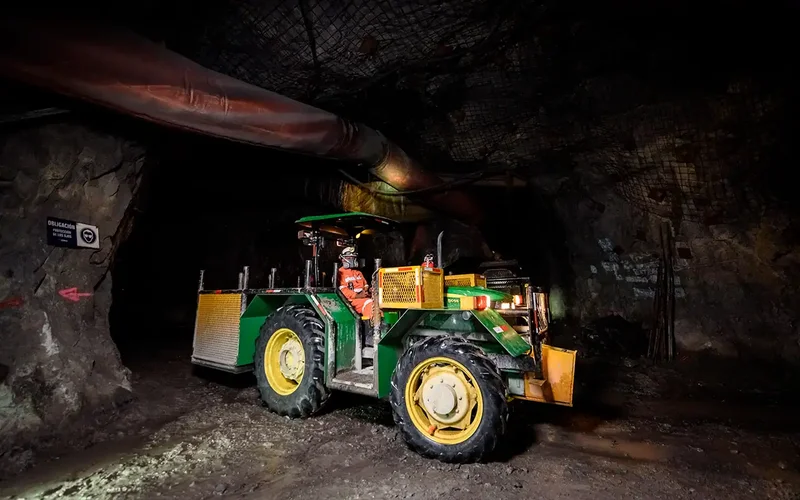
Block caving is not a simple efficiency upgrade. Its central challenge is geomechanical: engineers must model how the rock mass fractures, moves and interacts with surrounding workings. Nexa has deployed teleoperated scoop trams, real-time geotechnical instrumentation and microseismic monitoring to manage that process and keep workers away from active caving zones.
Why Cerro Lindo Matters to Nexa
Cerro Lindo is a polymetallic underground operation in the Chincha area of Peru’s Ica region. It produces zinc, copper, lead and silver concentrates and is a major part of Nexa’s integrated mining-and-smelting portfolio in Latin America.
The operational milestone arrives during a stronger financial quarter. Nexa reported US$908 million in net revenue, up 28% from a year earlier, and US$98 million in net income, compared with US$13 million in the second quarter of 2025. Adjusted EBITDA rose 78% to US$286 million.
Higher zinc prices, by-product contributions, lower costs and the recovery of Peruvian operations drove the improvement. Across Nexa’s mining portfolio, treated ore volumes increased 11% from the first quarter. Zinc production across Nexa rose 8% year on year to 79,000 tonnes, while copper output declined.
Why This Matters for Peru
Peru is already a global copper, zinc and silver supplier, but productivity at mature underground mines depends increasingly on technology, automation and access to deeper mineralization. Cerro Lindo gives the industry a domestic test of a method used at very large underground deposits elsewhere.
If the cave performs as designed, other operators may study the model for deposits that are too deep or too low-grade for conventional stoping. The relevant proof will not be the inauguration itself but sustained recovery, predictable dilution, stable ground behavior, safety performance and unit-cost reductions over several quarters.
What to Watch Next
Ramp-up. Nexa must expand from the initial sector without disrupting the rest of Cerro Lindo’s underground production.
Unit costs. Quarterly reporting should show whether continuous extraction delivers the savings projected by management.
Copper grades. Access to higher-grade zones will be tested against the recent decline in copper production.
Geotechnical performance. Cave propagation, dilution, recovery and microseismic data will determine whether the method can scale safely.
Frequently Asked Questions
Sources
- Nexa Resources: Cerro Lindo implements block caving, August 3, 2026
- Peru securities regulator: Nexa Resources Perú second-quarter 2026 earnings release
- Nexa Resources: consolidated second-quarter 2026 results
- Nexa investor relations: Cerro Lindo location, capacity and production profile