A blueprint for future: Revisiting South Korea’s architectural legacy in Iran
TEHRAN- When we speak of Iran-South Korea relations today, the conversation often centers on trade volumes, petrochemicals, or technology transfers. However, as a recent and insightful report by the Iran-South Korea Joint Chamber of Commerce reminds us, the foundation of this partnership is far deeper and more inspiring than many realize. It is a story not just of commerce, but of shared vision, architectural excellence, and cross-cultural engineering—one that holds valuable lessons for our shared future.
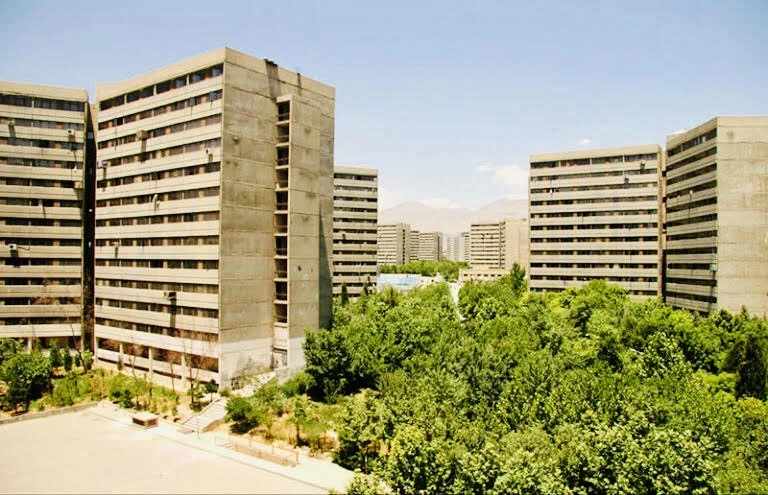
In a detailed review, the Chamber highlights a remarkable yet lesser-known chapter of our history: the involvement of South Korea’s prestigious SPACE Group in the design of Tehran’s iconic Ekbatan Town during the 1970s. At a time when Iran was spearheading some of the most ambitious urban development projects in the region, the SPACE Group—founded by the visionary architect Kim Swoo Geun, one of Asia’s most influential design minds—joined forces with Iranian experts. Under the leadership of Engineer Rahman Golzar at the Tehran Renovation and Development Company, this collaboration brought together Korean modernist philosophy and Iranian urban needs.
The result? Ekbatan Town, which to this day stands as a benchmark of modern residential planning in Iran. Its success was never just about concrete and steel; it was a testament to the power of international expertise meeting local ambition. Kim Swoo Geun, who masterfully blended contemporary forms with traditional Korean aesthetics, later went on to design the main stadium for the 1988 Seoul Olympics—yet his imprint on Tehran's urban fabric remains one of his most enduring international achievements.
What makes this story so significant today is not merely its historical curiosity. It proves that Iran and South Korea have long shared a capacity for genuine technical and intellectual synergy. Nearly half a century before the recent waves of diplomatic and economic rapprochement, Korean and Iranian professionals were already exchanging knowledge, building trust, and creating landmarks that would serve generations.
The Iran-South Korea Joint Chamber of Commerce, in publishing this reflection, rightly calls this episode "one of the lesser-known pages of bilateral history." But I believe it is also one of the most hopeful. It reminds us that our relationship is not defined by temporary political winds, but by a durable, creative, and human-centered connection. From urban design to engineering innovation, our two nations have proven that we build better together.
As we look ahead to new infrastructure projects, smart cities, and sustainable development in Iran, the legacy of SPACE Group and Engineer Golzar’s team is not just a memory—it is a model. It shows us that Korean precision and Iranian vision, when united, produce outcomes that stand the test of time.
The future of Iran-Korea cooperation is bright, and it is built on a foundation that is stronger than we often acknowledge. Let us draw inspiration from this shared past and write our next chapter—one of renewed partnership, mutual respect, and shared prosperity.
This article is based on historical data and insights provided by Morteza Soltanpour Abyaneh, the chairman of Iran-South Korea Joint Chamber of Commerce.