Colombia’s Fracking Ban Bill Meets a President Who Promised a Decree to Restart It
Colombia · Energy
Key Facts
- The bill.Petro’s government filed a bill on 20 July to ban fracking and unconventional reservoirs outright, signed by the mines and environment ministers and two Pacto Histórico senators.
- Where it sits.The Senate’s Fifth Committee, with no rapporteurs yet named and no urgency message attached. It is the sixth attempt since 2018; the previous five all died.
- The reversal.Vice-President José Manuel Restrepo said in June that a decree authorising fracking would issue on 7 August — inauguration day.
- The law today.Fracking is legal in Colombia. The Consejo de Estado suspended the framework in 2018 but upheld it in a final 5-3 ruling in July 2022.
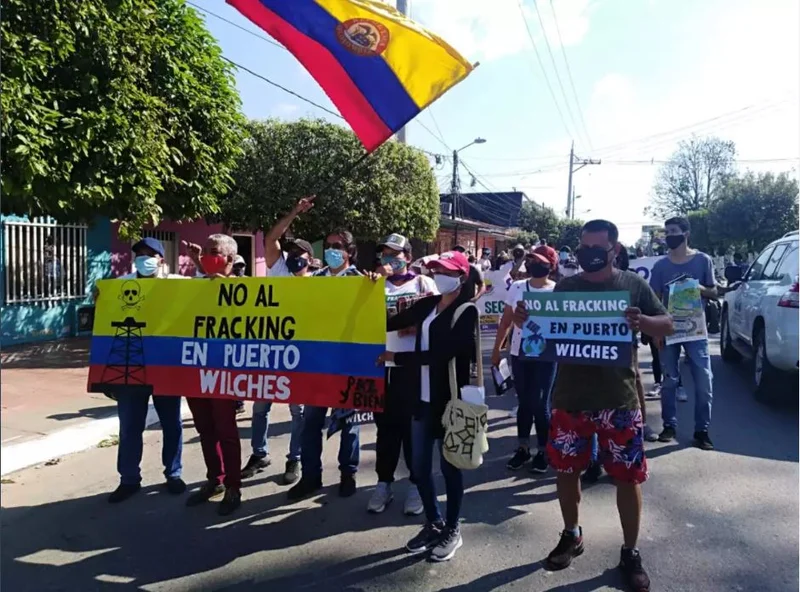
- The pilots.Kalé and Platero at Puerto Wilches were awarded in 2021 and suspended in September 2022. Neither has ever been drilled.
- Why it matters.CREE projects a gas shortfall reaching 39 percent of demand in 2026. Ecopetrol has begun importing gas through Cartagena.
Petro’s government filed a bill to ban fracking outright seventeen days before leaving office. His successor took the sash promising a decree to restart it.
The Colombia fracking ban bill was filed on 20 July, signed by two of Gustavo Petro’s ministers and two of his senators. Seventeen days later Abelardo De La Espriella took office having promised the opposite — a decree authorising the technique, issued on inauguration day itself. Both cannot be right, and the country’s energy policy now depends on which instrument survives.
What the Colombia fracking ban bill actually says
The bill was filed at the Senate on 20 July. It would prohibit exploration and production of unconventional reservoirs and multi-stage hydraulic fracturing nationwide, and was signed by mines minister Edwin Palma Egea, acting environment minister Irene Vélez Torres and senators Yuly Esmeralda Hernández Silva and Diana Carolina Corcho Mejía.
Six articles. It voids the research contracts behind the pilot projects and obliges the hydrocarbons agency to offer affected contractors four alternatives, including a conventional contract in the same area or termination by mutual agreement with no charge for investment they never executed. The mines ministry would have a year to write the regulations.
It sits in the Senate’s Fifth Committee with no rapporteurs designated and no urgency message. By the bill’s own count this is the sixth try since 2018; the previous five were archived.
The other half of the story
Two weeks later the government changed. María Nohemí Arboleda Arango took over the mines and energy ministry with a reported mandate that includes reopening exploration through fracking, with restrictions in protected areas.
The new environment minister, Fabio Arjona, has been explicit. He prefers “responsible fracking” to “sustainable fracking”, says there is no insurmountable technological barrier, rules it out inside protected areas, and calls gas from fracking something “we need for our energy security”. He puts the potential at about 2 percent of national territory.
Vice-President José Manuel Restrepo went further in June, saying a decree enabling new oil and gas contracts and a second authorising fracking would both issue on 7 August, alongside an Ecopetrol shareholders’ meeting to change the board and chief executive. Whether either was signed had not been confirmed at the time of writing.
De La Espriella himself has drawn one line: “Under no circumstances are we going to intervene in páramos or protected places.” He has also said it is impossible to close the fiscal gap without restarting the sector.
What is actually legal right now
Fracking has never been banned in Colombia. The bill’s own explanatory memorandum concedes as much.
The Consejo de Estado suspended the enabling decree and resolution in November 2018, relaxed that in 2019 to allow baseline studies, and in July 2022 denied the nullity action by five votes to three. Both norms stand.
The pilots are a different matter. Kalé went to Ecopetrol and Platero to ExxonMobil in 2021. Both were suspended at Ecopetrol’s request in September 2022 and have sat there since — never terminated, never drilled. The Constitutional Court found in 2023 that the Afrowilches community’s right to prior consultation had been violated. Acipet’s director estimates two to three years to meaningful production if anyone restarts them.
What it means if you live in or invest in Colombia
For residents, fracking law touches nothing you deal with — not visas, not property, not banking. The exception is your utility bill. CREE projects the monthly gas deficit reaching 39 percent of demand this year, Ecopetrol raised gas prices 34 percent during 2026 and has begun importing through Cartagena from December, and Fedesarrollo has costed the shortfall at 28 trillion pesos, roughly US$8.9 billion. Energy costs in Colombia are on an upward path either way.
For investors, the signal is not about fracking at all. In under three weeks Colombia produced a government bill to ban it outright, a ministerial resolution closing 42 percent of the country to new extraction, and an incoming administration promising decrees to do the opposite. That is not a legal framework; it is a political cycle. Anyone modelling Colombian upstream reserve life should be pricing the fragility of the instrument rather than the certainty of the statute.
Watch the decree, not the bill. A bill needs two chambers and has failed five times; a decree needs a signature — and would almost certainly draw an immediate challenge before the same Consejo de Estado that suspended the framework for four years. This is general information, not legal or investment advice.
Frequently Asked Questions
Is fracking legal in Colombia?
Yes. The Consejo de Estado suspended the enabling framework in 2018 but upheld it in a final ruling in July 2022. Both the decree and the resolution stand.
What would the Colombia fracking ban bill do?
It would prohibit exploration and production of unconventional reservoirs and multi-stage hydraulic fracturing nationwide, void the pilot research contracts and give affected contractors four alternatives.
Will it pass?
It faces long odds. It sits in the Senate’s Fifth Committee with no rapporteurs and no urgency message, and it is the sixth such attempt since 2018. The previous five were archived.
What happened to the pilot projects?
Kalé and Platero at Puerto Wilches were awarded in 2021 and suspended at Ecopetrol’s request in September 2022. Neither has ever been drilled.
Does this affect my gas bill?
Indirectly, and the direction is up. Colombia faces a gas deficit projected at up to 39 percent of demand in 2026, Ecopetrol raised gas prices 34 percent this year and has begun importing through Cartagena.
Sources: Ministerio de Minas y Energía; Senado de la República; Consejo de Estado; Corte Constitucional (T-514 de 2023); La República; Valora Analítik; Infobae.
This article was produced by The Rio Times’ automated newsroom system. How we use AI · Report an error