Yemen flips the battlefield on Saudi Arabia
Sanaa’s shifting military doctrine traps Riyadh as the kingdom seeks external shields
TEHRAN — The video clips from August 6 were unmistakable. Flames consumed a desert encampment. A row of armored vehicles sat reduced to twisted metal. The Yemeni Armed Forces struck first.
For weeks, Yemeni intelligence tracked a silent buildup. Saudi-funded formations, including the First and Third Readiness Brigades, massed troops and ammunition across al-Ruwaik in Marib, moving deliberately into the al-Abr, al-Thaniyah, and al-Wadiah corridors of Hadramaut.
The objective was a renewed ground offensive designed to relieve mounting domestic and international pressure on Riyadh.
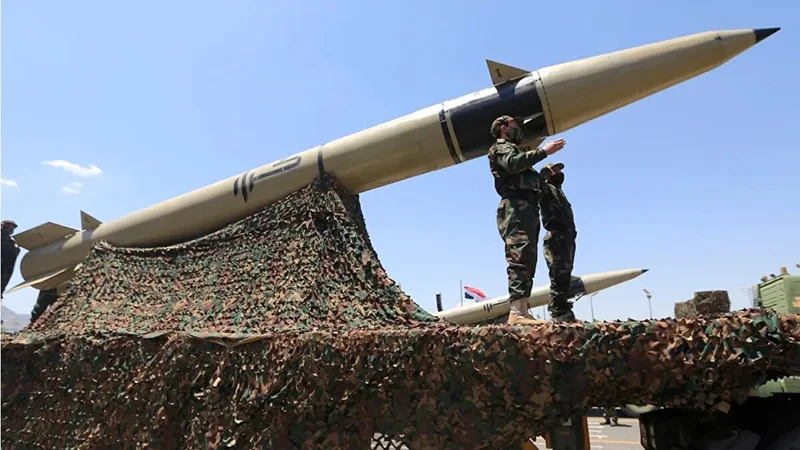
Sanaa refused to absorb the blow. Early Thursday, salvos of ballistic missiles and drone swarms obliterated the assembly points.
According to AFP, an anonymous Saudi military source acknowledged that at least 58 Saudi-backed mercenaries were killed in the operation.
Sanaa reported hundreds of casualties. The exact arithmetic matters less than the doctrinal shift it represents. Yemen no longer trades territory at the margins while enduring a siege.
The preemptive doctrine is fully active. Every Saudi military mobilization is now a target. Riyadh and its proxy forces can no longer dictate the timing or the geography of escalation.
The new maritime geography
The land strikes represent only one half of a larger campaign. On July 22, Sanaa formalized a total naval embargo on Saudi-linked shipping, cementing a strict blockade-for-blockade equation.
The trigger was a July 13 Saudi airstrike that cratered the runway at Sanaa International Airport, intentionally halting diplomatic and medical evacuation flights. The response cascaded across the region’s shipping lanes.
The Bab al-Mandeb Strait abruptly became a hazard zone for the kingdom. Crude oil loaded at Saudi Arabia’s Red Sea terminals and transiting the southern chokepoint collapsed from roughly three million barrels per day to about half that volume.
Insurance premiums for vessels docking at western Saudi ports reportedly spiked tenfold, climbing from a fraction of a percent of hull value to a full one percent. Container handling at Jeddah, Yanbu, and Jizan plummeted.
Riyadh desperately attempted to bypass this southern vulnerability by rerouting crude exports through Yanbu, its northern Red Sea hub. Yemeni naval forces simply extended their strike radius.
On August 5, anti-ship ballistic missiles hit the Saudi tanker Wafa right off the Yanbu coast. It was the eighth tanker struck since the blockade began. Another 29 vessels have been forced to turn back, seeking agonizingly long refuge around the Cape of Good Hope. The northern Red Sea offers no sanctuary.
A coalition of the vulnerable
Facing a military campaign it can neither suppress through airstrikes nor contain through other means, Saudi Arabia has returned to its oldest reflex: seeking external shields for internal weakness.
The Multinational Maritime Defense Alliance unveiled in late July already bore the marks of diplomatic theater. It brought together regional signers without bringing combat commitments from major powers.
Riyadh’s strategic panic reached a new peak on August 7, when Pakistani, Saudi, and Turkish leaders convened in Mecca to sign a mutual defense agreement.
The trilateral pact is being presented as a monumental shift in regional security architecture. On paper, it unites Saudi financial reserves, Turkish military technology, and Pakistan’s nuclear-backed armed forces under a single deterrence umbrella. In reality, the agreement is an admission of profound structural vulnerability.
Riyadh entered this war in 2015 at the head of a nine-nation coalition backed by total American logistical and intelligence support, projecting a victory within weeks.
Eleven years later, after spending hundreds of billions of dollars and watching its Red Sea energy routes paralyzed by Yemeni naval strikes, the kingdom is begging Ankara and Islamabad to guarantee its territorial safety.
This roster of so-called allies changes nothing on the ground or at sea. The Resistance Front does not wage conventional state-on-state warfare. It operates through mobile ballistic batteries, subterranean drone foundries, and low-cost anti-ship missiles launched from asymmetric coastlines.
For instance, neither Turkish naval frigates nor Pakistani infantry units massing on borders will dismantle the subterranean launch sites in northern Yemen or force open the Bab al-Mandeb Strait. Escort ships can guard individual hulls, but they cannot remove the political and military origins of Sanaa’s “blockade for blockade” doctrine.
The House of Saud’s decision-makers seem convinced that paper alliances and palace handshakes can compensate for the strategic realities forged on the battlefield by resilient resistance movements. They are deluding themselves.
The cost of an endless siege
Saudi Arabia is trapped in a paradox of its own creation. Escalating to a full-scale ground war guarantees open-ended attrition, exposing eastern oilfields and western resorts to forces that easily reach Abha and Jizan. Lifting the siege on Sanaa’s terms forces the kingdom to admit its trillion-dollar intervention was a colossal failure.
The middle option of maintaining a low-intensity siege is rapidly evaporating. Ansarullah has made the status quo too expensive to bear.
The Yemeni Foreign Ministry warned this week that persistent colonial policies will ultimately break the ruling structure in Riyadh itself. President Mahdi al-Mashat delivered the final condition without diplomatic ornament. If the aggression persists and the blockade remains, any dialogue is an illusion.
Member of Ansarullah’s political bureau, Mohammed Al-Farah said that the country is “proceeding with breaking the blockade, no matter what alliances are formed against us.”
Yemen has ceased fighting merely to survive. Despite years of blockade, bombardment, and isolation, it has cultivated an indigenous military-industrial capability and transformed its strategic geography into a powerful instrument of leverage.
The architects of the genocidal 2015 war sowed the wind. They are now reaping the whirlwind.