Peru · Business
Key Facts
—Producing basins: Only five of Peru's 18 sedimentary basins yield commercial hydrocarbons today.
—Dominant field: The Camisea complex in the Ucayali Basin supplies the vast majority of the country's natural gas.
—Idle offshore gas: Discoveries in the Tumbes-Progreso Basin remain undeveloped because there is no local gas market.
—Pisco Basin potential: The Pisco Basin holds an estimated 449 million stock tank barrels of prospective oil resources.
—Production scale: Outside Camisea, blocks in northwest Peru together average roughly 7,500 barrels of oil per day.
Peru’s oil and gas industry operates far below its geological potential. The country has 18 sedimentary basins, but only five produce commercial hydrocarbons, leaving enormous resources locked underground by forces that have little to do with geology.
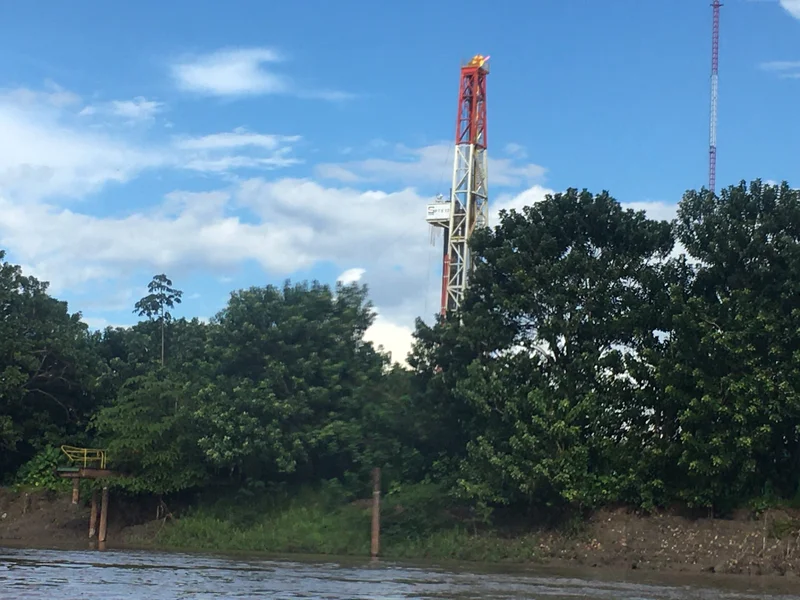
Peru holds significant hydrocarbon reserves in its Amazon and coastal sedimentary basins.
One-stop reference
Company Intelligence
Every listed company in Latin America — financials, ownership and structure for 1,450+ companies across 26 exchanges, in one place.
RTAsk Rio TimesCost of living, safety, visas across Latin America›
The Producing Five: A Narrow Footprint
Peru’s active production comes almost entirely from the Talara, Tumbes-Progreso, Marañón, and Ucayali basins, along with the Camisea sub-basin. The Talara Basin alone has yielded more than 1.6 billion barrels of oil and roughly 3.5 trillion cubic feet of associated gas from some 12,000 wells over its long history.
The Camisea complex, deep in the Amazonian Ucayali system, dominates national output. When Camisea natural gas liquids production began in August 2004, it reversed a years-long decline that had been sapping Peru’s energy self-sufficiency.
Why Peru’s Oil and Gas Basins Remain Idle
The simplest explanation for idle basins is the absence of a gas market. Offshore discoveries in the Tumbes-Progreso Basin have sat undeveloped for years because there are no pipelines to carry the gas to demand centers and no local industry large enough to consume it. Our reporting has shown that political uncertainty, including past government threats to nationalize the Camisea fields, has further chilled the investment climate for building such infrastructure.
Geography compounds the problem. The sub-Andean jungle basins like Marañón and Ucayali are remote and expensive to operate in, while coastal basins are cheaper to explore.
Without roads, processing plants, and export routes, even proven resources cannot justify the capital investment required.
Regulatory pace and licensing delays further slow progress. Basins move toward development only when acreage is under active contract and companies have fiscal certainty.
In Peru, bidding rounds have been sporadic, leaving large swaths of prospective territory in legal limbo.
Community opposition and environmental sensitivity form the final barrier, especially in the Amazon. Social conflict can stall seismic surveys and exploratory drilling for years, and companies routinely cite the difficulty of securing community consent as a primary reason for walking away from otherwise promising blocks.
The Scale of What Sits Unused
The Pisco Basin illustrates the gap between potential and production. Industry estimates point to roughly 449 million stock tank barrels of prospective oil resources, yet the basin has no meaningful output.
Trujillo, Lima, and Sechura-Salaverry basins all hold identified structures and seismic anomalies but remain exploration plays.
Offshore, the shallow-water shelves of Huacho and other basins show oil seeps and untested anomalies. The Talara and Tumbes offshore areas contain gas prospects that could supply a domestic market that does not yet exist in sufficient size to justify the build-out.
What Unlocking the Basins Would Require
Modern seismic surveys and exploratory drilling are the essential first step. Frontier basins remain underexplored, meaning companies cannot confirm commerciality without fresh data.
That data is expensive to gather in remote terrain with little existing infrastructure.
A functional gas market would need pipelines, processing capacity, and anchor customers. Export infrastructure, such as liquefied natural gas terminals or cross-border connections, could change the economics, but those projects require years of planning and billions in investment.
Investor confidence depends on clear block licensing schedules and stable fiscal terms. Peru’s hydrocarbons agency, Perupetro, must run regular, transparent bidding rounds that give operators the predictability they need to commit capital over decade-long timelines.
Community engagement cannot be an afterthought. In the Amazonian basins, securing social license means negotiating access, sharing benefits, and managing environmental impacts long before the first well is drilled.
Without that, even the most attractive geology will remain stranded.
What This Means for Expats and Investors
For foreign investors and expats living in Peru, the idle basins represent both a cautionary tale and a long-term opportunity. The country’s heavy reliance on Camisea means energy supply is concentrated in one remote area, creating vulnerability to localized disruptions that can affect power and fuel prices nationwide.
The undeveloped offshore gas in Tumbes-Progreso could one day fuel new industries along Peru’s northern coast, potentially creating demand for skilled foreign workers and business services. However, until pipeline infrastructure materializes, that economic diversification remains theoretical.
From a portfolio perspective, Peru’s hydrocarbons sector offers a classic frontier-market risk profile. The geology is proven in places, but the above-ground risks—community relations, regulatory unpredictability, and logistical hurdles—mean that only patient capital with a multi-decade horizon is likely to participate in any basin-opening wave.
Looking Ahead: The Path to Development
Peru’s government faces a clear choice: continue relying on a handful of mature fields, or create the conditions that turn idle basins into producing assets. The current trajectory suggests slow, incremental progress rather than a sudden boom.
Perupetro has signaled interest in promoting underexplored areas, but converting that interest into signed contracts requires political will and bureaucratic efficiency. For readers watching the sector, the key indicator to monitor is the frequency and success rate of new licensing rounds.
International energy companies have not abandoned Peru, but they are selective. The basins most likely to see near-term activity are those close to existing infrastructure or with clear export pathways, leaving the more remote Amazonian and deepwater plays for a future chapter in Peru’s energy story.
Frequently Asked Questions
How many of Peru's sedimentary basins actually produce oil and gas?
Only five of Peru's 18 sedimentary basins produce commercial hydrocarbons: Talara, Tumbes-Progreso, Marañón, Ucayali, and the Camisea area within the Ucayali system. The remaining 13 basins are either completely unexplored or have seen only preliminary exploration without reaching commercial production.
Why are gas discoveries off Peru's coast not being developed?
Several offshore gas discoveries remain undeveloped primarily because there is no local market for the gas and no pipeline infrastructure to move it to population centers or export facilities. Without anchor customers such as power plants or industrial users, the economics of building costly subsea pipelines simply do not work.
What is the biggest barrier to developing Peru's Amazonian oil and gas basins?
The combination of remote geography, high logistical costs, and the need for community consent makes Amazonian basins especially difficult. Social and environmental conflicts frequently delay or cancel exploration plans, and companies often cite the challenge of securing community approval as a decisive factor in abandoning otherwise promising blocks.