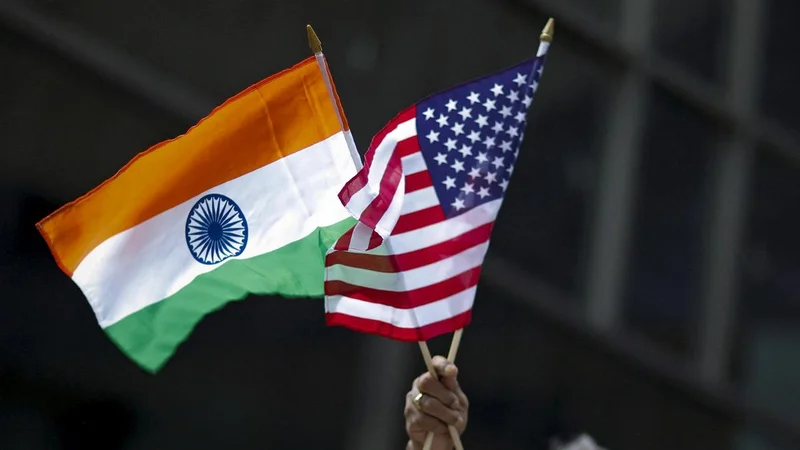
The Trump administration’s latest tariffs on several trading partners, including India, are widely seen as another trade dispute. That interpretation misses the larger picture. Alongside growing demands for greater burden-sharing, tighter technology restrictions and a more reciprocal approach to international partnerships, the tariffs reflect a broader shift in American statecraft. Washington is increasingly judging partners and competitors through the lens of national interest rather than strategic convergence. The immediate impact will be felt in trade negotiations; the more enduring implications are strategic. They signal a changing American approach to alliances and partnerships with important implications for India.
This approach reflects what the Trump administration describes as ‘flexible realism’. Unlike the post-Cold War liberal international order, this approach places national interest at the centre of American foreign policy. It treats trade, technology, industrial policy, and security as integrated instruments of statecraft. Partnerships are judged less by shared values or historical goodwill than by the tangible strategic and economic value they deliver. Rather than signalling a retreat from global engagement, it recalibrates how the United States pursues its interests in an increasingly competitive international environment.
The China factor
It is useful to recall the strategic logic that has underpinned the India-United States partnership over the past decade. With China’s emergence as Washington’s principal strategic competitor, India assumed growing strategic importance in the U.S.’s calculations. Defence cooperation expanded, the Quad gained momentum, technology partnerships deepened, and supply-chain resilience became a shared priority. While democratic values provided a favourable political backdrop, it was the convergence of strategic interests driven by China’s rise that gave the partnership its real momentum. For both New Delhi and Washington, managing the geopolitical consequences of a more powerful China became the principal driver of bilateral cooperation.
This shift in American statecraft does not diminish India’s strategic importance, but it does redefine the basis on which that importance will be judged. Strategic convergence with the U.S. remains important, but it can no longer be assumed to be the principal driver of the relationship. Washington is increasingly likely to assess even close partners through the lens of reciprocal economic benefit, technological capability, and strategic contribution. Consequently, India can no longer assume that intensifying U.S.-China competition will, by itself, continue to enhance its strategic relevance. The partnership must increasingly rest on what India brings to the table rather than on China’s rise alone.
The next phase
The more significant implication of this evolving approach is that it redefines the nature of strategic partnerships. The first phase of the India-U.S. relationship was shaped by strategic convergence driven by China’s rise. The next phase will increasingly depend on strategic complementarity, with each country expected to contribute capabilities that reinforce the other. Defence cooperation, critical technologies, resilient supply chains, and advanced manufacturing will matter not merely because they help manage China’s rise, but because they strengthen the resilience and competitiveness of both economies. The India-U.S. partnership is therefore evolving from one defined primarily by a shared strategic challenge to one sustained by mutual strategic value. Far from weakening the relationship, this evolution could make it more balanced and resilient.
If flexible realism encourages Washington to rely on stronger and more capable partners, it also creates greater space for India’s strategic agency. Strength begets strength. A more economically competitive, technologically advanced, and militarily capable India is not only a more valuable partner for the U.S. but also better positioned to pursue its own strategic interests. The relationship can therefore evolve from one shaped primarily by China’s rise to one anchored in India’s capabilities and strategic contribution.
For India, this evolution reinforces rather than weakens the relevance of strategic autonomy. In the emerging international environment, strategic autonomy is not about maintaining equal distance from competing powers; it is about preserving the ability to make independent choices based on India’s own interests. That also means that India’s approach to China should increasingly be guided by its own long-term strategic calculations rather than by the trajectory of U.S.-China relations. In practice, this requires a strategy of multi-alignment: strengthening the strategic partnership with the U.S., managing competition and cooperation with China on India’s own terms, and deepening strategic, economic, and technological partnerships with the European Union, Japan, and Global South.
Looking ahead
The India-U.S. partnership is entering a new phase. During the past decade, its momentum was driven by a shared response to China’s rise. That strategic convergence will remain important, but it will no longer be sufficient on its own. In this emerging strategic environment, enduring partnerships will increasingly be built on capability, reciprocity, and strategic value. For India, this carries a broader strategic lesson. In an increasingly fluid geopolitical environment, no major power can build a long-term foreign policy on the expectation that another country’s rivalry will continue to elevate its strategic importance. India’s strategic relevance must increasingly flow from its own economic dynamism, technological capabilities, defence preparedness, and diplomatic influence. The challenge, therefore, is not merely to remain relevant in Washington’s strategic calculus, but to build the capabilities that make it an indispensable partner. That would not only strengthen the India-U.S. partnership but also reinforce India’s strategic autonomy in an increasingly contested world.
G. Venkat Raman is Professor at the Indian Institute of Management, Indore, Madhya Pradesh. The views expressed are personal
Published - August 08, 2026 12:08 am IST