BMW Korea and Mercedes-Benz Korea can better fend off the rapid rise of Tesla and Chinese electric vehicles (EVs) makers by pivoting toward Korea’s growing ultra-luxury vehicle segment — an arena where newcomers are unlikely to match their brand heritage and exclusivity anytime soon, industry officials said Friday.
Rather than competing head-on in the increasingly crowded premium market, the German automakers are expanding their highest-end offerings, betting that their longstanding brand heritage and premium positioning will remain difficult for newer rivals to replicate.
The strategy comes as Tesla and Chinese brands, such as BYD, continue to gain traction in Korea, eroding the dominance long enjoyed by established premium automakers. For instance, Tesla’s price-competitive Model Y won a title as the nation’s top-selling vehicle in the first half, accounting for more than 30 percent of all newly-registered vehicles here.
While German brands still remain strong in the luxury segment, competition is becoming increasingly intense in mainstream premium models, prompting them to focus on higher-margin vehicles where pricing power and brand equity remain their biggest advantages.
BMW Group recently shared plans to launch its standalone ultra-luxury marque, BMW ALPINA, in Korea in 2027. Under the initiative, BMW Korea is scheduled to establish seven dedicated ALPINA retail spaces nationwide by the second half of next year ahead of the brand's debut.
The BMW 7 Series sold 3,077 units in the first half of 2026, becoming the top-selling model in the same segment.
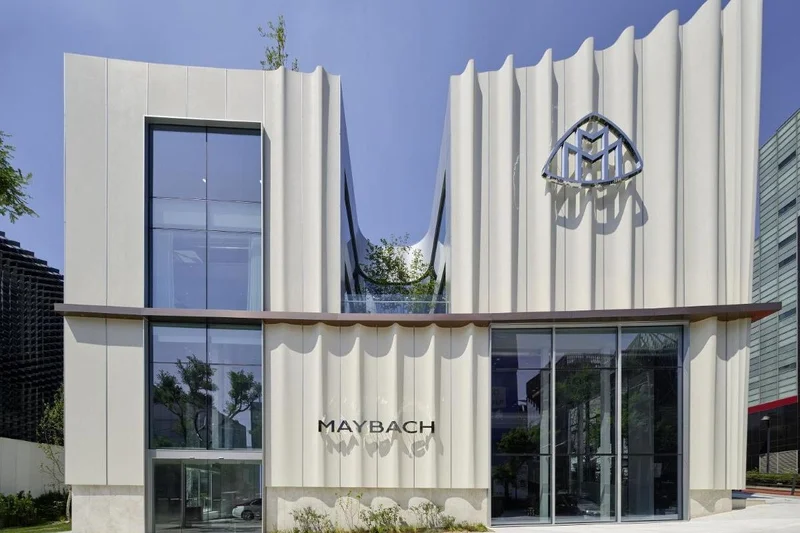
Mercedes-Benz Korea is also making similar moves by strengthening its ultra-luxury presence with an upcoming launch of its new S-Class model. Korea has become Maybach’s third-largest market after China and the United States last year. Maybach is the ultra-luxury brand of Mercedes-Benz.
The shifts from BMW and Mercedes-Benz reflects robust growth in Korea's ultra-luxury vehicle market.
According to BMW Korea, domestic sales of flagship premium sedans priced between 100 million won and 200 million won, including the BMW 7 Series and Mercedes-Benz S-Class, rose from around 12,000 units in 2014 to about 34,000 last year.
Sales of vehicles priced above 300 million won, including Maybach, Bentley and Ferrari models, climbed even faster, increasing nearly sixfold from 452 units to 2,605 during the same period.
Industry officials said German premium brands increasingly view the ultra-luxury segment as a defensive stronghold against the influx of lower-priced EV competitors. Despite the steep sales growth by Chinese price-competitive models, few of Chinese luxury cars still cannot appeal to Korean customers, according to the officials.
"German automakers recognize that competing solely on price or technology against Chinese EV makers will become increasingly difficult," an industry official said. "Instead, they are concentrating on the ultra-luxury market, where brand prestige, craftsmanship and heritage remain key competitive advantages that are difficult to replicate from Chinese rivals."
While the strategy is unlikely to halt the expansion of Tesla and Chinese EV brands in the market, the official said it could help BMW and Mercedes-Benz preserve profitability by strengthening their presence in a segment where competition remains limited.
Others pointed out the auto industry’s transition to EVs forced the German vehicle powerhouse to revamp their strategy against the unavoidably fierce rivalry against Chinese counterparts.
“With Chinese EV makers rapidly closing the performance gap in the electrified era, German premium automakers have little choice but to double down on the ultra-luxury segment,” an auto industry official said. "The ultra-luxury segment remains one competitive arena that Chinese brands are unlikely to match anytime soon."