Saudi Arabia Displays Armoured Vehicles for Sudan Army Offensive
Sudan · DEFENSE
New armour reaches the Sudan army offensive
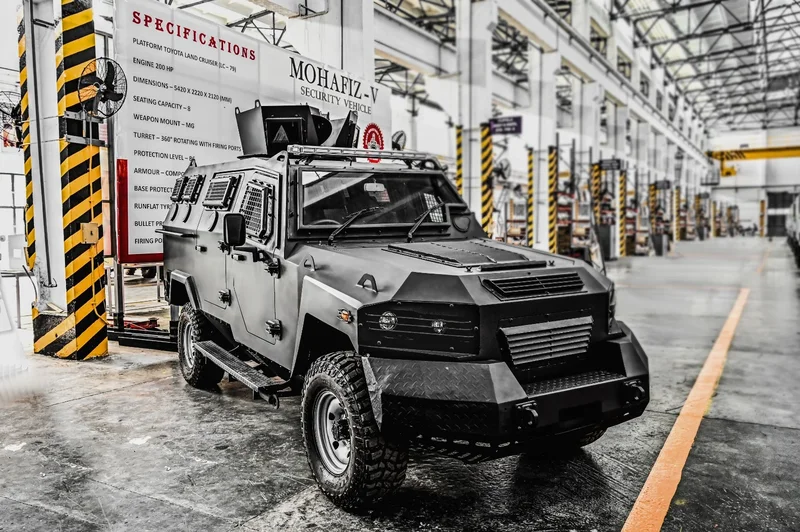
The Sudanese Armed Forces have put new Pakistan-made Mohafiz-V armoured vehicles on public display, signalling a material upgrade to their battlefield capabilities. The vehicles are believed to be part of a broader Saudi-backed arms arrangement that has drawn fresh attention to the Gulf kingdom’s role in Sudan’s war.
An earlier Sudan Tribune report from 13 October 2024 said a first batch of 50 armoured fighting vehicles had arrived at Wadi Sayidna military base north of Omdurman. That delivery marked the beginning of what analysts now describe as a sustained pipeline of hardware reaching SAF-held territory.
The most specific figure circulating in regional reporting is a US$1.5 billion Pakistan–Sudan arms deal, said to include JF-17 fighter jets, K-8 jets, drones and armoured vehicles. One 2026 analysis says that deal was later stalled or put on hold, but that Saudi political backing of the SAF continued regardless.
Saudi Arabia’s stake in the Sudan army offensive
Saudi Arabia’s interests in Sudan centre on Red Sea security, regional influence, food security and preventing instability from spilling toward its own coastline. Analysts cited in multiple outlets say Riyadh prefers a unified Sudanese state and tends to favour the SAF because it represents institutional continuity and state authority in Port Sudan.
Crown Prince Mohammed bin Salman has been the public face of Saudi policy toward Sudan, hosting General Abdel Fattah al-Burhan in Jeddah. The kingdom has simultaneously positioned itself as a humanitarian mediator, having launched the Jeddah Declaration talks in May 2023, even while analysts say it leans toward the army.
Saudi Arabia also has a broader interest in counterbalancing the United Arab Emirates, which is widely reported to back the rival Rapid Support Forces. Sudan’s war is increasingly described as a proxy struggle involving Gulf powers on opposite sides of the conflict’s political economy.
The US$1.5 billion arms package and its limits
The reported US$1.5 billion Pakistan–Sudan arms deal has become a focal point for understanding the scale of external involvement in the conflict. The package allegedly includes JF-17 fighter jets, K-8 training jets, drones and armoured vehicles, with Saudi Arabia financing the arrangement.
However, a 2026 Al-Monitor report indicates that the deal has stalled or been put on hold, even as Saudi political backing of the SAF continues. The exact Saudi role in the vehicle deliveries remains reported rather than officially confirmed, and Riyadh denies direct military involvement.
The safest characterisation, based on available reporting, is that Saudi Arabia is deeply invested in the outcome of Sudan’s war and that the SAF is receiving new armoured vehicles and other materiel amid a broader regional proxy contest. No official Saudi confirmation of the armoured-vehicle shipment exists in the supplied materials.
Gulf money and the pre-war backdrop
Gulf financial flows into Sudan predate the current war by years. A POMEPS analysis notes that Saudi Arabia and the UAE provided US$200 million monthly in cash and commodity subsidies to Sudan’s government in the second half of 2019, giving generals room to resist civilian pressure.
That financial cushion helped entrench military dominance well before the SAF-RSF split erupted into open conflict. The same pattern of external patronage now shapes the battlefield, with each Gulf power backing a different faction in a contest over ports, trade routes, gold, military access and Red Sea leverage.
The wider picture is not simply a Gulf rivalry. Sudan is also a theatre for broader external competition involving Russia, Iran, China, Türkiye, Egypt, Qatar and the UAE, in addition to Saudi Arabia, making it one of the most layered proxy contests on the continent, as explored in Africa: The New Scramble.
Who gains and who loses from the Sudan army offensive
General al-Burhan and the SAF stand as the primary beneficiaries of Saudi backing, gaining both political legitimacy and material reinforcement. The public display of Mohafiz-V vehicles serves a dual purpose: boosting troop morale and signalling to rivals that the army’s supply lines remain open.
The RSF, by contrast, faces a better-armed opponent while its own reported UAE backing draws parallel scrutiny. Civilians caught between the two forces continue to bear the heaviest cost, with the Jeddah Declaration’s humanitarian promises largely unfulfilled on the ground.
Pakistan emerges as a quiet beneficiary of the arms trade, while Saudi Arabia gains leverage over Red Sea security arrangements without deploying its own troops. The kingdom’s dual role as mediator and patron remains its defining contradiction in the conflict.
What to watch as the Sudan army offensive unfolds
The status of the reported US$1.5 billion arms deal will be a key indicator of how far Saudi Arabia is willing to go in backing the SAF openly. If the deal revives, it would mark a significant escalation in the Gulf proxy dimension of the war.
Al-Monitor reported in April 2026 that Crown Prince Mohammed bin Salman hosted al-Burhan in Jeddah as the arms deal stalled, suggesting diplomatic channels remain active even when hardware flows slow. The next visible test will be whether further batches of armoured vehicles appear at SAF bases in the coming months.
The broader Red Sea security picture will also shape external calculations, as Saudi Arabia, the UAE, Egypt and other powers jostle for influence over ports and trade routes. Sudan’s war has become inseparable from that wider scramble, and the arrival of new armour is only the most visible symptom of a much deeper contest.
Frequently Asked Questions
What armoured vehicles has the Sudanese army received?
The Sudanese Armed Forces have publicly displayed Pakistan-made Mohafiz-V armoured vehicles, with a first batch of 50 armoured fighting vehicles reported arriving at Wadi Sayidna military base in October 2024.
Is Saudi Arabia directly arming Sudan’s army?
Saudi Arabia is widely reported to be bankrolling arms supplies that have strengthened the SAF, but Riyadh denies direct military involvement and no official confirmation of the shipments exists.
How much is the reported Pakistan–Sudan arms deal worth?
The reported deal is valued at US$1.5 billion and is said to include JF-17 fighter jets, K-8 jets, drones and armoured vehicles, though one 2026 analysis says it has since stalled.
Sources
This article was produced by The Rio Times’ automated newsroom system. How we use AI · Report an error