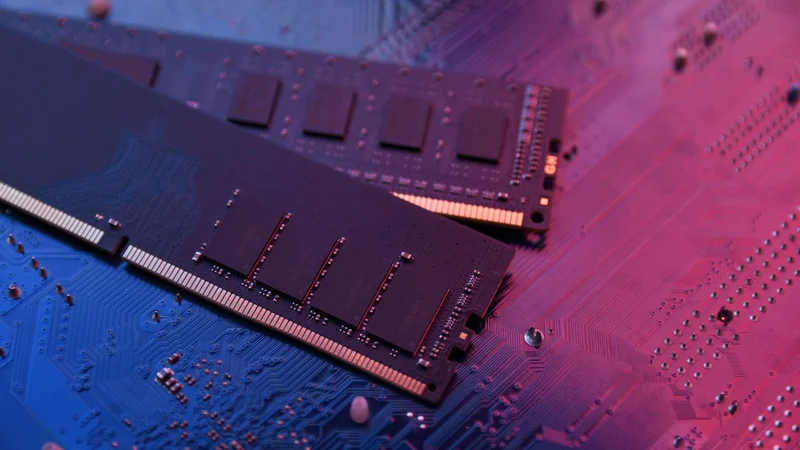
It appears that the RAM crisis is getting worse than ever as we head further into 2026. I've been closely watching and reporting on memory price hikes — which were soon followed by other PC component cost increases — since this crisis first began, and the worrying thing is, I can't recall a gloomier stream of negative news than I've witnessed over the past few weeks.
That includes Samsung recently declaring that the RAM crisis is going to become more severe in 2027, and rumors that even mighty Apple is floundering in its attempt to secure new RAM supplies from China (as other notebook makers consider this alternative route to the three main memory chip giants: Micron, Samsung and SK Hynix).
Previous to that, we saw laptop maker Framework break news of a truly eye-opening cost increase for mobile RAM, just as one gauge of DDR5 pricing saw it jump in price to a new all-time high (after plateauing earlier this year). On top of that, the boss of SK Hynix voiced the opinion that 2027 will be the worst year in the RAM industry's history, and that the crisis is likely to be drawn out to the next decade.
This isn't just about RAM, of course, but other components, including CPU price rises, and devices themselves — PCs and laptops (and phones). But most notably over the past month it's been graphics cards in the crisis limelight. We've witnessed the resurrection of old GPUs to try to bolster stock levels of more affordable cards, and more recently we've been subjected to what seems like an endless parade of negativity about imminent price hikes.
Apparently, Gigabyte is set to increase the price tags of its graphics card to the tune of 20% to 40% in Japan, and MSI is going to jack up prices of Nvidia GPUs in China by 20% or more. Asus is supposedly preparing a similar 20% hike (as Wccftech reported).
Another recent gloom nugget is the assertion that Nvidia RTX 5000 models will get hikes of 30% in South Korea this month, and all of this pain is mainly rooted in the increased price of video RAM, of course. (Those cost increases are the reason the RTX 5000 Super refreshes have been delayed, according to the grapevine, as those rumored cards are packed with VRAM).
While a good deal of this is individual pieces of regional activity with GPU pricing, it's obvious that these hikes are happening as part of a concerted shift, one that will surely be reflected globally — it's not like Asian markets are in a bubble of their own.
Sign up for breaking news, reviews, opinion, top tech deals, and more.
The overarching theme is a worsening of price hike misery, and that the pricing storm is likely to intensify this year, and probably in 2027, too. While previously the RAM crisis has been more of a light-and-shade affair, now it feels like the depression has been turned up a notch. Whereas before, there was certainly more darkness than light, we've had notable spots of relief where an exec in the memory industry stepped forward and theorized that maybe things aren't as bad as we think. But lately those embers of optimism appear to have burned out.
To me, it feels like there's a shift underway towards a full acknowledgement that we really are going to experience a lot more pricing pain in the foreseeable future. If it's so bad that even Apple is purportedly scrambling to secure RAM supplies, and is having trouble doing so, I think it's time to turn up the worry meter by a notch or two.
What should you do?
Here's my advice on the current landscape with PC components and hardware (season it appropriately). Obviously, worrying isn't going to help you, but awareness of what might be sensible upgrades or purchases to make now will, based on the likelihood of hikes (we could call it the 'hike-lihood' – or maybe not). Nothing is certain about the future of components, of course, but it does feel like there's a clear area in which the potential price hikes are a bigger threat: GPUs.
As I discussed above, there's a lot of recent evidence that graphics card pricing is going up. Yes, it's a collection of rumors in the main, but there's a lot of it all pointing in a very similar direction — and a video RAM toll was always going to be exacted in the end. We've seen it already with higher-end graphics cards, and now I believe we're going to see it in the mid-range, and even budget models. Indeed, top-end GPUs are likely to get even more expensive as well.
If you're thinking about a GPU upgrade for this year or next, given all this, I think now really is the time to buy — especially with a lower-tier model, as you can still get more affordable graphics cards at their MSRP. Ditto for mid-rangers, although it's tougher to recommend higher-end Nvidia boards when they are already so expensive.
As noted, though, that could get worse. And granted, you may still want to wait for Black Friday — it's not that far off, and there might be some GPU deals then. However, I wouldn't bank on anything hugely compelling (or discounts that aren't offset by the price rises which are predicted to take hold in the next few months).
So, if there's one PC component that I think you should buy now, it's a graphics card. I think the signs are pretty clear on that (and see here for my recommendations on different models to consider). By extension, higher-end gaming laptops could also be a wise move for purchasing sooner rather than later. That's for the same reason, really — they have beefy (mobile) GPUs (with plenty of VRAM in some cases).
I don't think it's a bad move to buy any laptop, by the way, gaming or not (away from the higher-end), come your earliest window of opportunity. I think we'll see further price rises here, too, and RAM is going to cause more upward pricing pressures for notebooks — just look at Framework's recent revelation as mentioned.
What about RAM and SSDs themselves? While system memory kits and storage have already seen huge price rises, it now looks like there's worse to come (somehow).
On the other hand, there's a ceiling as to how expensive this stuff can get before buyers withdraw from what they see as an increasingly unrealistic and out-of-touch market. This is a much more difficult call to make, but if you can find something that looks relatively reasonably priced, I don't think you'll regret the purchase in the next couple of years. But that said, I can't recommend a RAM upgrade in particular at current pricing levels, unless it's unavoidable, frankly.
Above all, though, consider a GPU upgrade if you're in the market for a new card, or you think you'll need one in the next couple of years (yes, I think it's wise to be looking quite far down the road here).
The other thing to bear in mind is that there's a danger there will be a rush for GPUs, a flurry of buying that puts further strain on supply and therefore prices. As VideoCardz reports, one Japanese retailer has warned of Nvidia RTX 5000 graphics card sales increasing "sharply", even just with the news of rumored price increases — let alone the confirmation. Prices are already rising and restocks of the RTX 5070 Ti and RTX 5080 are already being labelled as "unstable", hinting that inventory could start to dry up quickly.
That's just one report, of course, and it pertains to the high-end of the market, so it's not something to start panicking about yet. But it does make some sense that if pricing begins to creep up, more PC owners may start to act on GPU upgrades. I wouldn't blame them, frankly.
➡️ Read our full guide to the best laptops**1. Best overall: **
Apple MacBook Air 13-inch M4**2. Best budget: **
Asus Chromebook CM143. Best Windows 11 laptop
Microsoft Surface Laptop 13-inch4. Best gaming:
Razer Blade 165. Best for pros
MacBook Pro 16-inch (M4 Pro)
And of course, you can also follow TechRadar on YouTube and TikTok for news, reviews, unboxings in video form, and get regular updates from us on WhatsApp too.
Darren is a freelancer writing news and features for TechRadar (and occasionally T3) across a broad range of computing topics including CPUs, GPUs, various other hardware, VPNs, antivirus and more. He has written about tech for the best part of three decades, and writes books in his spare time (his debut novel - 'I Know What You Did Last Supper' - was published by Hachette UK in 2013).