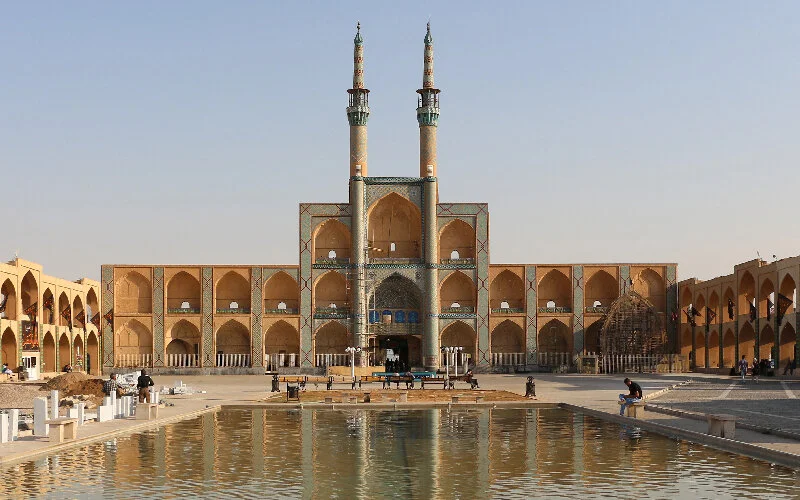
Monitoring begins at centuries-old sites in UNESCO-listed city of Yazd
TEHRAN — Monitoring of centuries-old monuments in the UNESCO-listed Historic City of Yazd has begun as part of an ongoing effort to strengthen conservation and management of the Iranian oasis city, a local official has said.
Majid Aloumi, the head of the Historic City of Yazd World Heritage Base said, continuous monitoring is a systematic process for tracking the condition of historic buildings and spaces, identifying damage at an early stage and providing information needed for conservation and management planning.
The Historic City of Yazd World Heritage Base is responsible for training, supervision, design and control of conservation, restoration and development activities within the World Heritage area, Aloumi said on Saturday.
He added that information collected through field monitoring, along with reports from relevant agencies, is periodically compiled and analyzed to assess the state of conservation of the historic city on an ongoing basis. The measures are being implemented as part of the management plan for the Historic City of Yazd World Heritage property.
Aloumi said the newly launched monitoring program includes visual documentation of the existing condition of monuments, as well as assessments of physical, structural, social and biological damage and the condition of the urban landscape. General and specialized records, or dossiers, will also be prepared for the monuments.
During the first phase, the Jameh Mosque of Yazd, Kolahdoozha House, which now houses the Water Museum, Chehel Mehrab Mosque, the Sheikh Ahmad Fahadan Mausoleum, the Shah-Abolqasem complex, Vaqt-o-Sa'at Square and the Amir Chakhmaq complex, among other sites, have been placed under specialized monitoring.
The results of the program will serve as a basis for future conservation, restoration and management plans for the historic monuments, Aloumi said.
The Historic City of Yazd was inscribed on the UNESCO World Heritage List in 2017. Located in Iran's central deserts near the historic Spice and Silk Roads, the city is regarded by UNESCO as a living testimony to the intelligent use of limited resources in a desert environment.
Its traditional urban fabric developed around the qanat water-supply system, with individual districts built around qanats and communal centers. Earthen construction, underground courtyards, wind catchers and thick walls helped residents adapt to the harsh desert climate.
The historic city has retained traditional districts and a range of architectural and urban elements, including qanats, houses, bazaars, hammams, water cisterns, mosques, synagogues, Zoroastrian temples and the historic Dolat-Abad Garden. UNESCO also highlights the longstanding coexistence of Islam, Judaism and Zoroastrianism in the city.
AM