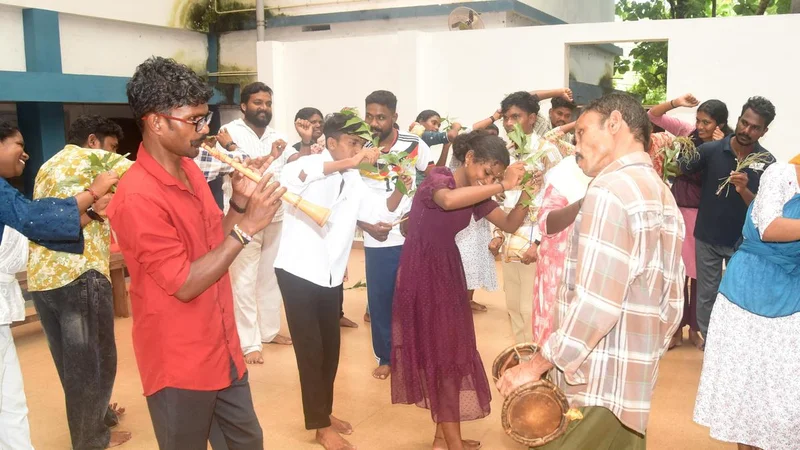
In a pioneering initiative to create a pool of master trainers and judges in the traditional art forms of tribal communities, the Adikala Kendram under the Kerala Institute for Research, Training and Development Studies of Scheduled Castes and Scheduled Tribes (KIRTADS) has trained its first batch of 26 tribal students in Paniya dance and music.
The two-month professional certificate programme, approved and funded by the Union Ministry of Tribal Affairs, aims to develop trained practitioners from five tribal communities — Paniya, Paliya, Irula, Hill Pulaya and Mavila. The certificates for the first batch will be distributed at a ceremony on the KIRTADS campus here on August 10.
According to the organisers, the programme, launched with financial assistance of ₹50 lakh from the Ministry of Tribal Affairs, is the first of its kind in Kerala to systematically train members of tribal communities as professional trainers and judges in indigenous art forms.
“Our aim is to develop a group of master trainers and expert judges in the tribal art forms of the Paniya, Paliya, Irula, Hill Pulaya and Mavila communities,” said Smitha Sivadasan, one of the project coordinators at the Adikala Kendram.
The first batch comprised students aged between 18 and 45 from Wayanad, Idukki, and Kasaragod districts. Around 10 experienced Paniya artistes trained the participants. Artistes from the Paliya, Irula, Hill Pulaya and Mavila communities will be invited to train subsequent batches in their respective traditional dance and music forms.
Prajod Irulam, one of the training coordinators, said creating a new generation of master trainers could significantly change how tribal art forms are presented and evaluated at cultural events and school festivals.
“At present, people with only a limited understanding of these art forms often perform them after learning basic steps and techniques from social media platforms such as YouTube,” he said. The presence of trained practitioners from the respective tribal communities could also help ensure more informed evaluation of competitions, he added.
Karthika Das, one of the 26 students, said the programme had given the participants greater confidence to perform the art forms and independently conduct sessions for those unfamiliar with their nuances.
“We have learnt how to systematically assess performances and techniques, encourage team spirit among tribal artistes, and help them excel in the field,” she said.
A major component of the course was a 10-day induction programme led by expert resource persons from Kerala Kalamandalam Deemed-to-be University. The sessions were designed to deepen the trainees’ understanding of the art forms and prepare them to serve as informed judges, while promoting greater awareness of their traditional characteristics and performance practices.
Published - August 08, 2026 07:14 pm IST