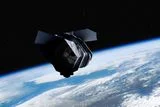
At the end of August 2026, the Nancy Grace Roman Space Telescope (Roman) will launch on a million-mile journey beyond Earth. From that distant vantage point, it will survey vast swaths of the cosmos, revealing far more of the universe than ever before and delivering crucial information about exoplanets, dark energy, and how space itself has expanded over time.
With an enormous field of view and a large array of high-resolution light detectors, the telescope is capable of accomplishing in just months what would take decades for its predecessor, the Hubble Space Telescope, according to NASA.
“Roman is a new kind of mission for NASA,” Jeremy Perkins, the project’s observatory integration and test scientist, told Discover. One intended “to answer some of the key questions that we just don’t understand about the universe.”
Read More: NASA’s Roman Space Telescope Arrives in Florida Ahead of Late-Summer 2026 Launch
What Makes Roman Different from the JWST?
The telescope is equipped with an 8-foot mirror designed to collect starlight. Other instruments will convert that light into electrical signals, which can then be decoded to create detailed panoramas of the cosmos. Julie McEnery, the senior project scientist for Roman, has said that to display a single image from the telescope in 4K, you’d need half a million TVs — enough to cover the face of El Capitan in Yosemite Valley, according to reports from NBC News.
To put Roman’s abilities into perspective, it offers the same sharp resolution as Hubble but can survey the sky 1,000 times faster, with each image covering an area 100 times larger, according to NASA. Both telescopes work with similar light wavelengths, in contrast to the James Webb Space Telescope, which has a fundamentally different goal: to peer deep into the infrared spectrum, ideal for imaging the earliest galaxies.
As NASA puts it, “Webb will tell us about the early universe, and Roman will help us understand how it evolved from there.”
In its first few years of operation, Roman is set to document millions of galaxies, billions of stars, thousands of supernovae and something like 100,000 exoplanets, according to Perkins.
How Roman Will Help Us Understand Dark Energy and Dark Matter
By imaging so many galaxies and supernovae, researchers will be able to reach a more precise estimate of how fast space is expanding. That, in turn, could help unravel two of the biggest mysteries in physics: dark energy and dark matter.
Dark energy is thought to be accelerating the universe’s expansion, driving galaxies apart, while dark matter accounts for most of the matter within galaxies, despite being invisible and thus only detectable by its gravitational effects.
“These are the two forces that have built the universe,” Perkins said, yet both have proven notoriously difficult to investigate. With Roman’s help, he predicts, “we're going to be able to see [their] impact on the universe and understand [them] to an extent that we haven't been able to do before.”
The Search for Exoplanets
The telescope will also perform a census of solar systems and exoplanets in the Milky Way galaxy, providing a better idea of how our own fits in. Roman won’t tell us about the atmospheres of particular worlds. But by increasing the number of known exoplanets from roughly 6,300 to tens of thousands, it will create a long list of promising targets for the Habitable Worlds Observatory, a proposed NASA mission — loosely slated for launch in the 2040s — that would search for signs of life on Earth-like planets.
And all of that is just what scientists expect Roman to find; surely, Perkins noted, greater surprises are in store, considering the near-unfathomable scope of the mission.
“When you're looking at trillions of objects,” he said, “a one-in-a-million chance is happening, like, two or three times a day.”
The telescope passed its final inspections this spring and got shipped off to the Kennedy Space Center in Florida. It’s scheduled for launch on Aug. 30, 2026, but will need another three months to reach its destination, a stable orbit between Earth and the sun. At that point it will begin sending its first images back home.
“I'm just really excited to have our aperture cover go off right, and get those detectors on, and start seeing light hit our detectors,” Perkins said. “Not just simulated light in a test, but actual starlight.”
Read More: NASA’s Nancy Grace Roman Space Telescope's ‘Spy Mirror’ Could Transform How We Map the Universe
Article Sources
Our writers at Discovermagazine.com use peer-reviewed studies and high-quality sources for our articles, and our editors review for scientific accuracy and editorial standards. Review the sources used below for this article:
- This article references information from NASA: Wide Field Instrument
- This article references information from NBC News: 1,000 times faster than Hubble: Up close with the NASA space telescope meant to unlock the cosmos
- This article references information from NASA: Hubble, Roman and Webb Space Telescopes Infographic
- This article references information from NASA: Roman and Webb Comparison Graphics from Far and Wide
- This article references information from NASA: Exoplanets