When we think of Africa, our minds, perhaps understandably, tend to turn immediately to elephants, lions and rhino (maybe meerkat and warthog).
But there’s another massive face of the continent to consider – those countries we never really think of as Africa (salam, Egypt), those we forget until we remember the movie (“Just smile and wave!” Madagascar) and those we’ve never heard of until they shine in something like the FIFA World Cup (congrats, Cape Verde).
These countries offer a great swath of attractions, and often have far fewer travellers to block the views, spoil photos, or to stand behind in interminable queues.
Who knew, for instance, that Algeria is the biggest country in Africa and the Seychelles is the smallest? Or that Cape Verde has the third most important nesting site in the world for loggerhead turtles, while Madagascar has 40-plus species of lemurs?
Or even that the Comoros is known as the “Perfume Islands of Africa” and Sao Tome and Principe as the “African Galapagos”, and Mauritius, which I’ve always thought of as offering the ultimate drop ’n’ flop beach holiday, is actually also a high-adrenaline hotspot for mad adventure sports?
Get exclusive travel deals delivered straight to your inbox. Sign up now.
So let’s explore some of those lesser-pondered African destinations and the treasures they offer, from the snow-capped peaks of Morocco’s Atlas Mountains, Algeria’s sweeping Saharan dunes, the turquoise reefs of the Seychelles, Madagascar’s giant baobabs and tiny lemurs, and the greatest open-air museum on earth in Egypt’s Luxor.
ALGERIA
The lowdown Algeria covers nearly 2.4 million square kilometres, and sits in North Africa between Morocco to its west and Tunisia and Libya to its east. More than 80 per cent of its population of 48.5 million – a blend of African, Arab and indigenous Berber cultures – live on the Mediterranean coastline to the north. While it has numerous attractions, it doesn’t have too many tourists, guaranteeing, almost always, a front-row view.
See + do Algeria has a rich history, with some of the best-preserved Roman ruins outside Italy, the fabulous Sahara Desert – with the rare Saharan cheetah – oasis towns with medieval architecture, such as Ghardaia, and colourful kasbahs, such as the UNESCO-listed Algiers markets.
Don’t miss“The Algerian Sahara is one of the most spectacular and least-visited desert regions in the world,” says Ben Ittensohn, regional director, Explore Worldwide, Australia & New Zealand. “It has an incredible sense of scale and remoteness. Travelling through the spectacular Tassili N’Ajjer National Park, with its ancient rock art, striking rock formations and vast dune fields, is an experience that stays with travellers long after they return home.”
Who goes there? Explore Worldwide runs three trips in Algeria, one of 10 days focused on archaeological highlights in the north for $3780 a person; another of nine days on the desert in the south for $3570; and a third for 16 days, a combination of the two at $7680. See exploreworldwide.com.au
Need to know The best time to visit is October to April, with warm days and cool nights. Smartraveller advises: Exercise a high degree of caution. See tourismalgeria.com; smartraveller.gov.au
CAPE VERDE
The lowdown Many people had not heard of Cape Verde before it came close to knocking out Argentina in last month’s FIFA World Cup. A remote nation 620 kilometres off the coast of West Africa, almost level with Senegal, it has a population of just over 500,000. Despite its 500 years of Portuguese rule (Portuguese is the official language), and so much colonial-era architecture, it’s still very much a part of Africa, with local Creole its main spoken language, a rich African musical heritage and that obsession with football.
See + do Cape Verde is best known for gorgeous white-sand beaches, crystal-clear turquoise water, windsurfing, sailing, scuba diving and kiteboarding. Its island Boa Vista also has the third-most important nesting site in the world for loggerhead turtles, and its waters are a breeding ground, from February to May, for humpback whales.
Don’t miss Climbing the 2829-metre-high active volcano of Pico do Fogo for beautiful views from its peak.
Who goes there? It’s so difficult to get to that most of its visitors arrive by ship on a cruise, stopping off en route to somewhere else. Cruise line Silversea, for example, has a 14-day cruise departing the Senegalese capital Dakar on April 17, 2027, to Lisbon, Portugal, which stops at Cape Verde’s Fogo, then its Porto Novo, from $A19,320 a guest. “Silversea has been going to the west coast of Africa for quite a while,” says Joe O’Sullivan, managing director of small ship cruise specialist Cruise Traveller. “Cape Verde is a popular stop because people know it’s hard to reach, and they’re unlikely to go there otherwise.” See silversea.com
Need to know Temperatures in this small country, known for its stable government and economy, are balmy between November and June. See capeverde.com
COMOROS
The lowdown Comoros is a collection of three main islands (a fourth is administered by France) off the east coast of Africa, halfway between Mozambique and Madagascar. Its people speak a dialect of Swahili, East Africa’s most popular language. It supplies a high volume of the world’s ylang-ylang essential oil, a key ingredient of perfumes such as Chanel No.5. It is a stunningly beautiful nation, home to some of the richest marine biodiversity in the world.
See + do ”Think azure water, untouched beaches, vibrant coral reefs and lush tropical rainforests,” says Samuel Karani, general manager East Africa of Intrepid Travel. “It still feels genuinely off the radar, with incredible endemic wildlife and a strong sense of place. Travellers can spot humpback whales and spinner dolphins, watch green sea turtles nesting on quiet beaches, and snorkel alongside manta rays, parrotfish and reef sharks. Critically endangered Livingstone’s flying foxes, some of the largest bats in the world, are found there.”
Don’t miss Humpback whale mothers and their newborn calves from mid-July to October.
Who goes there? Intrepid Travel runs nine-day small group tours with wildlife encounters and knowledgeable local leaders – who share personal stories of growing up on the remote islands and talk about Comorian culture and history – from $6818. See intrepidtravel.com
Need to know To avoid the December to April wet season, go from mid-July to October. See comorostourism.com
EGYPT
The lowdown In the north-eastern corner of Africa, close to the Middle East, Egypt’s identity is intrinsically African. It is a founding member of the African Union and its life-blood is the River Nile, which flows up from East and Central Africa. There’s simply no other place on Earth like it.
See + do Dennis Bunnik, joint chief executive of Bunnik Tours, says that while the pyramids and cruising the Nile are both magical, the country offers so much more. “For some, it is when they stand face-to-face with Tutankhamun’s gold death mask; for others, it’s when they turn a corner and see Abu Simbel for the first time,” he says. “For me, it was, and still is, walking through the hypostyle hall at Karnak Temple, a hall of 136 columns covered in hieroglyphics and at the top still containing their original colours.”
Don’t miss The new Grand Egyptian Museum, where, for the very first time, the entire contents of Tutankhamun’s tomb is on display. “It has instantly become one of the world’s greatest museums,” says Bunnik.
Who goes there? Bunnik Tours runs small-group tours to Egypt. Its 12-day Highlights of Egypt, from $10,795 a person twin-share, includes the pyramids, a Nile cruise, the tombs of the Valley of the Kings and the Temple of Hatshepsut. See bunnik.com.au
Need to know Daytime temperatures are mild from October to April, while evenings are cool. Smartraveller warns: Exercise a high degree of caution. See visitegypt.com; smartraveller.gov.au
MADAGASCAR
The lowdown Madagascar, off the East African coast, is the world’s fourth-largest island at nearly 600,000 square kilometres – about 1½ times the size of Germany – with a population of more than 30 million. About 165 million years ago, it split away from the African continent and is famed for its rich wildlife and massive baobab trees.
See + do Sue Badyari, chief executive of World Expeditions Travel Group, says Madagascar feels like a world of its own. “Its landscapes, wildlife and cultures are found nowhere else on Earth. The biodiversity is extraordinary – from lemurs and chameleons to baobab trees and the dramatic limestone pinnacles of Tsingy de Bemaraha National Park. It is a rich blend of African and Asian cultural influences.”
Don’t miss Like lemurs? Madagascar has scores of species.
Who goes there? World Expeditions runs three tours of seven, 11 and 21 days, from $2940 a person. The itineraries combine natural wonders with cultural experiences, visiting remote communities and lesser-known regions with experienced local guides.“Madagascar rewards those who are prepared to slow down,” says Badyari. “Infrastructure is improving, but journeys can be long and that, along with some of the most remarkable wildlife and landscapes, is part of the experience.” See worldexpeditions.com
Need to know The best time to visit is during the dry season, from about April to October. Smartraveller warns: Exercise a high degree of caution. See madagascar-tourisme.com; smartraveller.gov.au
MAURITIUS
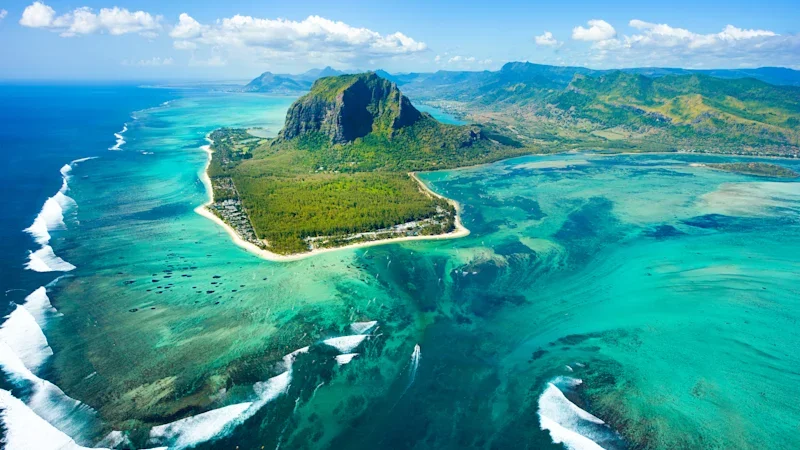
The lowdown Mauritius is an island nation, nearly 2000 kilometres off the coast of Mozambique, east of Madagascar. Colonised by the Netherlands, then France and finally Britain, it voted, on gaining independence in 1968, to be aligned with Africa. It is well known as a luxury travel destination with beautiful white-sand beaches, azure waters and high-end resorts.
See + do It’s perfect for a beach holiday but, says Danica Wilson, Africa specialist with travel company Encompass Africa, there is a whole other island hiding in the interior. “Our guides can take guests canyoning and abseiling down the Seven Cascades at Tamarind Falls, rappelling down a 40-metre waterfall into a jungle pool, and sea kayaking to mangroves to explore volcanic craters and freshwater caves,” she says. “There are rainforest trails up to the island’s highest peak for hikers.”
Don’t miss The incredible contrast of activities – going from a rugged canyon rappel in the morning to a champagne sunset on a catamaran by afternoon.
Who goes there? Encompass Africa runs private tailored tours to include whichever mix of activities guests request. “We build these experiences around their dream and travel parameters,” says Wilson. A seven-day adventure trip, for instance, could be from $3500 a person, and a luxury top-tier tour could be up to $8500 a person, all land-only. See encompassafrica.com.au
Need to know The best time to visit is May to December; September to November is especially good for hiking. Smartraveller warns: Exercise normal safety precautions. See mauritius.net; smartraveller.gov.au
MOROCCO
The lowdown Morocco is a North African country across the Strait of Gibraltar from Spain. It contains a mix of African culture with Arab, indigenous Berber, Spanish and French ways of life. It has a share of the Sahara Desert, as well as the towering Atlas Mountains, bustling medinas, ancient kasbahs, surf beaches, the romance of Casablanca and the stunning blue city of Chefchaouen. Wildlife sightings include the endangered Barbary macaque monkey, desert-adapted foxes and – everywhere – stray cats that locals feed.
See + do “Morocco is one of Africa’s most surprising destinations,” says Martin Ruffo, senior product manager with Inspiring Vacations. “Travellers can explore souks in Marrakesh and Fes, spend a night under the stars in the Sahara Desert, and discover a rich blend of Arab, Berber and European cultures.”
Don’t miss Camel-riding expeditions across the dunes and a night glamping in a luxury Sahara Desert camp.
Who goes there? Inspiring Vacations runs a range of eight to 15-day tours of Morocco, from $2595 a person. It also runs a 29-day trip, combined with Egypt and Jordan. “On our trips you experience Morocco beyond the landmarks,” Ruffo says. “You can share a traditional lunch with a local family, sleep in a desert camp, or discover the country’s stories and traditions alongside expert guides.” See inspiringvacations.com/au
Need to know The best time to visit is spring (March to May) and autumn (September to November). Smartraveller warns: Exercise a high degree of caution. See visitmorocco.com; smartraveller.gov.au
SAO TOME AND PRINCIPE
The lowdown An eight-island nation – with only two islands inhabited – Sao Tome and Principe lies off the west coast of Gabon in the Gulf of Guinea. Its African- Portuguese mixed population of just 240,000, makes it Africa’s second-smallest island nation. The Portuguese brought African slaves to its shores in the early 1500s to work on the sugar, cocoa and coffee plantations. Off the beaten tourist path, it teems with wildlife and is billed one of the least visited, most untouched tropical paradises on Earth.
See + do The quieter island of Principe is a UNESCO Biosphere Reserve and a nature-lover’s must-see. In particular, birders will enjoy the island, says Thomas Alexander of the Classic Safari Company. “Gaining the unofficial moniker of the African Galapagos, the nation has a significant number of endemic species,” he says. “The ocean offers sanctuary to humpback and sperm whales, dolphins and numerous nesting turtle species. Alongside crystal-clear waters, there is wonderful snorkelling and diving and very few other visitors. The capital, Sao Tome, is a step back in time with a village-like atmosphere, historical architecture and delectable chocolate.”
Don’t miss The islands were once the world’s largest producer of cocoa and many of the plantation estates have been converted into boutique hotels. Roca Sundy provides modern hospitality as well as a glimpse into the past.
Who goes there? The Classic Safari Company offers tailor-made tours, with most visiting for seven to eight nights from $5000 a person, excursions extra. See classicsafaricompany.com.au
Need to know The best time to visit is in the dry season, from June to September. See visitsaotome.com
SEYCHELLES
The lowdown The Seychelles is an archipelago of 115 islands in the Indian Ocean, 1000 kilometres east of Kenya, and is Africa’s smallest country. It’s considered a leader in ocean preservation and has one of the world’s biggest raised coral atolls, home to more than 100,000 giant tortoises. Its 135,000-strong population is a multi-ethnic blend of people with French, African, Indian and Chinese ancestry. Unusually, it is a matriarchal society, and the country doesn’t demand a visa from anyone.
See + do ”While the pristine beaches are the obvious drawcard, the Seychelles are also one of few places where you can see free-roaming giant land tortoises,” says Sean Martin, managing director ANZ at G Adventures, which visits the country. “We give guests the opportunity to take one of the Seychelles’ most rewarding hikes, the Copolia Trail, and a guided tour of Vallee de Mai – a UNESCO world heritage site once believed to be the original site of the Garden of Eden – where the world’s heaviest seed, the coco de mer, grows to up to 30.5 kilograms.”
Don’t miss The sight of prehistoric jungles, with evolutionary oddities such as the jellyfish tree, meeting white sands, framed by pink-tinged granite boulders. The Seychelles are the only oceanic granite islands in the world.
Who goes there? Most visitors arrive by cruise ship and see only their resort and one island, but G Adventures has just launched its first tour in the Seychelles as part of its Geluxe Collection. The eight-day Discover Seychelles itinerary includes stays on three different islands – Mahe, Praslin and La Digue – as well as day trips to nearby islands, from $7100 a person. See gadventures.com
Need to know The best time to visit is April to May and October to November. See seychelles.com
TUNISIA
The lowdown Tunisia is squeezed between Algeria and Libya in North Africa. It is flanked by the Sahara Desert at its base, and the Mediterranean at its tip. It has buzzing medinas, pretty seaside villages, lush forests, rolling hills, and spectacular ancient Roman architecture. Modern-day Tunisians are descendants of the indigenous African Berber people and the Arab Muslims from the Middle East who brought their language, and Islam, to the country. The variety of attractions, coupled with Tunisia’s compact size, make it easy to explore.
See + do Tunis is a pleasant capital, with its bustling medina, and coffee and cake shops, while Carthage, once Rome’s rival, is scattered with a breathtaking selection of ruins. Inland, there’s the UNESCO World Heritage Site of Kairouan, Islam’s fourth-holiest city, founded in AD 670 and famous for its Great Mosque. There are also vast salt flats, troglodyte homes and the thrill of the desert, with the chance to spot Tunisia’s national animal, the fennec fox, which is about the size of a Chihuahua, but has huge ears.
Don’t miss Many areas in Tataouine were used as locations for Star Wars. Berber granary fortresses – intricate honeycombs built of stone and clay – are equally fascinating.** **
Who goes there? On The Go Tours has a range of different packages, from the six-day Tunisia Discovery Experience from $1967 a person, to the eight-day Tunisia Immersive Experience from $2808 a person. Itineraries aim to “balance cultural treasures with scenic views and relaxation”. See onthegotours.com/au
Need to know Visit from April to October. Smartraveller warns, Exercise a high degree of caution. See discovertunisia.com; smartraveller.gov.au
Five more countries emblematic of Africa (and why we love them)
KenyaThe birthplace of the modern safari and the inspiration behind
The Lion King, Kenya has a well-developed infrastructure and plenty of excellent parks to view wild beasts, from the Maasai Mara – which annually hosts the largest migration of animals on earth – to Amboseli, with its views of Mount Kilimanjaro; from Tsavo to Lake Nakuru, with its fabulous flocks of flamingos. See kenyatourism.in; smartraveller.gov.au
BotswanaOne of Africa’s most admired democracies, Botswana is loved by tourists for its lush Okavango Delta, which supports the Big Five – lion, leopard, elephant, buffalo and rhino – and is traversable by dug-out canoe, as well as in traditional safari vehicles. The country also has the stunning Kalahari Desert, home to the San people, one of the world’s oldest continuous cultures, who still hunt with bows and arrows. See botswanatourism.co.bw
NamibiaWith the world’s oldest desert, the Namib, Namibia’s dry and otherworldly landscapes contrast with the green plains of much of the rest of southern Africa. There are the highest sand dunes on earth at the Sossusvlei, dazzling white salt plains and the ghostly Skeleton Coast, where the desert meets the ocean in a debris of shipwrecks and whale bones. See visitnamibia.com.na
South AfricaWidely regarded as one of the best safari destinations in Africa, there’s a huge variety of private and public game reserves to explore, stocked with vast numbers of wildlife. Along the coastline, there are also sharks, penguins and whales, while the fine wine and farm-to-table dining scene is flourishing. The Apartheid Museum in Johannesburg offers a moving look at South Africa’s turbulent history and its ongoing support for human rights around the globe. See southafrica.net; smartraveller.gov.au
ZimbabweWelcome to one of the most stunning sights on earth: the incredible Victoria Falls between Zimbabwe and Zambia, one of the seven natural wonders of the world. It is more than 1.7 kilometres wide, and dramatically falls more than 100 metres, with 500 million litres of water coursing over the edge every minute in peak flood season. Awesome. The country also has enviable numbers of wildlife, and often fewer visitors jostling to see them. See zimbabwetourism.net; smartraveller.gov.au