EXPLAINER: What makes a community disaster-resilient?
CEBU CITY, Philippines — A disaster-resilient community is more than just having an evacuation center and emergency supplies.
It must know who can respond, what resources are available, how to reach vulnerable residents, and how to maintain communication when roads, power and other essential services are disrupted.
These are among the measures outlined in a disaster preparedness framework presented by Cebu City Councilor Dave Tumulak, head of the Cebu City Disaster Risk Reduction and Management Council (CCDRRMC).
READ: Cebu disaster fund worth P88.7M gets council nod
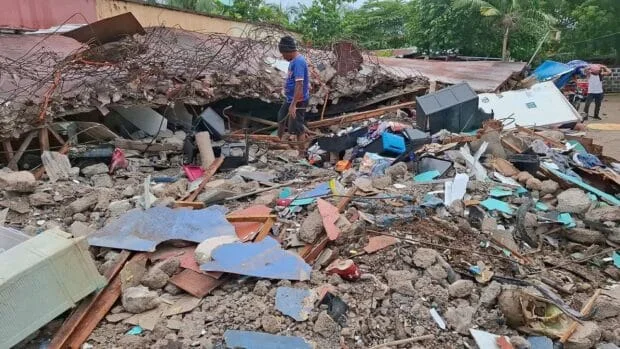
The framework is based on the possibility that a major disaster could isolate communities by damaging roads and bridges, paralyzing traffic, disrupting power and communications, overwhelming hospitals and emergency responders, and delaying access by government agencies.
In such circumstances, each barangay may have to rely on its own people and resources during the critical first 72 hours.
Know who can respond
One proposed step is for barangays to maintain an updated registry of residents with skills that could be useful during emergencies.
The list could include doctors, nurses, midwives, medical technologists, pharmacists and other health workers, as well as engineers, electricians, plumbers, carpenters, welders, drivers and heavy-equipment operators.
Radio operators, information technology professionals, police, military, fire and security personnel could also be identified as potential community responders. Sitio leaders would help identify residents with these skills.
The aim is to establish beforehand who within a community may be able to provide medical, technical, rescue, communication or other assistance when regular response systems are disrupted.
Identify available resources
A barangay would also need an inventory of resources that could be tapped during an emergency.
The proposed list includes water refilling stations and water tank owners, rice retailers, groceries, bakeries and other food establishments, as well as lumber and hardware stores.
Barangays could likewise identify available generators, chainsaws, trucks, backhoes, heavy equipment and other rescue tools within their communities.
Knowing where these resources are located could allow communities to access available supplies and equipment without immediately depending on assistance from outside the barangay.
Identify those who need help
Disaster preparedness also requires knowing which residents are the most vulnerable during an emergency.
The framework proposes strengthening barangay health centers as community resilience hubs capable of providing first aid, emergency treatment, medicine storage and patient stabilization.
It also calls for updated information on children, senior citizens, pregnant women and persons with disabilities to help responders identify residents who may require priority assistance during an evacuation or emergency.
Plan according to local risks
Not every barangay faces the same hazards, making location-specific planning another part of the proposed approach.
Communities would need to assess the condition of homes, schools, health centers, roads, bridges and other public facilities, along with power and communication systems.
After a disaster, they would also need to quickly establish the number of casualties and injuries, identify missing persons and displaced families, determine which vulnerable residents require immediate assistance, and assess available food, potable water, shelter, medicines and sanitation supplies.
The framework emphasizes that timely and accurate information can help produce a faster and more coordinated disaster response.
Pool resources
Self-reliance does not mean every barangay must have all the resources it might need.
The framework proposes district-level resource pooling for situations where a barangay’s own capacity is insufficient.
Neighboring communities could share rescue vehicles, equipment, medical personnel and volunteers, technical responders, evacuation facilities and logistical resources.
Under the proposed setup, barangays would respond first, districts would provide additional support, and the city would reinforce the response when necessary.
Protect the responders
The preparedness plan also recognizes that responders have families and homes of their own.
Barangay officials and emergency personnel may not be able to effectively report for duty if they are dealing with threats to their own households.
The framework therefore calls for responders to have secure homes and emergency plans for their families, allowing them to report for duty during emergencies.
Extend into schools
Disaster resilience would also extend into schools.
The framework proposes updated school disaster risk reduction and management plans, regular earthquake and fire drills, and training for teachers and staff in first aid, basic life support and incident command.
It also calls for student emergency response teams, identified evacuation routes and assembly areas, procedures for security threats and misinformation, and parent-student reunification protocols during emergencies.
Coordination among schools, barangay DRRM committees, CCDRRMO, the police, Bureau of Fire Protection and other stakeholders is also included.
Disaster preparedness
Taken together, the proposed measures place disaster preparedness beyond the question of whether a barangay has an evacuation site or emergency supplies.
They focus instead on whether a community already knows who can help, what it has, who needs help first, what risks it faces and how it will communicate and coordinate when normal systems are disrupted.
For communities facing the first hours of a major disaster with limited outside assistance, those preparations could determine how quickly the barangay can respond while waiting for wider government support.
Disclaimer: The comments uploaded on this site do not necessarily represent or reflect the views of management and owner of Cebudailynews. We reserve the right to exclude comments that we deem to be inconsistent with our editorial standards.