Two regions are vying to host Korea’s planned second space center, which will be capable of launching and landing reusable launch vehicles, with the host region to be announced in October, the country’s space authority said Sunday.
According to the Korea AeroSpace Administration (KASA), Jeonnam-Gwangju Special Metropolitan City (formerly South Jeolla Province and Gwangju) and Jeju Special Self-Governing Province have applied for the open bidding for the country's second space center.
KASA did not specify exact sites for the space center, but South Jeolla Province has been promoting Goheung County as a candidate region, while Jeju has reportedly proposed using a floating launch facility in waters off the city of Seogwipo on the island.
The second space center is designed to support more than 10 reusable launch vehicle operations annually from the mid- to late 2030s. The government aims to establish launch, landing and maintenance facilities for reusable launch vehicles on a site covering about 5.62 million square meters by 2034.
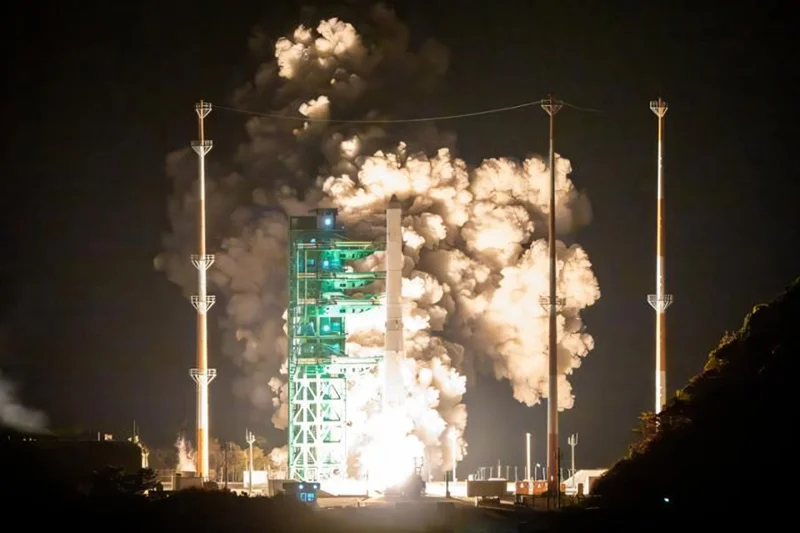
Korea currently mostly relies on the Naro Space Center in Goheung for its space launch operations, limiting its capacity to support launches of small and solid-fuel rockets by private companies.
When the government initially announced the project, it said candidate sites would be evaluated based on various conditions, including sufficient land to secure a safe area. Jeju, however, is known to have proposed an alternative approach involving launches of small satellites from using the offshore platform.
Mostly used for solid-fuel space rockets for military purpose, the offshore platform was used in 2023 to launch a solid-fuel space launch vehicle developed by the Ministry of National Defense.
Meanwhile, Goheung is highlighted by its advantage of having existing infrastructure. If the second space center is built near the Naro Space Center, the existing launch site, a launch complex dedicated to private companies, a national industrial complex and other facilities could be grouped as a single cluster.
KASA will first review whether the applicant regions meet the basic requirements for hosting the facility. It will then assess factors including launch operability, conditions for building launch infrastructure and other conditions before announcing the final selection in October.
"The second space center will become the country’s key space logistics infrastructure in the New Space Era,” KASA Administrator Oh Tae-seog said.