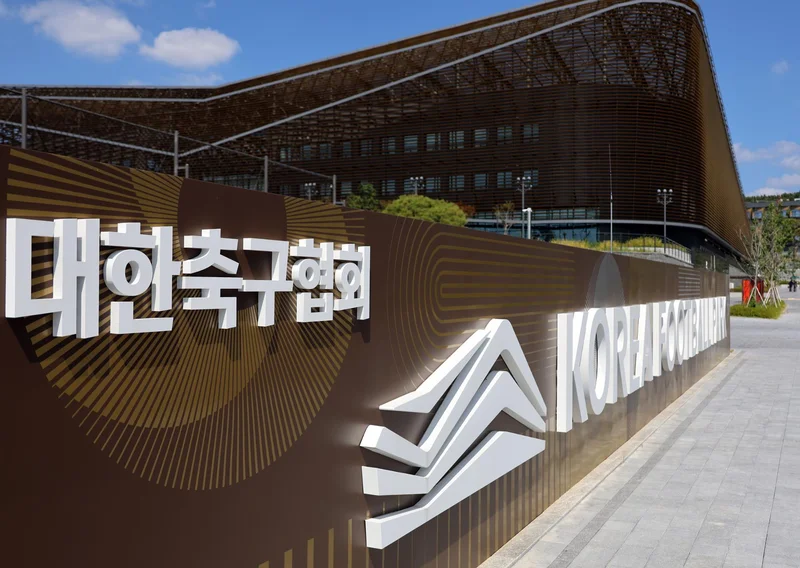
The Korea Football Association (KFA) has apologized. Again.
Following Korea’s disappointing 2026 World Cup campaign, a parliamentary hearing, a police search of KFA headquarters and renewed scrutiny of long-buried allegations, the KFA has acknowledged that public trust in the institution has been badly damaged. It has promised “deep self-reflection,” greater transparency and sweeping reform.
While that response is necessary, it is not sufficient.
Korean football does not need another apology. It needs a reckoning.
The latest crisis cannot be reduced to a poor World Cup performance, nor to the controversial appointment of a national team coach. Police are investigating whether improper interference occurred in the 2024 appointment of Hong Myung-bo, while the KFA’s handling of the process has already attracted sustained criticism. The sports ministry previously found that the association had breached its own procedures in appointing both Hong and his predecessor, Jurgen Klinsmann, although it did not conclude that the appointments were illegal.
That distinction matters. An allegation is not a conviction, and procedural failures are not automatically criminal offenses. But a governing body cannot expect public confidence when its most consequential decisions repeatedly become matters for police, parliamentary or government scrutiny.
More disturbing still are the allegations now resurfacing from 2011-12.
Recent reports, drawing on materials from a 2016 Ministry of Culture, Sports and Tourism investigation, allege that foreign referees assigned to seven international competitions were provided improper entertainment, including sexual services, with some expenses paid using KFA corporate cards. The matches included qualifiers connected to the 2014 World Cup and the 2012 London Olympics. Whether any referee was influenced, or whether any match was compromised, has not been established. Those questions require evidence, not speculation.
But the allegations are serious enough to demand a transparent examination of the underlying records and the decisions that authorized the spending.
They are also not appearing in a vacuum.
In 2016, the sports ministry found widespread improper expenditure by current and former KFA officials, including about 200 million won ($141,600) spent through corporate cards at establishments where such spending was prohibited. The ministry ordered recovery of funds, disciplinary action and referrals for investigation. Police subsequently charged 11 former and current KFA officials over alleged misuse of association funds.
The lesson should have been clear: Governance is not an administrative detail. It is the foundation on which sporting credibility rests.
Yet Korean football has repeatedly found itself debating the same questions — who made the decision, whether proper procedures were followed, whether money was properly spent and who, ultimately, is accountable.
That is why another statement promising reform will not be enough.
The KFA should submit itself to an independent and comprehensive review of its governance. The process for appointing national team coaches should be transparent and independently auditable. Financial controls must be strengthened. Conflicts of interest must be disclosed. Disciplinary and pardon decisions must be subject to clear, published standards. And where wrongdoing is established, responsibility must extend to senior officials, not merely those at the bottom of the ladder.
At the same time, Korean football must resist the temptation to rewrite its sporting history on the basis of unproven allegations. The players who represented Korea did not create these institutional problems. Their effort, achievements and defeats belong to them. Nothing discovered about the KFA’s administration should casually diminish what was earned on the field.
But protecting the players means protecting the credibility of the institution behind them. The KFA does not own Korean football. It is entrusted with administering it. That distinction has been forgotten for too long.
Fans do not owe the association their trust. The association must earn it — through transparency, accountability and demonstrable change. A disappointing World Cup can be repaired on the training ground. A damaged institution cannot.
The KFA has said it wants Korean football to receive cheers rather than anger, support rather than criticism. But that will not be achieved by asking people to forget. It will be achieved by giving them a reason to believe that the same failures will not happen again.
Korean football does not need another apology. It needs a reckoning — and this time, it needs the reform to follow.