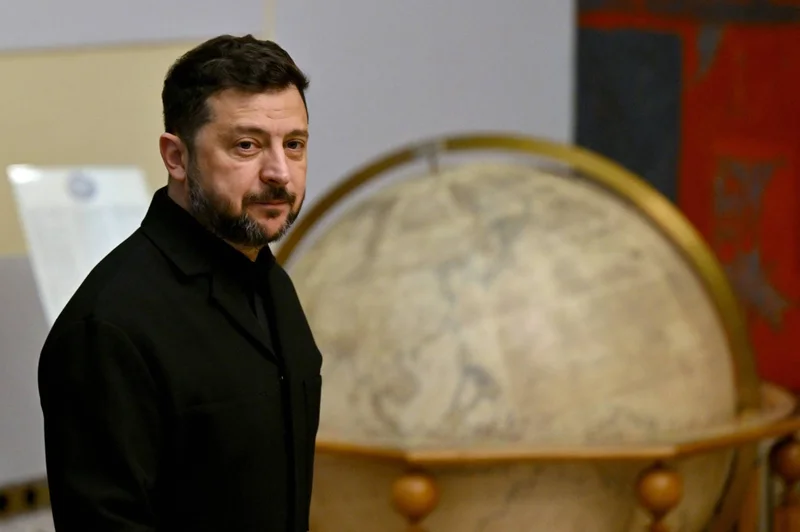
Kyiv is seeking air defense systems from South Korea, Ukrainian President Volodymyr Zelenskyy said, as Russia continues to bombard its neighbor with missiles and drones.
“In my view, the Republic of Korea should have closer cooperation with Ukraine. We are open to this. We would very much like to receive support from South Korea in an area where we have a shortage. That is air defense systems,” Zelenskyy said in a transcript of an interview with Ukrainian media posted to X on Saturday.
The Republic of Korea is the formal name for the South.
Russia has ramped up its attacks on Ukraine in recent months, regularly firing salvos of difficult-to-intercept ballistic missiles, with Kyiv pressing its partners for more U.S.-made Patriot interceptors and other air-defense equipment.
In the interview, Zelenskyy said that Seoul has good reason to bolster defense cooperation with Kyiv, noting North Korea’s growing military ties with Russia, including its 2024 dispatch of some 14,000 to 15,000 combat troops to fight in Ukraine. He also said that Pyongyang was set to deploy an additional 30,000 to 50,000 troops to Russian territory, an increase from a claim he made last month.
He did not offer further details or proof of the deployment plans.
“They are studying this war,” Zelenskyy said of the North Korean forces. “If we are talking about crises and escalation in another region — in the Pacific — which could pose a threat to other Asian countries, then North Korea will certainly gain experience in modern warfare under Russia.”
Zelenskyy said it is “absolutely clear” that North Korea will continue to build up this experience, “receive licenses from Russia and receive all kinds of military tools from them.”
He said Kyiv is also ready to work on a “Drone Deal and other areas as well,” a reference to Ukraine’s multiyear international framework that offers a range of projects depending on partners’ needs, including Ukrainian combat expertise, technology and defense-industrial cooperation.
South Korea, however, is bound by legislation that restricts arms exports to active war zones — a fact noted by Zelenskyy in his interview.
“But we would like to have this cooperation and are counting on it,” Zelenskyy said. “Our diplomats are in contact.”
Observers say that while direct transfers of weapons are unlikely, especially as defense firms look to fill domestic demand, joint ventures and tech sharing remain viable possibilities.
Zelenskyy has been pleading with supportive countries to help Ukraine refill its depleted arsenal of missile interceptors, even saying last month that Ukraine’s relations with Japan have not met Kyiv’s “high expectations,” months after Tokyo eased some of its onerous restrictions on the export of lethal weapons.
The Ukrainian leader said that, while Kyiv was grateful for Japan’s support, it had “not been as significant” as it could have been.
His remarks came less than a month after he said his country is interested in working with Japan’s Mitsubishi Heavy Industries, which is one of the few companies to hold a license to manufacture Patriot missiles, after U.S. President Donald Trump indicated that Washington would give Kyiv a license to manufacture the advanced weapons.
But Trump abruptly reversed that decision weeks later, leaving any potential collaboration with Japan in limbo.
Ukraine could be looking for deeper security cooperation in other areas following Tokyo’s move in April to ease export rules for lethal weapons. That revision, however, kept in place a rule that bars transfers to countries currently involved in conflicts, allowing them only in “exceptional circumstances.”
The export of lethal arms is also only possible for the 17 countries Japan has Equipment and Technology Transfer Agreements with — a grouping that Ukraine hopes to join as soon as possible.