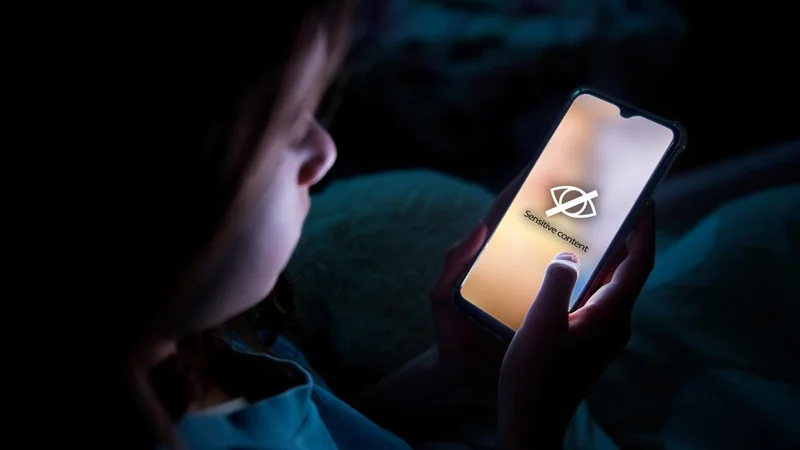
The debate over whether a social media ban for under 13- or 16-year-olds should be implemented or not, and amid the Union government’s standoff with Meta, an interesting intervention appeared in the Lok Sabha last week, with a private members’ Bill listed in that House by Bharatiya Janata Party (BJP) MP Baijayant Panda, throwing a little light on what such a move could look like in its legislative form.
The ‘Safeguarding Healthy Internet Environments for Little Digital-Natives (Shield) Bill, 2025’ was listed on Friday (August 7, 2026) but could not be tabled as both Houses of Parliament adjourned early.
It is “now well established by multiple studies that many social media algorithms are not only designed to foster addiction but also to embellish and reinforce narrow and extreme viewpoints, rather than shed light on all angles of any issue,” Mr. Panda told The Hindu.
It was “particularly harmful for young teenagers and children”, Mr. Panda said. Many social media platforms had acknowledged these conclusions, and consequently, several countries had started imposing restrictions on social media access to minors, especially those under the ages of 16 or 13, with the Centre also seized of the issue. “I had drafted a private member’s Bill for this purpose a year ago, after wide consultations with all stakeholders,” he said.
“Opposition parties need to reflect and rethink their blanket disruption of Parliament even on issues such as this, where there is no dispute with the Treasury Benches,” the BJP legislator said.
The Bill specifically states that no child under 13 years of age shall create an account on any social media or online gaming platform without verified parental consent, and that every intermediary shall provide parental control dashboards enabling guardians to monitor activity, manage privacy settings, and restrict screen time.
Any harmful content reported by an individual, guardian or parent shall, subject to verification by the intermediary, be removed or disabled within 36 hours of receipt, or 24 hours if it involves child sexual material. Every application shall have a reporting button titled ‘Report Child Harm’ accessible to all users.
Any intermediary who fails to comply with the Act shall be liable to a penalty of up to ₹10 crore, and wilful or repeated violations will lead to suspension of the intermediary's services or blocking under the provisions of Section 69A of the Information Technology Act, 2000.
Officers designated by intermediaries who fail to observe due diligence in matters, specifically child safety or content removal obligations, either because of connivance or neglect, will be personally liable and could face imprisonment for up to 3 years, a fine of ₹10 lakh, or both.
An annual child safety and risk assessment process, identifying exposure risks related to content algorithms and interactions on a service, has to be carried out and submitted to the government. Information collected about users via the verification requirement cannot be used for behavioural profiling, the Bill says.
As more and more countries appear to be bringing legislation that restricts social media usage by children, the Bill listed by Mr. Panda appears to be a timely signal of similar efforts in India.
Published - August 09, 2026 05:35 pm IST