Computer Science and Engineering (CSE), and its allied computing disciplines have retained their overwhelming appeal among engineering aspirants in Kerala, while government engineering colleges continue to command a clear preference over most self-financing institutions, an assessment of the ongoing allotment process reveals.
Emerging programmes such as Artificial Intelligence attract strong interest, whereas traditional core branches such as Civil and Mechanical Engineering continue to draw candidates with relatively lower ranks.
Similar to previous years, the appetite for computing extends well beyond conventional CSE. Candidates have opted in large numbers for CSE with Artificial Intelligence and Machine Learning (AI&ML), Artificial Intelligence and Data Science, Computer Science and Design, Cyber Security and other computing-related programmes.
Yet, the data does not indicate that conventional engineering has become irrelevant. Electronics and Communication Engineering (ECE) remains a major second preference and continues to command strong ranks, particularly at government colleges. Electrical and Electronics Engineering, Mechanical Engineering and Civil Engineering also attract candidates, particularly where the institution has a strong reputation.
College reputation
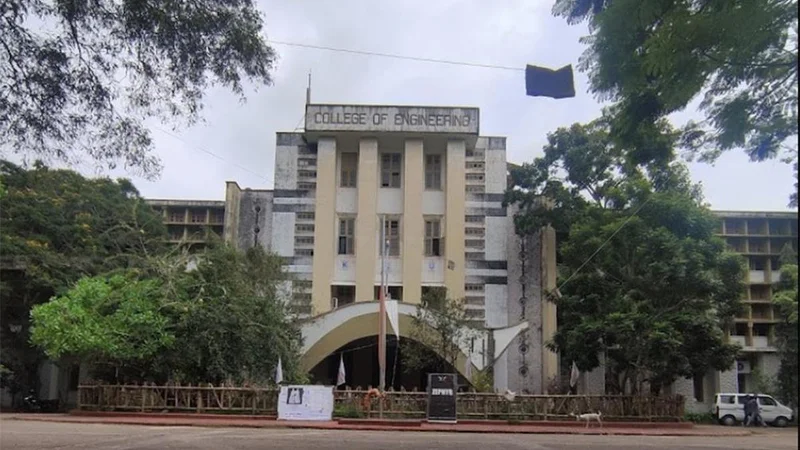
The figures indicate that college reputation remains almost as important as branch preference in the State. The College of Engineering Trivandrum (CET) continues to occupy a distinct position at the top of the hierarchy, followed by institutions such as Government Engineering College, Thrissur; Rajiv Gandhi Institute of Technology, Kottayam; and TKM College of Engineering, Kollam.
An official pointed out that the three allotment phases point to a three-tier preference structure among engineering aspirants. At the top are premier government institutions, especially CET. Within these institutions, CSE and ECE are the principal choices. A second tier comprises emerging technology programmes such as AI&ML, AI and Data Science, Cyber Security, Data Science, Computer Science and Design, which are increasingly competing with conventional branches for higher-ranked candidates. The third comprises traditional branches and newer programmes in institutions where admission remains possible at substantially higher ranks.
The allotments also show that the demand for technology-oriented education is not restricted to a small group of elite candidates. Even among candidates in the 30,000-40,000 rank range, CSE and its variants remain prominent choices.
“For example, around rank 36,000, the allotment list includes CSE at several institutions, CSE with AI&ML, Data Science and Cyber Security, as well as ECE and Electrical and Electronics Engineering,” the source points out.
Published - August 09, 2026 07:59 pm IST