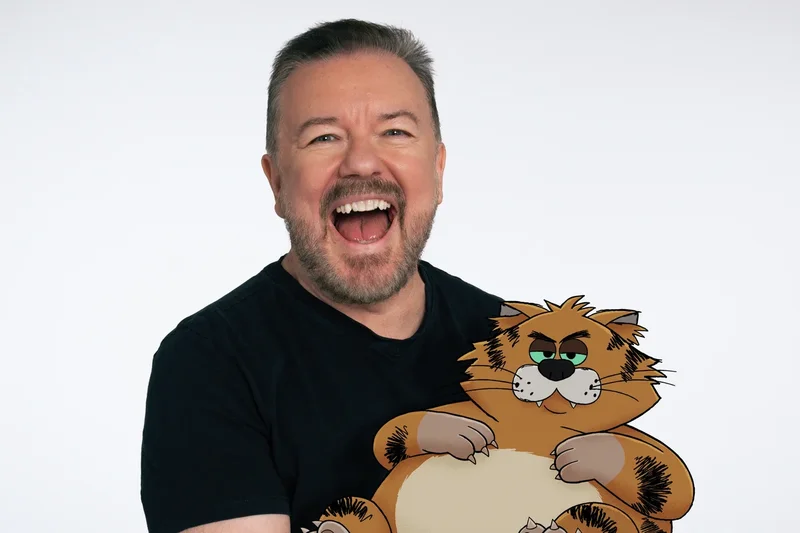
Ricky Gervais says he has “never been so happy” after his critically derided Netflix series Alley Cats reached the number one spot on the streaming platform.
The six-part animated series, which marks Gervais’ first TV comedy since the conclusion of his hit Netflix drama After Life concluded in 2022, follows a gang of foul-mouthed feral cats as they attempt to help a lost kitten find its way home.
Gervais voices Gus, a cynical orange tabby, and is joined by frequent collaborators including Tom Basden, Diane Morgan, David Earl and Andrew Brooke.
The series has been widely panned by critics, with The Independent’s Louis Chilton giving it just one star in his review.
“For the past two decades, the increasingly futile question hanging over Gervais’s career has been whether he will ever make something as brilliant as The Office again,” he wrote. “Alley Cats makes me wonder if he even has it in him to make another Life’s Too Short.”
The 65-year-old comedian, however, seemed defiant as he celebrated the cartoon’s Netflix success.
“Oh. My. God,” he wrote on Instagram, alongside a picture of the show occupying the top spot in Netflix’s chart.
“I’ve never been so happy,” he added. “Best fans in the f***ing world.”
The Telegraph’s reviewer Anita Singh gave the show zero stars, describing it as “the worst thing to happen to cats since Cats”.
“Alley Cats is staggeringly unfunny,” she wrote. “It’s bizarre to see someone of Gervais’s talent produce this.”
Meanwhile Metro’s Tom Percival was similarly unimpressed, writing: “I was shocked that a man I used to think was a comedy genius, a man who worked on two of the best comedies of all time and produced arguably the greatest comedy character of the 2000s, David Brent, could produce such lazy claptrap.”
Appearing to allude to the criticism on Friday, Gervais posted on X, telling his followers: “If you watch Alley Cats and you get offended at any point, just remember that 1, It’s just a cartoon, and 2, you’re an adult, and can take it.”
He struck a similar tone in an interview with The Times on Saturday, telling the paper that he found audience outrage to be “inevitable and a bit boring now”.