Sign in. It’s quick, free and it’s up to you.
An account is an optional way to support the work we do. Find out more.
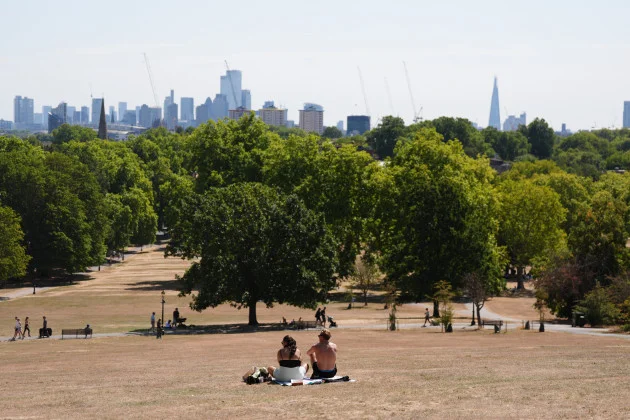
TEMPERATURES HAVE RISEN to 30C in south-east England over the weekend as the UK prepares for a fifth heatwave in the coming week.
Meanwhile, north-west Scotland has been hit by half a month’s rainfall in just two days.
Frittenden in Kent recorded 30.6C on Sunday, with more places expected to reach highs of up to 32C later in the day.
“We’ve seen Frittenden in Kent reach 30.6C. We still expect temperatures to peak at maybe 32C or just above this afternoon,” meteorologist Tom Morgan told the Press Association today.
Forecasters said Monday will be slightly cooler but heatwave conditions will likely return next week, with a high of 36C expected in parts of East Anglia and the South East by Thursday.
Health officials have warned of risks when taking some medicines, including common painkiller ibuprofen, in hot weather as they can make it harder for the body to stay hydrated, regulate temperature or cope with sun exposure.
Dr Alison Cave, chief safety officer at the Medicines and Healthcare products Regulatory Agency, said: “Proton pump inhibitors (PPIs), commonly used to treat acid reflux and heartburn, have also been linked to a very low risk of a lupus-like skin reaction triggered by sun exposure, and common painkillers such as ibuprofen and naproxen may also increase sun sensitivity.”
The UK Health Security Agency (UKHSA) has issued yellow heat health alerts for the East Midlands, West Midlands, South East, South West, East of England, Yorkshire and the Humber, and London.
The yellow heat health alerts are in place until 9pm on Tuesday, but may well be extended as the hot weather continues.
While drought-hit parts of England and Wales struggle, more than half a month’s rainfall hit north-west Scotland in the last 48 hours, the Met Office said.
“They’ve seen over 100mm of rain on Friday and Saturday, so the rain isn’t far away and there is a little bit of rain in northern England and Northern Ireland today too,” Mr Morgan said.
The extreme weather of summer 2026 has included two record-breaking heatwaves in May and June that led to more than 2,800 excess deaths.
Two more heatwaves in July, the driest July in England and Wales since records began in 1836, have fuelled drought and wildfires.
Nineteen counties across England recorded effectively no rainfall – 1mm or less – across the whole of the month, with half of England and all of Wales plunged into drought.
To embed this post, copy the code below on your site