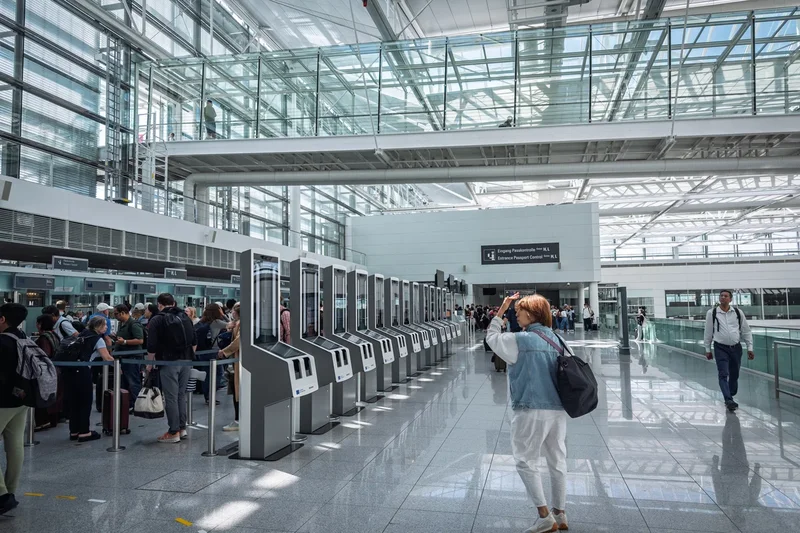
The European Union is considering further delaying the full rollout of its entry/exit system (EES) in order to avoid added complications at its borders, according to a report.
The EU finally introduced its new border security system in stages from October last year, replacing the old process of manually stamping passports with the registration of biometric details when travellers arrive in Europe.
But the system has already faced calls to be scrapped after creating bottlenecks at airports, with a fifth of Brits now considering cancelling their European holidays this summer due to the chaos.
Industry sources told The Times that Apostolos Tzitzikostas, the commissioner responsible for negotiations over the EES with non-EU countries, has privately assured the checks will be paused.
Mr Tzitzikostas was said to be pushing to extend a derogation allowing officials to suspend the new checks past the existing deadline of 6 September for the full rollout.
And he was reported to have already made assurances to the UK that an extension is possible, having recently. met with transport secretary Heidi Alexander, according to the newspaper.
The department said last month that Ms Alexander had raised concerns about the EU’s new digital border check system with Mr Tzitzikostas during their meeting on 14 July.
Ms Alexander said in a statement at the time: “We want everyone to have the summer holidays they deserve – and yesterday’s meeting shows everyone is pulling in the same direction.
“I was reassured that the EU commissioner for transport understood the concerns of holidaymakers and recognised the need for us to work together.”
That came amid reports that passengers were missing their flights due to long queues, while Ryanair warned of “queue chaos” from the new system, which it said was not ready for full implementation.
They pointed to several popular airports including Spain’s Alicante, which they said was not ready for the checks due to “insufficient staff, kiosks and system readiness”.
Alicante-Elche Miguel Hernández airport is now preparing for a £985 million upgrade including facilities to streamline EES checks.
The EU's EES only became fully operational in April and applies to all 29 Schengen countries, most of which are EU member states, with further operations expected in the autumn.
The system requires travellers to register their biometric details, such as fingerprints and a photo, when they arrive in the EU, replacing the previous system of manually stamping passports.
EES is required for all non-EU passengers entering or exiting Schengen countries.
The British government has announced £20 million in new funding to increase the number of booths for passport checks at the country's main gateway to Europe, the Port of Dover.
The majority of the new checks will be done in EU member states, but will take place in Britain for those using the ferry through the Port of Dover or taking the train into the EU, the government said.