On July 20, 2026, India’s young people came together to demand a fair education system and accountability for paper leaks.
These young women and men came from every caste, class, region and religion. They were brave enough to demand justice, wise enough to know their Constitutional rights, tender enough to laugh at their own turmoil, and earnest enough to believe that they could fight and win.
The nation watched the protesters in awe, as they sang, danced, laughed, held hands and stood together. Their resistance gave voice to the pain both of their own generation, and of crores of Indians who are suffering but have been silenced by fear.
Met with violence
The protests carried forward India’s proud legacy of peaceful resistance, a tradition which won it independence and is protected by Article 19 of the Constitution.
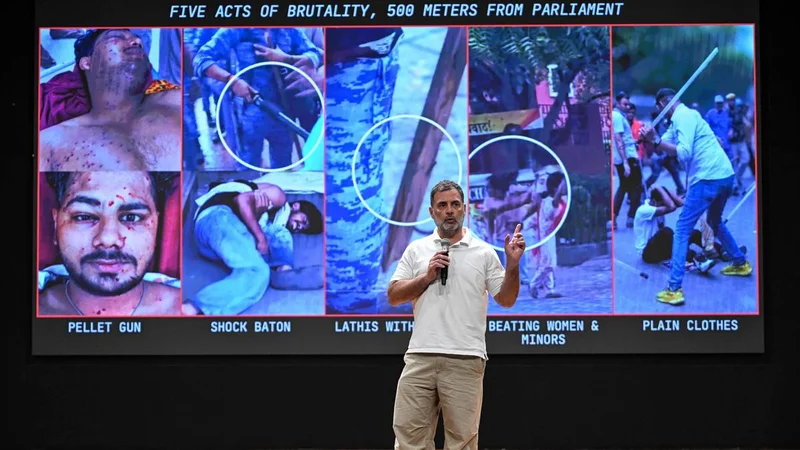
Yet, the government tried to crush the youth’s voice with a brutal assault. They were attacked with tear gas shells, beaten with nail-studded lathis and shot with pellet guns.
Nineteen-year-old Sahil Lochab, whom I met, had hundreds of lead pellets lodged all over his upper body. A pellet struck his eye, likely blinding him. Policemen wielding batons brutally assaulted young women, injuring many on their private parts. Minors were beaten with lathis, their bones broken, gashes and bruises on their bodies. In Bihar, student protesters were shot with firearms, including an AK-47, in Siwan, leaving many severely injured.
Who authorised this illegal and unconstitutional violence?
Centralised power
The Narendra Modi government prides itself on its centralised control. Whether it is a mission to Mars or an Olympic medal, it repeatedly trumpets that the credit is due to Prime Minister Narendra Modi and Home Minister Amit Shah. Nothing moves without their approval.
The violence happened in the heart of Delhi, barely 500 metres from Parliament. Both the security forces deployed, the Delhi Police and the Rapid Action Force (RAF), report directly to the Home Minister.
There are only two possibilities. First, he authorised the attack on the students — in which case he is culpable. Second, he had no idea that it was taking place — which means that he is entirely incompetent. Either way, as Home Minister, what happened on that day is his responsibility, and he must resign.
Instead, his inaction proves that he approves of the attack on students. He has not ordered any inquiry or even issued a statement. He has refused to come to Parliament, and motions filed daily by the Opposition asking for a discussion have been summarily rejected.
At the same time, Prime Minister Modi, desperate to protect his image, has activated his propaganda machinery and Godi media. First information reports and detentions of young protesters continue, in order to intimidate them. The Bharatiya Janata Party’s online trolls threaten young female protesters and their parents, forcing them to issue public apologies. Prime Minister Modi personally made a video “forgiving” the youth of India for exercising their legitimate right to express themselves. How absurd it is for a Prime Minister to forgive his own people when they are demanding accountability.
Standing with India’s youth
Since Prime Minister Modi is clearly so out of touch, let me warn him — young people across the country have awakened. His image is destroyed and can never be rebuilt. The youth of India will not allow him, Home Minister Shah, or any official to escape the consequences of their actions. We in the Opposition stand with the youth. We will not allow these crimes to pass unpunished.
On July 20, 2026, Sahil and thousands of young people across India demanded accountability from those they elected to office. Sooner or later, they will get that accountability. And we will ensure it.
Rahul Gandhi is the Leader of the Opposition in the Lok Sabha, Member of Parliament for Rae Bareli, Uttar Pradesh, and Member of the Indian National Congress
Published - August 10, 2026 12:16 am IST