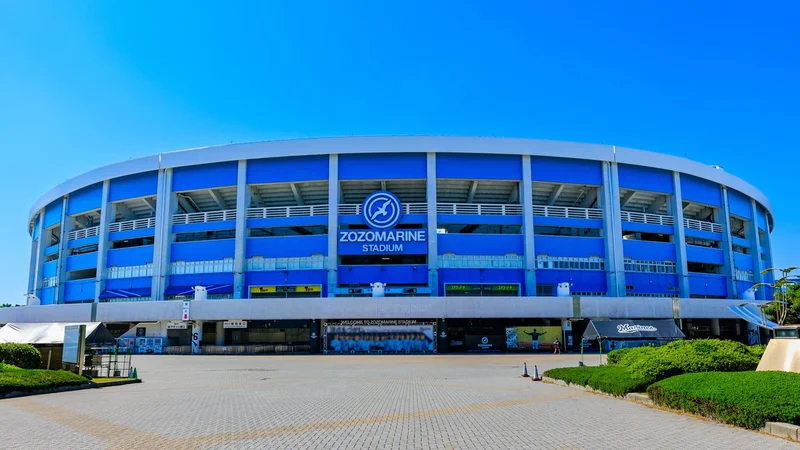
Extreme Weather Spurs Renewed Interest in Dome Stadiums Across Japan
Sports## Higher Temperatures and Rising Risks
On June 2, the Chiba municipal government, the Chiba Lotte Marines baseball team, and Aeon Mall—operator of a mammoth shopping center near Zozo Marine Stadium—signed an agreement to begin planning a new ballpark. It will be built on a parking lot owned by Chiba Prefecture a kilometer north of the current facility, with opening targeted for around 2034.
At a press conference announcing the deal, acting team owner Tamatsuka Gen’ichi emphasized the need for a roofed venue: “To create a truly attractive facility, we have to construct a dome, given the recent severity of climate change. Today’s agreement finally gives us a framework to begin concrete preparations.”
Japan has recently seen a sharp rise in days when temperatures reach 35° Celsius or higher. On August 5, 2025, Isesaki in Gunma Prefecture recorded 41.8°, the highest temperature ever observed in Japan. Torrential downpours have also become more frequent.
Initially, Chiba officials were hesitant about building a dome stadium due to high expenses. An outdoor stadium was estimated to cost around ¥65 billion, while a dome would exceed ¥100 billion, raising fears of a public backlash over lavish spending.
But public comments collected last summer overwhelmingly favored an indoor venue, citing player safety, spectator comfort, and the ability to host events regardless of weather. With strong backing from the baseball team as well, the city shifted its policy toward an indoor design. Although many residents requested a retractable roof like that of Es Con Field Hokkaidō, cost considerations make a fixed structure the more likely option.
Since opening in 1990, Zozo Marine Stadium has been known for strong gusts and the scent of Tokyo Bay. But ensuring multipurpose use—concerts, exhibitions, and more—will require being able to withstand severe weather. Chiba’s concept envisions a year-round “entertainment stadium.” Adjacent Aeon Mall, for its part, is eyeing business opportunities by functioning as an extension of the new stadium.
Tsukiji to Host a 50,000‑Seat Indoor Arena
A major indoor stadium is also planned for the former Tsukiji Market site in Tokyo. On the 190,000-square-meter property owned by the Tokyo metropolitan government, developers will construct nine buildings, including a multipurpose arena for baseball, soccer, and concerts, along with hotels, offices, residences, and retail facilities. The ¥900 billion redevelopment will be led by a consortium including Mitsui Fudōsan, Toyota Fudōsan, and the Yomiuri Shimbun Group. Construction of the main facilities will begin in fiscal 2028, with opening planned for the early 2030s.
Announcement of the plan by a consortium that included the owners of the Yomiuri Giants fueled speculation that the team might relocate its home field to Tsukiji. This was quickly dismissed by Yomiuri Shimbun Group president and team owner Yamaguchi Toshikazu, however, who said the project was not premised on such a move.
The current home of the Giants, Tokyo Dome, has been operating since 1988, but its prime location next to Suidōbashi Station means relocation offers little advantage. The Tsukiji stadium, meanwhile, is designed from the outset as a multipurpose indoor venue rather than a facility premised on baseball.
An Indoor Rugby Stadium in Central Tokyo
Redevelopment is also advancing in Tokyo’s Meiji Jingū Gaien district, where the Chichibunomiya Rugby Stadium will be rebuilt as an indoor venue on the site of the former Jingū Secondary Stadium.
The current stadium dates back to 1947, constructed through donations and volunteer labor on the burned‑out grounds of the former Gakushūin Girls’ School, which had been used as a US military parking lot. Originally called Tokyo Rugby Stadium, it was renamed in 1953 upon the passing of Prince Chichibu, honorary president of the Japan Rugby Football Union, and has long been regarded as hallowed ground for Japanese rugby.
The new stadium, scheduled to open in 2030, is modeled on Paris La Défense Arena (renamed Plenitude Arena in 2026), Europe’s largest indoor sports venue, and will be Japan’s first indoor rugby stadium. Seating capacity for rugby games will be 15,000—a decrease of about 10,000—but the venue will still be able to accommodate up to 25,000 for concerts and other events.
Rugby traditionally embraces play in rain or snow, so the idea of an enclosed stadium with artificial turf initially sparked opposition. Ultimately, however, priority was given to the utility of a venue that can be used year‑round regardless of weather.
In addition to the new rugby stadium and the Japan National Stadium rebuilt for the 2020 Olympic and Paralympic Games, the Jingū Gaien district will also see a new baseball stadium, to be completed around 2033. This ballpark will remain outdoors given its role as the main venue of college baseball competitions, as well as to keep construction costs down and to align with the neighborhood’s green spaces. Zoning restrictions also prevent dome construction due to floor‑area ratio limits. The district will thus host a mix of indoor and outdoor venues, and how they are used in the future will be closely watched.
A Trend Toward Outdoor Stadiums Since the 2000s
Inspired by Tokyo Dome’s success, dome stadiums proliferated around the country from the 1990s. Fukuoka, Osaka, Nagoya, Sapporo, and Tokorozawa in Saitama (which placed a roof onto an existing outdoor facility) all built domes. But the pendulum swung back in the 2000s as fans sought the experience of watching games in open‑air environments.
Examples of new outdoor ballparks include the extensively renovated and expanded prefectural Miyagi Stadium in Sendai, home of the Tōhoku Rakuten Golden Eagles since 2005. The Hiroshima Tōyō Carp followed in 2009 with the construction of Mazda Zoom‑Zoom Stadium near Hiroshima Station, featuring natural grass and an asymmetrical field often seen in Major League Baseball.
One model for the modern baseball stadium was Oriole Park at Camden Yards in the United States. Built in 1992, it blended a classic brick exterior with an open, airy field. In contrast, the world’s first dome stadium, the Houston Astrodome, closed in 2005, highlighting aging issues faced by fixed-dome facilities.
The pursuit of the classic baseball experience—with sunshine and fresh air—strongly influenced Japanese stadium design. Broadcasts of Japanese players in the Major Leagues also helped convey the appeal of American open-air parks. Yet with summer heat intensifying, outdoor viewing has become increasingly challenging. Many people still prefer outdoor stadiums, but concerns over player and spectator safety and comfort, along with organizers’ anxiety about unpredictable weather, are driving renewed interest in indoor venues.
Kōshien’s Dilemma: Tradition Versus Safety
The National High School Baseball Championship is staged at Hanshin Kōshien Stadium, an outdoor stadium west of Osaka. Based on the recommendations of a review panel, the Japan High School Baseball Federation is now considering shortening games there to seven innings, starting from the 100th spring invitational in 2028. The panel concluded that a shorter format would improve tournament operations and protect the health of players and spectators.
The biggest health risk is the extreme heat during the summer tournament in August. Concern about the aging stadium earlier prompted talk of constructing a domed venue in a neighboring district, but tradition prevailed, and the existing ballpark was renovated between 2007 and 2010, including replanting its iconic ivy.
The review panel’s final report reaffirmed Kōshien’s symbolic status as a “sacred” venue for high school baseball and synonymous with the sport itself. While some still advocate moving the tournament to a dome, the report recommended continuing at Kōshien from historical and social perspectives.
Renovation plans henceforth call for extending the stadium’s “silver umbrella”—a roof now covering the grandstand—to the Alps cheering sections between the infield and outfield seats. Full dome construction is considered nearly impossible due to the Hanshin Expressway running directly beside the stadium, leaving no space for the massive support columns a dome would require.
Even with a seven‑inning format, heat risks will remain. As dome and indoor stadiums gain momentum nationwide, Kōshien faces difficult choices in balancing tradition with safety.
(Originally published in Japanese. Banner photo: Zozo Marine Stadium, which is slated for redevelopment as an indoor venue. © Pixta.)