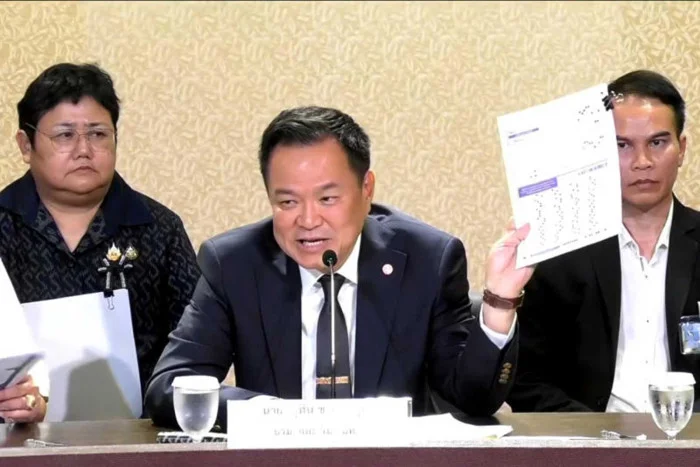
Some influential political families are involved in local-government exam fraud, with evidence forwarded to the National Anti-Corruption Commission (NACC), says the Interior Ministry.
Deputy Interior Minister Worasit Liangprasit said on Sunday the Local Personnel Administration Committee (LCAC) had approved a revised list of successful candidates, which the Department of Local Administration (DLA) will send to provincial committees this week along with implementation guidelines.
Local administrative organisations will be instructed to remove officials whose appointments were obtained through fraud by Aug 31, Mr Worasit said.
The ministry identified 5,925 candidates whose examination scores were deemed abnormal and forwarded their names to police and the NACC.
The probe will target not only candidates but also mediators and agents involved in arranging fraudulent results.
Some agents allegedly operated networks covering between 50 and 100 candidates.
Asked whether influential local political families were involved, Mr Worasit said some had been implicated. He said the details, including financial transactions, had been passed to the NACC for further investigation. No names were provided.
The deputy minister said no one would be exempt from prosecution if evidence linked them to the scheme, regardless of whether they were civil servants or politicians, as the probe carries on.
Deputy permanent secretary for interior and acting DLA director-general Nirat Pongsitthaworn said the revised results reflected a commitment to ensuring honest candidates were not denied positions because of corruption.
"Whoever did wrong must face the consequences, without exception," Mr Nirat said.
Meanwhile, former MP Thepthai Senpong challenged Prime Minister and Interior Minister Anutin Charnvirakul to answer questions about the scandal.
He asked whether candidates removed from the original list would face legal action, whether the entire examination should be retaken given alleged flaws in the recruitment process, and whether politicians and senior officials were among those implicated.
He also questioned whether the government would pursue criminal, civil, disciplinary and ethical penalties against all offenders, rather than limiting action to a small number of officials or protecting powerful political figures.