The Korean economy is showing signs of a "broader improvement" on the strong performance of chip-related industries, a state-run think tank said Monday, although uncertainties in the Middle East are expected to intensify inflationary pressures.
"The Korean economy showed signs of broader improvement, led by semiconductor-related sectors," the Korea Development Institute (KDI) said in its monthly economic assessment.
"Exports and equipment investment continued to grow strongly, driven by semiconductors, while consumption growth accelerated, led by durable goods," it added.
"All-industry production posted relatively high growth, as services maintained a favorable trend and manufacturing rebounded," the KDI also said.
The KDI, however, noted Asia's No. 4 economy still faces uncertainties, including U.S. tariff policies and lingering geopolitical instability in the Middle East.
The think tank also pointed out that the country's still-elevated inflation and weakening employment conditions pose economic challenges.
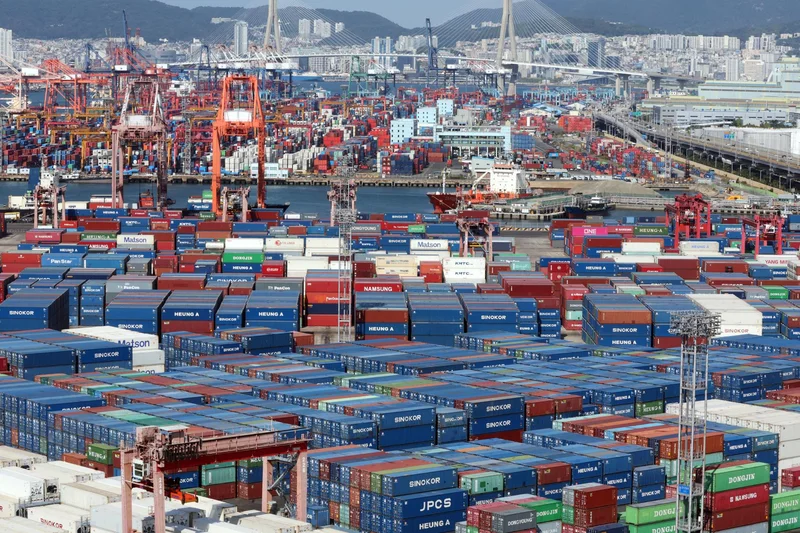
Korea's monthly exports soared to the second-highest level ever in July, rising nearly 63 percent from a year earlier, amid solid global demand for memory chips.
Outbound shipments came to $98.89 billion in July, just below the all-time high of $102.2 billion posted in June.
By sector, exports of semiconductors, the backbone of Asia's fourth-largest economy, shot up 179 percent over the period to $41 billion as global prices for memory products remained high amid strong demand from artificial intelligence (AI) data centers.
The country's consumer prices, meanwhile, rose 2.8 percent in July from a year earlier as oil prices remained elevated, though the rate of increase slowed, falling below the 3 percent mark for the first time in three months.
Korea also added 63,000 jobs in June from a year earlier, marking the first rebound in two months, although manufacturing jobs continued to lose ground.