At least 30,000 affected by Myanmar floods as conflict, crop losses threaten food security
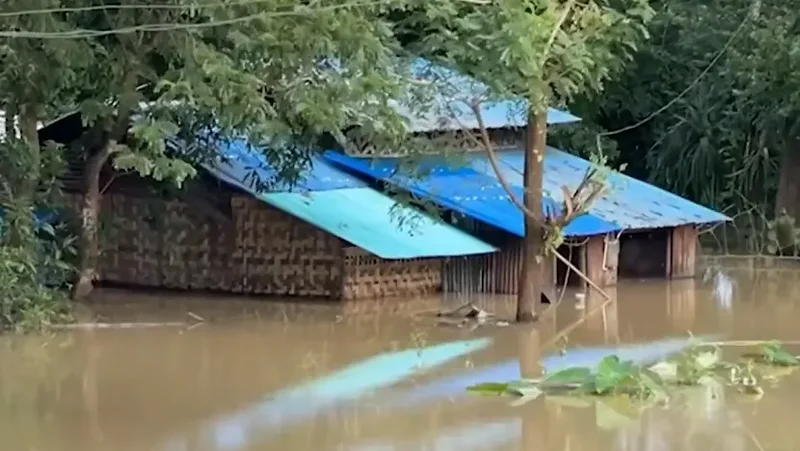
At the centre of the crisis is Lemyethna township, where the Ngawun River embankment was breached on the night of Jul 30, sending floodwaters into villages and farmland.
At least 30,000 residents in Myanmar’s Ayeyarwady region are grappling with severe flooding as armed conflict, fuel shortages and crop losses deepen threats to livelihoods and food security.
At the centre of the crisis is Lemyethna township, where the Ngawun River embankment was breached on the night of Jul 30, sending floodwaters into villages and farmland.
Myanmar authorities blamed heavy rainfall and erosion for the breach.
But some residents said the ageing embankment had been in poor condition, weakened by rat holes and termite mounds.
Maintenance had also become increasingly difficult as fighting between the Myanmar military and the Arakan Army spread into the area.
RELIEF EFFORTS HAMPERED
Years of conflict and natural disasters have left many communities in Myanmar accustomed to repeated crises.
But the latest flooding has brought new challenges for residents and those trying to help them.
“We are really hurting inside. As for livestock, some are dying due to the weather. Cattle and buffaloes are now living out in the rain and hot sun,” said one farmer.
“The whole village is facing difficulties. When rescuers and donors arrived, we felt joy in our hearts.”
Government security forces have declared the entrance to the flood zone hazardous, restricting access for private rescue groups arriving from other parts of the country.
Instead, the groups have had to set up a base at a nearby monastery before travelling into affected villages to distribute supplies.
Even then, some communities in Lemyethna township remain difficult to reach, despite an urgent need for food and other essentials.
The township is also sheltering hundreds of internally displaced people who had earlier fled fighting that spread from Rakhine State into Ayeyarwady.
“I have no words to describe the hardship I’m going through,” one internally displaced person said.
“Whatever little we could bring with us while fleeing the war, we brought along. But now everything is submerged in the flood.”
RICE BOWL UNDER THREAT
The flooding is also threatening agriculture in Ayeyarwady, often described as Myanmar’s rice bowl.
Farmers had already been struggling with fuel shortages, making it difficult and expensive to operate the machinery needed to cultivate and harvest their crops.
The floods have now dealt them another blow.
Authorities say about 3.7 million acres of paddy were planted across Ayeyarwady region this season.
While Lemyethna accounts for only a fraction of that total, individual farmers face significant losses.
Many had already spent money on fertiliser and other inputs, while higher fuel prices have pushed up cultivation costs.
Farmers say paddy plants can survive in floodwaters for up to a week before the crops are destroyed.
For them, the question now is how they will rebuild their livelihoods.
Myanmar authorities have pledged to repair the damaged embankment and provide food, water and healthcare to affected communities.