Sign in. It’s quick, free and it’s up to you.
An account is an optional way to support the work we do. Find out more.
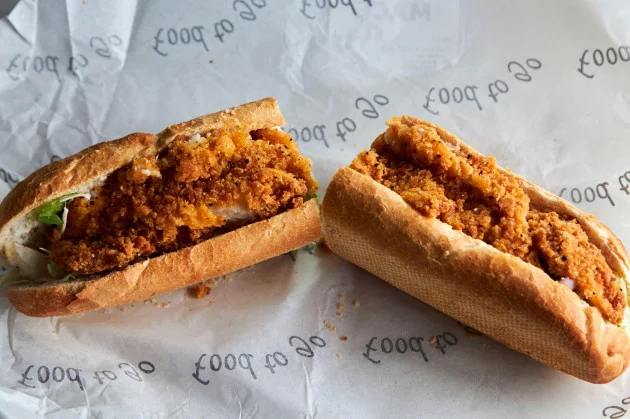
IN SOME OF Dublin’s city centre establishments, a chicken fillet roll or a basic sandwich could now set you back nearly as much as a teenager on minimum wage makes in an hour.
The once cheap and cheerful lunch options are not immune to inflation.
Since 2018, Tesco meal deals have gone from €3.50 to €5 for those without a club card. That’s a 43% increase in seven years.
Many coffee shops sell pre-made sandwiches. In Bear Market, they’re €8.95, while in Café 28 on Dame Street, they’re €10.50. Up-market spots like Dollars on Exchequer Street have larger sandwiches for between €12 and €13.50.
When our reporter looked at the price of a Centra deli breakfast roll in the city centre, she found it ranged from €7.25 to €8.25, depending on the amount of fillings chosen.
Dunnes perhaps provides the best value for money, offering freshly-made sandwich with three fillings for €4.25. Their breakfast rolls were €4.99 and a turkey roll was €6.25.
Still, the humble sandwich is looking less humble every year.
Irish food journalist Patrick Hanlon says meal deals he once bought at Boots and WH Smith at Dublin Airport have almost doubled in price in the last couple of years.
He said that while the cost of eating out is no doubt spiralling upward, so is everything else.
“If you’re happy that a pint is inching on eight quid, how come you aren’t happy if a sandwich is inching on 10 quid?
“They are that beacon of convenience, but they aren’t ever going to get any cheaper. And a caveat: if things get cheaper, there’s a reason why,” said Hanlon.
He told The Journal that the explosion in the number of grab-and-go places shows establishments are trying to provide good quality food at a price people will pay.
There are several pizza places in Dublin now offering a different dining style – “queue up, get a slice, eat it standing up”.
“Spaces are at a premium, the rents are increasing, and it is harder and harder for operators to earn a profit,” he said.
“I think all of us are holding that to possibly an old standard, and are aghast at how expensive it is. But I mean, everything is relative at the end of the day.”
So where can you get a hearty meal in the capital when you’ve not brought lunch from home?
Hanlon says pizza by-the-slice places like Mani and Doom Slice are reasonably-priced for the quality.
The Place Proper Street Food, a food truck market on Hogan Place in Dublin 2, has a selection of options at fair prices, he says.
Some sit-down restaurants are offering quicker dining experiences, with prices that are easier to stomach and deals on two-course meals instead of three.
For a sit-down lunch, Hanlon recommends Chez Max and Umi Falafel, where you can get a meal for under €15 without being rushed or pressured to order more.
His favourite might be the Pepper Pot Café, which has “incredibly competitive” prices and a great setting in the Powerscourt Townhouse Centre.
Hanlon also recommended Chiya for a fresh kebab at a “digestible” cost.
In the mid-2010s, €10 was “plenty” for lunch in Dublin, says Maggie Fagan, the editor of Char, a food and drinks magazine.
“I think now it would be around €15, but there are still deals to be had.”
For an affordable lunch, she recommends mom-and-pop shops, such as McCabe’s Deli on Tara Street. She said Asia Market on Drury Street also has great deals.
Fagan said student cafés that are open to the public are a great hack for getting a high-quality, but subsidised meal.
She recommended The Goodies Café in the National College of Art and Design (NCAD) and the Buttery in Trinity College Dublin.
Do you eat out for lunch less often since prices have increased?
To embed this post, copy the code below on your site