What you need to know
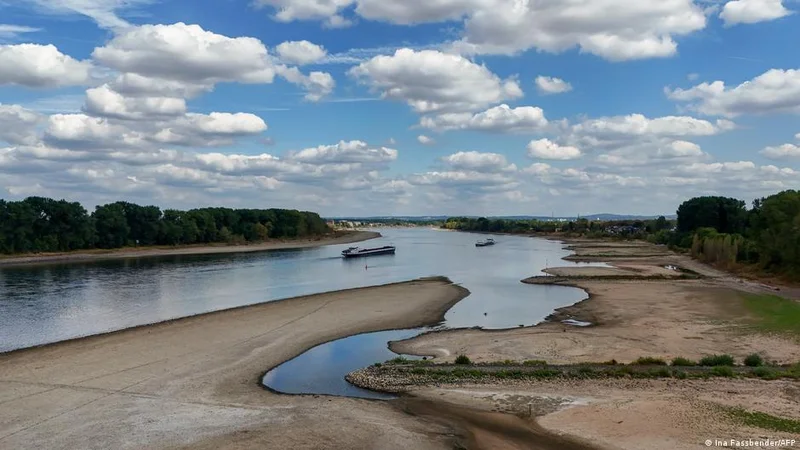
- Commercial shipping along the full length of the Rhine River could soon become impossible
- Historic low-water levels were recorded at several points on the river over the weekend
- A man was shot dead near Berlin's Zoo station after a dispute involving several people
Here is a roundup of top stories from and about Germany on Monday, August 10, 2026:
Tired of missing our real-time updates? Click here to add DW as a Preferred Source on Google.
Man shot dead near Berlin's Zoo station
A 30-year-old man has been shot dead following a dispute involving several people near Berlin's busy Zoologischer Garten station.
Paramedics tried to resuscitate the victim, but he died at the scene, police said.
The suspected attackers fled and remain at large.
Police did not say how many shots were fired shortly before midnight, and the circumstances surrounding the dispute remain unclear.
A homicide unit has taken over the investigation.
The shooting took place at one of western Berlin's busiest transport hubs, close to the Kurfürstendamm shopping boulevard and the Kaiser Wilhelm Memorial Church.
The case comes amid a marked rise in firearms incidents in the German capital.
Berlin police recorded 1,119 cases involving firearms in 2025, up 68% from 2024. Shots were actually fired in more than 500 of those cases.
Police chief Barbara Slowik Meisel said earlier this year that disputes once settled with fists were now increasingly involving guns.
Other recent cases include shots fired at a restaurant window in Neukölln early on Sunday and the shooting of a 38-year-old man in the city's Schöneberg district the previous weekend.
Rhine could become impassable at key shipping point
The Rhine River could soon become effectively split in two for commercial shipping as water levels continue to fall amid persistent dry weather, Germany's inland shipping association has warned.
Jens Schwanen, managing director of the Federal Association of German Inland Navigation, said the gauge at Kaub, a crucial point for freight traffic, was forecast to fall into single digits for the first time this week.
"Commercial shipping will no longer be able to transport goods in the region at such low water levels," Schwanen told the Rheinische Post newspaper.
He said excursion boats and river cruises would also be affected.
"In principle, the Rhine would then no longer be continuously navigable and would be divided into two," Schwanen said.
Shipping would still be possible between the ports of Amsterdam, Rotterdam and Antwerp and parts of North Rhine-Westphalia, roughly as far as Cologne.
Further south, traffic could continue on tributaries and connected waterways including the Neckar, Moselle, Main and Main-Danube Canal.
Historic low-water levels were recorded at several points on the Rhine in North Rhine-Westphalia over the weekend after weeks of dry weather and too little rainfall across the river's catchment area.
The falling river is already forcing freight vessels to carry much lighter loads, pushing up transport costs for industries that depend on bulk cargo.
Welcome to our coverage
Guten Tag from the DW newsroom in Bonn on the banks of the Rhine.
An inland shipping group is warning that, very soon, the river — Europe's most important inland commercial waterway — could no longer be navigable along its full length.
Germany's inland shipping association warned that the gauge at a crucial point for freight traffic could drop into single digits this week.
At such low levels, commercial vessels would no longer be able to transport goods through that stretch of the river.
Meanwhile, police are investigating a fatal shooting in a busy part of Berlin after a dispute involving several people.
Stay with us here for these stories and more of the things that Germany is talking about today.