Your support helps us to tell the story
From reproductive rights to climate change to Big Tech, The Independent is on the ground when the story is developing. Whether it's investigating the financials of Elon Musk's pro-Trump PAC or producing our latest documentary, 'The A Word', which shines a light on the American women fighting for reproductive rights, we know how important it is to parse out the facts from the messaging.
At such a critical moment in US history, we need reporters on the ground. Your donation allows us to keep sending journalists to speak to both sides of the story.
The Independent is trusted by Americans across the entire political spectrum. And unlike many other quality news outlets, we choose not to lock Americans out of our reporting and analysis with paywalls. We believe quality journalism should be available to everyone, paid for by those who can afford it.
Your support makes all the difference.
Read more
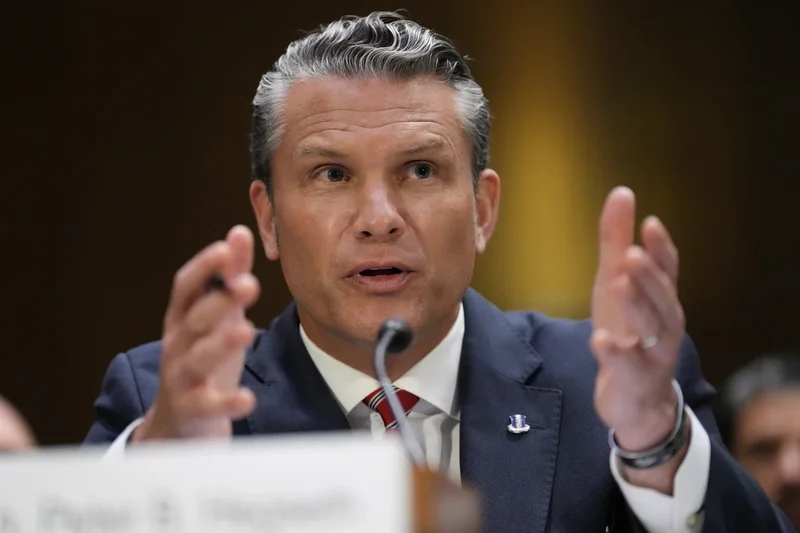
Defense Secretary Pete Hegseth's new initiative to test and treat troops for low testosterone has prompted a federal judge to question the differences between that kind of testosterone replacement therapy and hormone treatment for transgender men in the military.
U.S. District Judge Ana Reyes in Washington raised the question Wednesday in an ongoing lawsuit against President Donald Trump's ban on transgender troops. Reyes noted that Trump's ban says “the Armed Forces must adhere to high mental and physical health standards ... without the benefit of routine medical treatment or special provisions.”
Reyes ordered both parties in the lawsuit to address “the similarities and differences in administering TRT, both medically and logistically, for trans men compared to other service members, including cis individuals.” She was using the acronym for testosterone replacement therapy.
The judge also requested information on the Pentagon's “basis for treating trans men and other service members differently between this new policy and the Military Ban.”
Reyes' order comes a week after Hegseth announced that he is rolling out a new screening program for “testosterone deficiency” among troops, calling it necessary to allow them to operate at their “absolute best.”
The screenings will be conducted annually as part of service members’ required medical screenings for those 30 and older, he said. Troops under 30 can volunteer to be tested. In a video on social media, Hegseth said receiving testosterone replacement therapy would be voluntary.
Other Trump administration officials have begun to advocate for men to have easier access to testosterone replacement therapies, but the messaging from Hegseth and others blends known science on the hormone with broader, and less substantiated, claims.
Testosterone levels in men decline naturally with age and have long been linked to issues like erectile dysfunction, low libido, mood changes and weight gain. But experts have debated for years how to diagnose those problems and whether they should be treated by replacing the hormone.
Reyes, who was nominated by President Joe Biden, is overseeing one of the lawsuits against Trump's ban on transgender troops. Transgender active duty service members and former service members seeking to reenlist sued in late January 2025, shortly after the president returned for his second term in office.
Reyes ruled last year against Trump's executive order to exclude transgender troops. A divided panel of federal appeals court judges sent the case back to Reyes after partially upholding her order, finding that the ban was unlawful and service members who sued could not be kicked out.
Reyes has since given the case class-action status, which means the outcome could expand to all service members.
Trump's transgender military ban remains in effect, however. The U.S. Supreme Court has allowed the Pentagon to enforce it as litigation plays out.
___
Associated Press writers Lindsay Whitehurst and Michael Kunzelman contributed to this report.