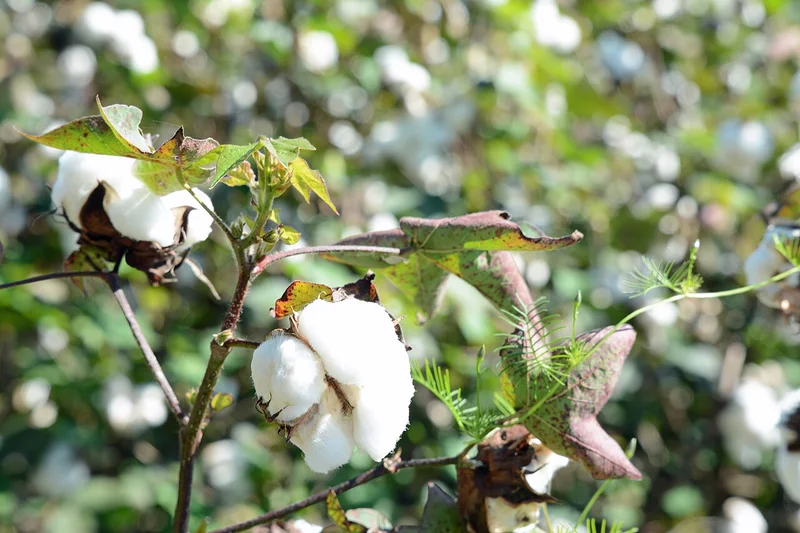
CFA Franc Zone Cotton Output Drops for Second Straight Season in 2025/2026
CFA Zone · AGRICULTURE
A two-season slide in CFA franc zone cotton
The USDA’s Cotton Outlook for the 2025/2026 season confirms that cotton production across Africa’s Franc Zone declined by roughly 415,000 bales year on year. That leaves total output at 4.0 million bales, a contraction of about 9 percent.
The slide follows an already difficult 2024/2025 season, when seed cotton production fell to 2.3 million tons, down 11.5 percent from 2.6 million tons the previous year. PR-PICA, the regional cotton producers’ association, reported that the downturn was broad-based, with only Senegal and Benin managing to buck the trend.
The back-to-back declines mark a reversal for a region that has long counted cotton among its top foreign-exchange earners. Fourteen countries across the West African Economic and Monetary Union and the Central African Economic and Monetary Community share the CFA franc, and cotton remains a pillar of rural livelihoods from Mali to Burkina Faso.
Mali hit hardest as pests slash forecasts
Mali’s 2025/2026 cotton forecast has been cut to 835,000 bales, a staggering 34 percent below the USDA’s August 2025 estimate. The culprit is the jassid (Amrasca biguttula), a sap-sucking insect that damages leaves and bolls, reducing both yield and fibre quality.
The USDA’s Dakar office, which covers Senegal and parts of West Africa, flagged pest infestation as the primary driver of the downward revision. Farmers in Mali’s cotton belt have struggled to contain the outbreak, and the financial hit is spreading through ginning companies and input suppliers.
Burkina Faso tells a different story. Its 2025/2026 forecast stands at 650,000 bales, a 15 percent increase, as better pest management and expanded planted area lift expectations. Côte d’Ivoire, meanwhile, estimates production at 565,000 bales for the current marketing year, with a modest recovery to 590,000 bales pencilled in for 2026/2027.
The currency straitjacket and farmer incomes
The CFA franc’s fixed peg to the euro, locked at 655.957 CFA per euro, has long been a double-edged sword for cotton exporters. When the euro strengthens against the United States dollar, the CFA franc appreciates in tandem, making West African cotton more expensive for dollar-paying buyers.
Historical studies by the International Monetary Fund and the World Bank have repeatedly linked cotton-sector stress to this exchange-rate dynamic. Farmer incomes get squeezed even when physical output holds steady, because the local-currency equivalent of dollar-denominated lint prices shrinks.
The Brookings Institution has described the CFA zone as lagging on growth and competitiveness, noting that the fixed rate can penalise exports while subsidising imports. For cotton, that means the region’s producers are exposed to global price swings with little cushion from domestic processing, since most fibre is exported raw.
Asian mills absorb the shock, for now
One bright spot in the USDA’s assessment is the resilience of Asian demand. Despite Côte d’Ivoire’s production dip in the 2025/2026 marketing year, export volumes stayed relatively firm because mills in Bangladesh, Vietnam and China kept buying.
That external demand cushion is critical for a region that ships most of its cotton unprocessed. The reliance on Asian spinners, however, also underscores a structural vulnerability: the value added from turning raw fibre into yarn and fabric is captured almost entirely outside the CFA zone.
France remains central to the monetary architecture through the euro peg and institutional legacy, while Asian mills dominate the downstream supply chain. This leaves cotton-producing states dependent on a narrow export base, a dynamic explored in our pillar on Africa: The New Scramble.
What the CFA franc zone cotton outlook means for investors
For investors and commodity traders, the two-season slide signals tightening supply from a region that has historically been a reliable origin for medium-staple cotton. The USDA’s 4.0-million-bale figure represents a meaningful hole in global availability, even if Brazil and the United States remain dominant exporters.
The divergence between Mali’s pest-driven collapse and Burkina Faso’s recovery also points to a more fragmented risk map. Anyone financing input supply, ginning operations or logistics in the zone needs to price in country-specific agronomic and security risks, not just regional averages.
The currency question adds another layer. With the euro’s trajectory uncertain and global cotton prices sensitive to economic shifts, the CFA franc’s peg means West African producers have little room to adjust through exchange-rate flexibility.
What to watch in the seasons ahead
Côte d’Ivoire’s early forecast for the 2026/2027 marketing year points to a 4.5 percent rebound to 590,000 bales, suggesting some optimism about acreage and pest control. Burkina Faso’s 15 percent projected gain for 2025/2026 also indicates that not every producer is in retreat.
Mali remains the wildcard. If jassid infestations spread or prove resistant to current control measures, the 835,000-bale forecast could face further cuts. The USDA’s next update will be closely watched for any revision to that number.
Longer term, the debate over the CFA franc’s future continues to simmer. Any move toward greater currency flexibility would reshape the economics of cotton farming across all 14 member countries, altering the risk-reward calculus for one of West Africa’s most enduring export industries.
Frequently Asked Questions
How much did CFA franc zone cotton output fall in the 2025/2026 season?
The USDA projects output at 4.0 million bales, a drop of roughly 415,000 bales or about 9 percent from the prior season.
Which country suffered the largest production cut in the current season?
Mali’s forecast was slashed by 34 percent to 835,000 bales, largely because of severe jassid pest infestation.
Why does the CFA franc’s peg to the euro matter for cotton farmers?
When the euro strengthens against the dollar, the CFA franc appreciates too, reducing the local-currency value of dollar-priced cotton and squeezing farmer incomes.
Sources
This article was produced by The Rio Times’ automated newsroom system. How we use AI · Report an error
LatAm Markets: Live Signals → — real-time movers, turnover leaders and FX across Latin America.