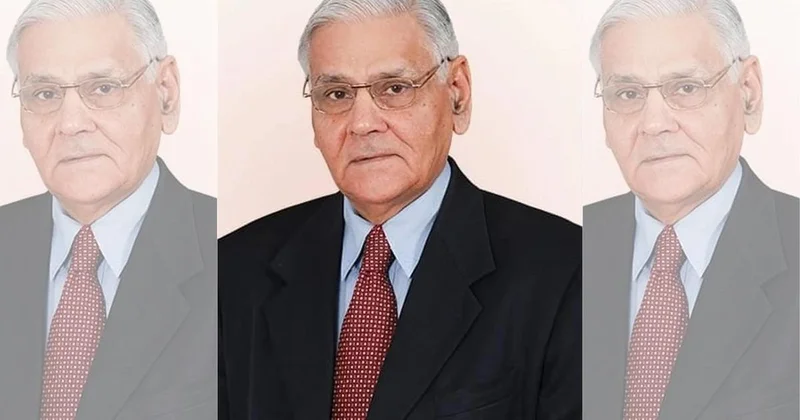
While his personal life was suffering immense tragedy, Jatinder Mehra’s tenure at Rourkela was also not without its challenges, particularly in dealing with the political influence of labour unions, a reality that had to be navigated with caution. The 1970s saw strong union activity, with frequent strikes and demands that often clashed with operational needs. These were defining moments that challenged Mehra’s ability to uphold operational integrity while prioritising worker safety. His time at Rourkela provided invaluable lessons in decision-making, negotiation, and the delicate balance of maintaining both discipline and fostering collaboration in a high-stakes industrial environment. “What I learned there shaped my future approach to management,” he reflects. “It wasn’t just about solving the immediate problems but about building systems that prevented them in the first place.” Mehra’s management philosophy became particularly important during his time at Rourkela, where the dynamics with the unions could sometimes be contentious. “In the 1970s, union power was strong, both in India and abroad. There were times when they would pressure the management to make decisions outside of the law or accepted protocols. I had to stand firm, even if it wasn’t the most popular stance.”
Mehra’s success at SAIL (and later at Essar Steel) can be attributed to his ability to drive progress – not just through technological advancements but also by transforming the mindset and skillset of the people who worked there. “The key to leadership is pushing performance to the next level. For that next level, you have to understand what is required and help your team achieve it.” His philosophy was simple yet profound: a manager’s role is to elevate the performance of those around them, helping them become self-sufficient and ready for bigger challenges. “If the workforce has the right support, they will rise to meet the challenges, no matter how tough they seem.” This mindset laid the foundation for Mehra’s long-term success as a leader in the steel industry.
An additional pivotal moment for Mehra was in the early 1970s when a fire broke out on the conveyor belt carrying coke – a key ingredient in the production of iron – from the coke oven. Faced with the potential closure of the plant, he chose to reroute the material via rail. This decision not only averted a crisis but also revolutionised and transformed their transportation system. “From that incident, I learned that failure doesn’t signify the end; it can be a gateway to new opportunities. Embracing challenges and learning from setbacks often lead to unexpected outcomes. I’ve come to appreciate the importance of celebrating small victories and recognising progress, no matter how minor. Ultimately, the journey matters just as much as the destination!”
On January 24, 1973, to bring India’s steel industry under a cohesive framework, the Indian government established the Steel Authority of India Limited (SAIL). This organisation became responsible for managing the country’s vast public sector steel assets, coordinating everything from production to technological advancements and market distribution. SAIL centralised the industry’s strategic direction and streamlined efforts across plants to increase efficiency and productivity. By this point, the public sector steel industry was India’s largest producer and employer.
SAIL represented more than just an organisational structure; it embodied India’s aspiration to compete with global steel giants. Under SAIL, the Indian steel industry expanded, modernized, and experimented with new technologies. This era saw the Bokaro Steel Plant come online in Jharkhand in 1972 and, later, the Visakhapatnam Steel Plant in Andhra Pradesh. These plants became showcases of Indian engineering and determination.
During this period, managers and engineers like Mehra honed their skills, learning not only the technical aspects of production but also the essential components of leadership, problem-solving, and resourcefulness. The public sector provided a fertile ground for those who wanted to make a difference, offering a space to innovate within the framework of national development.
The Ministry of Steel and Mines drafted a policy statement to evolve a new model for managing industry. The policy statement was presented to the Parliament on 2 December 1972. On this basis the concept of creating a holding company to manage inputs and outputs under one roof was mooted. This led to the formation of the Steel Authority of India Limited. The company, incorporated on January 24, 1973, with an authorised capital of Rs 2,000 crore, and was made responsible for managing five integrated steel plants at Bhilai, Bokaro, Durgapur, Rourkela, and Burnpur, along with the Alloy Steel Plant and the Salem Steel Plant.
Mehra worked mostly on the east coast of India because all the steel plants were located there due to the availability of raw materials in the area. He started off in Orissa, now known as Odisha. Odisha is an Indian state which is the eighth largest state by area and the eleventh largest by population, and Mehra served there, at Rourkela, for around 24 years before he was shifted to the headquarters – to the corporate office. He would go on to work in West Bengal for two-and-a-half years and in Andhra Pradesh for another five years. Mehra would go on to give 30 years of his life working with SAIL – one of the largest steel companies in India at the time, and this is where the progression of his career would take place. Little did he know then, dealing with the unions, at the coal face of the industry being forged, that he would go on to join Essar in the private sector in 1997 as managing director and vice chairman of Metals and Minerals.
“Back then, there were all these associated industries connected to steel, all under the government. Hindustan Steel was essentially running the steel units, but we also needed bricks, alloys, and a lot of other supplies to keep the plants going – and all those supply companies were also government-owned. So someone said, ‘Why not bring them all together?’ That’s how they started collaborating, dealing with each other directly. It was a sort of coming together of all these supporting industries. But interestingly, over time, that whole model was dropped. Today, SAIL only oversees the main plants themselves. I worked in two of them – Rourkela and Durgapur.”
Excerpted with permission from Steel Man: The Jatinder Mehra Legacy, Alison Norrington, Penguin Enterprise.
We welcome your comments at letters@scroll.in.