Taiwan representative in Japan boycotts Nagasaki anniversary ceremony over seating
Taiwan representative in Japan boycotts Nagasaki anniversary ceremony over seating
TOKYO (AP) — Taiwan’s top economic representative in Japan said he boycotted this year’s memorial marking Nagasaki’s 81st anniversary of the U.S. atomic bombing of the Japanese city, accusing Nagasaki officials of being pro-China and insulting Taipei.
Lee Yi-yang, head of the Taipei Economic and Cultural Representative Office in Tokyo, said in a social media post that seat assignments showed Nagasaki “deliberately denied Taiwan’s status as a nation, completely disregarding Taiwan’s sovereignty and dignity.”
Lee said he and two of his deputies boycotted the ceremony because their designated seats as representatives of Taiwan were not among those reserved for diplomatic missions. Lee instead sent a lower-ranked official from Fukuoka.
Nagasaki acted as “a pawn of China’s insistence that Taiwan is not a state and has no sovereignty,” Lee’s office said in a statement.
Nagasaki officials said seats for Taiwanese officials were located near other envoys and not clearly distinguished as nondiplomatic guests.
Nagasaki Mayor Shiro Suzuki was expected to speak to reporters later Monday.
Japan and China normalized diplomatic ties in 1972, ending war animosities. The joint communiqué officially recognized Tokyo’s diplomatic ties with Beijing and ended those with Taipei, though Japan and Taiwan still have close economic and trade ties through nongovernmental channels between the two sides.
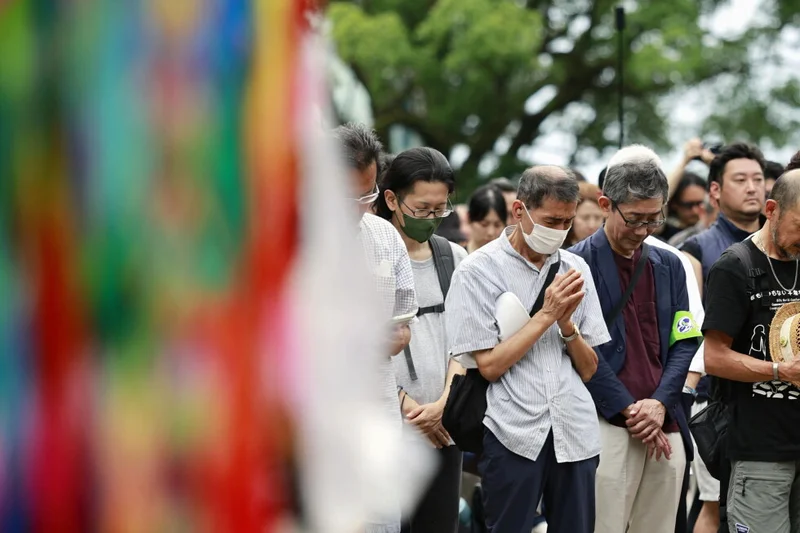
At Sunday’s memorial at the Peace Park in the southwestern city, representatives from 98 countries and three international organizations, including the United Nations, the European Union and the International Committee of the Red Cross, Nagasaki officials said.
The United States launched the Nagasaki attack on Aug. 9, 1945, killing 70,000 by the end of that year, three days after the bombing of Hiroshima that killed 140,000. Japan surrendered on Aug. 15, 1945, ending World War II and the nearly half-century of aggression across Asia.
Nagasaki also was boycotted in the 2024 anniversary by then-U.S. ambassador Rahm Emanuel and his counterparts from five other Group of Seven countries for not inviting Israel over the escalating conflict in the Middle East and concern of possible risks, such as protests and other safety issues at the ceremony.
That prompted Nagasaki to set a policy of inviting countries, regions and organizations that have either diplomatic missions in Japan or at the United Nations, including North Korea and countries in conflict.
Taiwan fits neither category as a guest but Nagasaki accommodated its representatives at their request last year, officials said.
Lee also attended the Aug. 6 atomic bombing memorial in Hiroshima, where he was treated equally with other foreign envoys, he said in a statement.
Lee also stressed that Taiwan has demonstrated itself to be a peace-loving nation, while China has increasingly posed threats to the region with its rapid military growth and nuclear weapons.
Lee took up his post in Japan in September 2024 and last year became the first Taiwanese representative from the liaison office to attend the Hiroshima and Nagasaki ceremonies. He was given a similar seat assignment in Nagasaki last year but did not raise the issue over the “indignity” to prioritize friendship, he said.
Associated Press video journalist Mayuko Ono contributed to this report.