Rachel Feltman: Happy Monday listeners. For Scientific American’s Science Quickly, I’m Rachel Feltman. You’re listening to our weekly science news roundup.
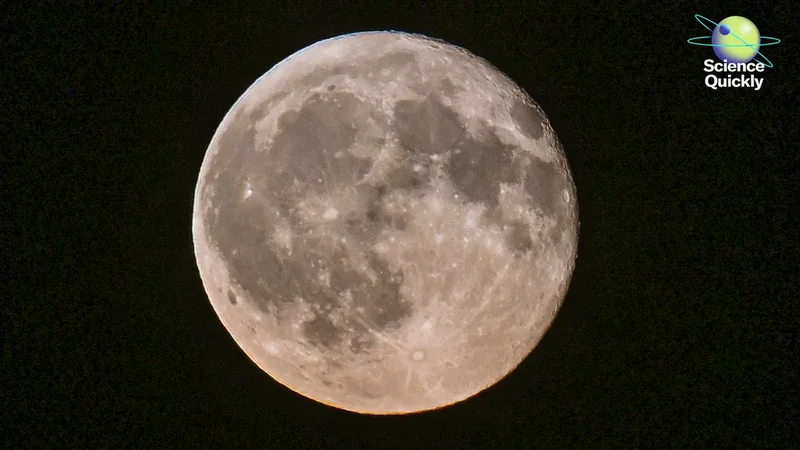
Let’s start on the moon, where a SpaceX rocket crashed into the surface early last Wednesday morning. This was an accident, but it didn’t catch scientists by surprise—and it hopefully won’t be a useless collision. Here to tell us more is Scientific American’s breaking news chief, Claire Cameron. Thanks for joining us, Claire.
Claire Cameron: Happy to be here.
On supporting science journalism
If you're enjoying this article, consider supporting our award-winning journalism by subscribing. By purchasing a subscription you are helping to ensure the future of impactful stories about the discoveries and ideas shaping our world today.
Feltman: So this piece of rocket was supposedly going to hit the moon. Did it do so?
Cameron: Yes it did. We know that it did hit the moon at some point on August 5th. European Southern Observatory’s Very Large Telescope was able to detect the impact plume, which lasted between five and 10 minutes after the impact.
So SpaceX originally launched this Falcon 9 rocket in January of 2025. It was carrying two lunar landers, which it delivered to the moon and which had varying levels of success. But its upper stage, which is about the same size as a five-story building, it was meant to reenter Earth’s atmosphere and burn up, but it didn’t do that.
Instead, it entered orbit around Earth at a similar distance to the moon, putting it on a collision course with our natural satellite. And it was discovered in orbit by an amateur astronomer who predicted that it would collide with the moon at some point in early August, and he predicted that it would be the 5th of August at around 2:35 A.M. Eastern time. And here we are.
Feltman: But we didn’t actually see it happen in real time. Could you explain why that is?
Cameron: Yeah, so astronomers were trying to observe the event in real time to see if they could see anything. But because of where the impact happened on the moon, it was at the limb, which is the outer edge of the moon. And so it’s just too hard to see that bright light from our distance. So they didn’t see the impact as it was happening, but they were observing it with instruments such as the Very Large Telescope to be able to see if after the fact there was the plume that we would expect that would come up from the moon when something of that size hit it at that speed.
Feltman: So we talk about space junk and, you know, the growing threat that it poses on Science Quickly not infrequently. Is there any, you know, particular concern raised by this piece of rocket, you know, hitting the moon unintentionally?
Cameron: It’s going to have no effect on Earth. Even though it is a large piece of space debris, and it hit the moon at several times the speed of sound—this wasn’t a small impact, if it had been on Earth, it would’ve been catastrophic. But thankfully our atmosphere really protects us from these kinds of events.
But it does have implications for future human-led missions to the moon. Like, if we are going to be establishing permanently staffed bases on the moon, if we’re going to have infrastructure there; NASA wants to build a nuclear reactor on the moon, there are designs on making factories on the moon, that kind of thing. Like, you know, all of those things could be affected by the increasing chance of a piece of debris hitting the moon.
Feltman: So even though this wasn’t intentional, are scientists hoping to learn something from watching the impact and the aftermath?
Cameron: Yeah, so there were many observatories hoping to see this impact, and you know, as the data starts to come out, we’ll get information on what exactly happened, what dynamics were at play, what forces were at play when this rocket hit the moon.
What exactly happened on the lunar surface? How did the dust and, like, bounce up, essentially? And that’s interesting information if we’re hoping to land anything on the moon successfully. It’s hard to land on the moon, so we want to have a very clear idea of what the surface dynamics are like and what happens when anything is coming down. And then also, you know, like, there might be other things that come out in time, and just being able to observe an event like this when we know it’s going to happen just gives us so much more opportunity to set up specific observations, to look for specific things, whereas when a meteor hits the moon, for instance, like, we don’t know that that’s going to happen ahead of time, so it’s very hard to study that kind of an event.
Feltman: Well, thank you so much for coming on to chat with us about this.
Cameron: Yeah, absolutely.
Feltman: Listeners, remember that you can always find more up-to-date science and tech news at ScientificAmerican.com.
Speaking of tech news, our next story features the ever-growing threat of cyberattacks. When you hear that phrase, you might very reasonably worry about digital infrastructure: losing access to your online bank or having your personal data leaked on the dark web, for example. But because so much of our physical infrastructure now interacts with the digital world, these attacks can impact our most basic of everyday needs.
In a recent example of this, ABC News reported last Tuesday that at least a dozen states disclosed cyber intrusions that targeted their water utilities. Essentially, hackers targeted components of the water control systems that were connected to the Internet, allowing them to change passwords and turn off wells. According to reporting by the New York Times, some government officials suspect Iran is behind the coordinated assault.
While no major disruptions had yet been reported last week, according to ABC, the FBI flagged some incidents of low water pressure and flooding. The agency advised disconnecting utilities from the Internet where possible and preparing to switch to manual systems in the event of an attack. As Axios noted in an article last week, the fact that most water utilities are run by local governments means their degree of protection from cyberattacks can vary greatly depending on municipal budgets and priorities. This could make the water supply an attractive target for coordinated cyberattacks from abroad.
While we’re already worrying about a lack of government oversight leading to problems with your plumbing, let’s check in on the cyclosporiasis outbreak. The Washington Post reported last week that the Centers for Disease Control and Prevention has connected cases in six more states to the primary outbreak. That makes 15 states in total tied to the outbreak, which is the largest on record. As of August 3, the CDC had confirmed 10,468 cases and was aware of another 12,255 reported cases that it had not yet confirmed. And last week, the Michigan Department of Health and Human Services reported two deaths related to the outbreak. The individuals have not been identified, but the department noted that both had significant underlying health conditions that could have been impacted by the severe diarrhea and resulting dehydration associated with cyclosporiasis. While the condition is generally not considered life threatening, this is a good reminder that serious gastrointestinal illness is no joke. Meanwhile, South Carolina is also seeing an uptick in cases that do not seem to be tied to the larger national outbreak.
It seems as though many folks wary of mass-produced produce are flocking to farmers markets instead. According to CapRadio, the farms usually responsible for providing most of the lettuce in the U.S. are leaving crops unharvested due to low demand, despite no evidence linking their products to the cyclospora outbreak. Meanwhile, Axios reported last week that Ohio’s Garrettsville Farmers Market was seeing a 127% increase in foot traffic compared with last July. If you’re wondering who cares about Garretsville, well I get it, no offense to the good people of Garretsville. The gist is that the Garretsville Farmers Market was able to collect this data while other farmers markets throughout Ohio may have been too busy to do so. But, anecdata across the state reflects a similar trend. The Philadelphia Inquirer also reported that Philly farmers markets had seen an uptick in customers over the past few weeks. And one West Virginia farmer told the Wall Street Journal that, while he would usually expect a summer slump in D.C. markets as people spent time and money on vacations and back-to-school shopping, his lettuce sales actually tripled this July. And the point-of-sale company Square, which powers payments for many farmers market vendors, also reported year-over-year sales increases for greens in New York farmers markets, including a sharp uptick this year. But the company did note that, while the public health scare may be driving some consumer behavior, they’ve seen a general trend toward more greens—which includes kale, lettuce, and fresh herbs—over the last five years.
The point is it certainly feels like people are shopping local to avoid cyclosporiasis. But can this actually protect you from explosive diarrhea? The answer is probably more complicated than you’re hoping. Experts told Time magazinethat small farms are unfortunately not immune to foodborne pathogens like Cyclospora, and in fact some noted that smaller operations may lack the resources for prevention and detection that larger farms can have. That being said, some of the experts did note that shorter supply chains with fewer parties involved can mean fewer opportunities for contamination. So, if you have the opportunity to buy directly from a farm that you trust is run ethically and hygienically, that’s worth something—though it doesn’t mean you’re at zero risk of a foodborne pathogen. There’s always a chance of contamination, but the more time and space there is between harvesting and eating, the more opportunities there are for pathogens to pounce.
With all of this in mind, yes you should still be eating veggies and you should buy them from wherever you’re able to sustainably buy veggies from. It's best to get whole heads of lettuce and uncut produce if you can, since the facilities and machines that chop greens up can spread pathogens from one harvest to another. And whatever you buy, make sure to wash it thoroughly—and wash your hands after handling it. Finally, cooking veggies to at least 158 degrees Fahrenheit is the surest way to kill Cyclospora. So maybe instead of a salad summer we should be leaning into soups, fajitas and veggie pastas.
We’ll wrap up with some exciting health news: a new type of flu shot. Last week, pharmaceutical giant Moderna announced that the Food and Drug Administration had approved the first flu vaccine made with mRNA technology. This Nobel prize–winning tech powered the first COVID-19 vaccines, allowing a more rapid response to the pandemic than traditional vaccine tech could have managed. Instead of using weakened or inactivated viral strains, these vaccines rely on synthetic strands of mRNA, or messenger ribonucleic acid, to carry genetic instructions into our cells. This tells our own bodies to produce harmless simulcrums of specific viral proteins, which our immune systems recognize as foreign and produce antibodies against. The hope is that mRNA vaccines, with their shorter production timelines, can target seasonal flu strains more accurately. Moderna’s mFlusiva shot, which is intended for adults ages 50 and older, will reportedly be available soon at select retailers.
That’s all for this week’s news roundup. We’ll be back on Wednesday with the inside scoop on how linguists created Rocky’s musical language for the movie Project Hail Mary.
Science Quickly is produced by me, Rachel Feltman, along with Fonda Mwangi and Jeff DelViscio. This episode was edited by Alex Sugiura. Marielle Issa and Aaron Shattuck fact-check our show. Our theme music was composed by Dominic Smith. Subscribe to Scientific American for more up-to-date and in-depth science news.
For Scientific American, this is Rachel Feltman. Have a great week!